What Did Arjun Singh Say About Taking Over Bangladesh?
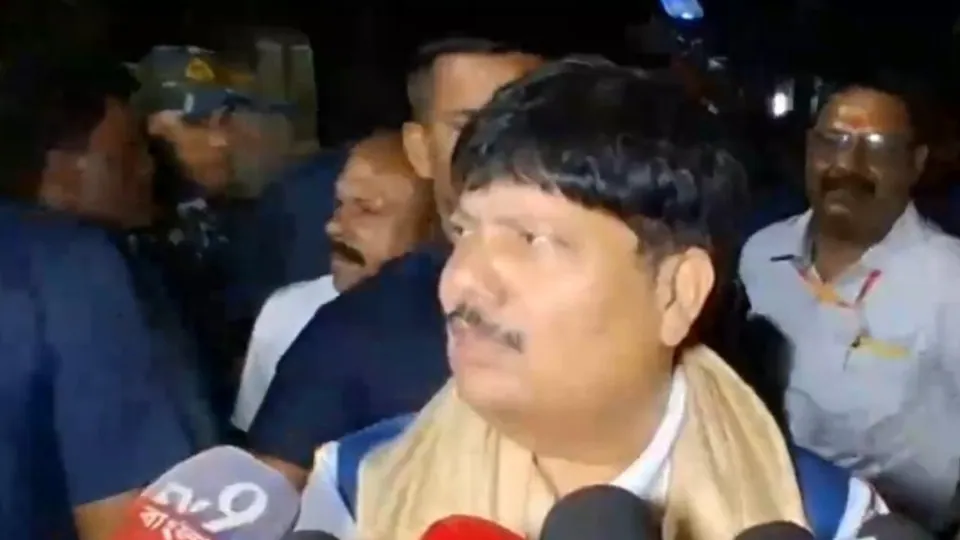
Speaking to reporters in Bhatpara, West Bengal, on Tuesday, November 24, Singh made a statement that quickly attracted attention because it referred to taking control of a neighbouring sovereign country. He said, “We will take Bangladesh by December 16th. Enough is enough; there are no more excuses regarding Bangladesh. We will certainly take revenge for the way Hindus have been killed in Bangladesh; there is no doubt about that.”
Singh’s comments linked the alleged violence against Hindus in Bangladesh with a call for retaliation. However, he did not provide details about what he meant by taking Bangladesh, how such an action could be carried out or whether he was referring to any official government position.
There is also an important distinction between a politician’s public statement and India’s foreign policy. Singh’s remarks do not, by themselves, represent an announcement of military action or a change in the Indian government’s position towards Bangladesh. No official policy or military operation to take control of Bangladesh was announced alongside his comments.
December 16 is particularly significant in Bangladesh because it is celebrated as Victory Day, marking the country’s victory in the 1971 Liberation War and the emergence of Bangladesh as an independent nation. The date also coincides with former Prime Minister Sheikh Hasina‘s proposed return to Dhaka, adding another sensitive dimension to the minister’s remarks.
Why Are Hindus in Bangladesh at the Centre of the Controversy?
Concerns about the safety of Hindus and other religious minorities in Bangladesh have remained an important issue in India-Bangladesh relations, particularly since the political upheaval that removed Sheikh Hasina from power in August 2024.
Reports of killings, attacks on homes, vandalism of temples, property disputes and intimidation have raised concerns among minority organisations and human rights groups. These incidents have also contributed to political criticism of successive Bangladeshi authorities and demands for stronger protection of vulnerable communities.
The scale and nature of the reported violence, however, require careful examination. Not every crime involving a Hindu victim is necessarily communal or religiously motivated. Some incidents have been linked to personal disputes, political rivalries, criminal activity or property conflicts, while others have prompted allegations of targeted violence against minorities.
The Bangladesh Hindu Buddhist Christian Unity Council reported 257 incidents of communal violence during the first six months of 2026. Its figures included 44 murders, 62 attacks or acts of vandalism targeting temples and other places of worship, and 47 attacks, arson incidents or acts of vandalism involving homes and businesses.
These figures represent incidents documented by the organisation and should not automatically be interpreted as independently established communal crimes in every case. Bangladesh’s Press Institute-backed fact-checking body, BanglaFact, has also challenged some claims about the communal motives behind particular killings and incidents.
India has separately acknowledged the broader problem. In a written response in the Rajya Sabha in March 2026, the Ministry of External Affairs said it was monitoring attacks against minorities in Bangladesh, including violence targeting homes, businesses, properties and places of worship. Citing available data from human rights organisations, the government referred to approximately 3,100 incidents of violence against Hindus and other minorities between August 2024 and February 2026.
New Delhi has said it has consistently raised minority safety concerns with Bangladeshi authorities and expects incidents of killings, arson and violence to be thoroughly investigated. The Indian government has also maintained that the primary responsibility for protecting the lives and rights of people in Bangladesh rests with the Bangladeshi government.
The continuing concerns help explain why reports of attacks on Hindus have become politically sensitive in West Bengal, a state that shares a long international border with Bangladesh and has close historical, cultural and family connections with the neighbouring country.
Bangladesh Rejects Sheikh Hasina’s December 16 Return Plan
Singh’s statement came at a time when Bangladesh was already facing another politically sensitive development: Sheikh Hasina’s announcement that she intended to return to the country from India on December 16.
Hasina, who served as Bangladesh’s prime minister from 2009 until August 2024, fled to India after a student-led protest movement over public-sector job quotas escalated into a nationwide uprising against her government. She arrived in India on August 5, 2024, as the political crisis intensified and her administration collapsed.
More than two years after leaving Bangladesh, Hasina has now identified December 16 as her proposed return date. Her spokesperson, Syed Mozammel Ali, told Reuters that the former prime minister wanted to travel from Delhi to Dhaka aboard Biman Bangladesh Airlines, Bangladesh’s national carrier.
According to Ali, Hasina had asked the Dhaka administration to arrange her return journey. He argued that because she had been flown to India aboard a Bangladeshi aircraft on August 5, 2024, the government should facilitate her return in the same manner.
Hasina’s announcement has created a fresh diplomatic and legal challenge for Bangladesh and India. Dhaka wants her extradited to face the consequences of the legal proceedings against her, while New Delhi has said that Bangladesh’s extradition request is being examined through the applicable procedures.
Bangladesh Minister Says Hasina Can Return Only Through Extradition
Bangladesh’s State Minister for Foreign Affairs, Humayun Kobir, dismissed Hasina’s proposed travel arrangements and said she could return only through the formal extradition process.
Speaking to journalists after briefing foreign diplomats in Dhaka, Kobir said that desire and reality were different. He rejected the suggestion that Hasina could simply board a commercial or national-carrier flight and return without addressing the legal proceedings against her.
He said, “The reality is that a terrorist will never be allowed to return except through extradition… She is not a regular commercial passenger. She can only be brought back in handcuffs and under strict surveillance.”
The remarks reflected the position of the current Bangladeshi administration, which considers Hasina a convicted person and wants her transferred from India through the bilateral extradition framework.
Kobir also indicated that discussions about her return would take place with the Indian government rather than being settled through arrangements directly requested by Hasina or her representatives.
Bangladesh’s position means that December 16 is currently Hasina’s stated intention, not a confirmed travel date. Her return depends on the legal and diplomatic process, including India’s response to the extradition request.
Why Sheikh Hasina Was Sentenced to Death in Absentia
Hasina’s proposed return is particularly complicated because Bangladesh’s International Crimes Tribunal (ICT) sentenced her to death in absentia in November 2025 in a case involving crimes against humanity linked to the suppression of the 2024 uprising.
The proceedings concerned allegations that state forces used lethal violence against protesters during the demonstrations that eventually brought down her government. Hasina has denied the accusations and rejected the legal proceedings against her.
The United Nations estimated that as many as 1,400 people may have been killed during the unrest between July and August 2024. The uprising began with protests over public-sector employment quotas before expanding into a wider movement against Hasina’s administration.
Bangladesh’s authorities have maintained that Hasina must face the consequences of the tribunal’s judgment. Her proposed return therefore raises questions about arrest, detention and the enforcement of the sentence if she enters the country.
Hasina has also sought to obtain new Bangladeshi identity and travel documents through legal representatives in the United Kingdom. Her representatives have argued that she should be able to return home, while Bangladeshi officials have questioned the validity of her request and maintained that extradition is the appropriate route.
India-Bangladesh Extradition Dispute Adds to Diplomatic Tensions
The extradition issue has become one of the most sensitive subjects in relations between New Delhi and Dhaka. Bangladesh has repeatedly requested that India hand over Hasina, who has remained in India since leaving office in August 2024.
The two countries signed an extradition treaty in 2013, which was subsequently amended in 2016. The agreement provides a legal framework for transferring individuals sought by either country, although the process is subject to its provisions and applicable legal considerations.
Bangladesh argues that Hasina has been convicted and should be returned to face the consequences of the judgment. India, however, has not announced a final decision on the request.
In April 2026, India’s Ministry of External Affairs said that the extradition request was being examined by the competent authorities in accordance with applicable law and established procedures. New Delhi has also expressed an interest in engaging constructively with Bangladesh’s government and strengthening bilateral relations.
The matter is sensitive because any decision could affect India’s diplomatic relationship with Bangladesh, its legal obligations under the treaty and the political implications of transferring a former head of government who has sought refuge in India.
Hasina’s proposed December 16 return has therefore not resolved the extradition question. Instead, it has brought the disagreement back into public focus at a time when both countries are managing wider political and security concerns.
Why December 16 Matters to Both Bangladesh and Sheikh Hasina
December 16 is one of the most important dates in Bangladesh’s national calendar. Known as Victory Day, it commemorates the surrender of Pakistani forces in Dhaka in 1971, which brought the Bangladesh Liberation War to an end and established Bangladesh as an independent country.
The date carries enormous historical and political significance. It is associated with the country’s independence movement and the legacy of Sheikh Mujibur Rahman, Bangladesh’s founding leader and Sheikh Hasina’s father.
Choosing Victory Day as her proposed return date gives Hasina’s announcement a symbolic dimension beyond ordinary travel arrangements. It places her intended homecoming alongside one of the country’s most significant national commemorations.
However, the current Bangladeshi government has rejected the idea that the symbolism of the date changes her legal position. Officials have insisted that any return must take place through extradition and that she would face arrest.
The disagreement also highlights the political divide between Hasina and the authorities who came to power after her removal. Her Awami League party has been barred from political activities, and her return could become a major source of political tension.
Could Arjun Singh’s Remarks Affect India-Bangladesh Relations?
Singh’s statement has the potential to intensify political rhetoric around an already sensitive bilateral relationship. Bangladesh and India share extensive economic, cultural, historical and geographical connections, but their relationship has faced difficulties following the political transition in Dhaka.
Both countries have important interests in maintaining stability along their shared border. Cooperation is relevant to trade, transport, energy, water-sharing arrangements, security and the movement of people. Any escalation in political tensions could complicate these areas.
West Bengal has a particularly important geographical position in this relationship. The state shares a long border with Bangladesh, and developments in the neighbouring country can have direct implications for border communities, migration concerns, trade and security arrangements.
However, Singh’s remarks should not be confused with an official Indian government announcement. A statement by an individual political leader does not establish that India intends to invade, occupy or annex Bangladesh. Any such action would represent a major international and constitutional matter requiring decisions at the national level, not something that can be inferred from an individual minister’s comments.
India’s publicly stated approach has focused on diplomatic engagement, border security, minority protection and the examination of Bangladesh’s extradition request. There has been no accompanying official announcement indicating a change towards military intervention.
What Happens Next?
Several developments will determine how the situation unfolds over the coming weeks. The first is whether India makes any decision on Bangladesh’s extradition request for Sheikh Hasina. Until New Delhi announces its position, her proposed December 16 journey remains uncertain.
The second is how Bangladesh handles the political and security situation surrounding Hasina’s possible return. The government has made clear that it intends to arrest her if she comes back, while her representatives continue to insist that she should be allowed to return.
The third is the response to concerns about minority safety. Reports of attacks against Hindus and other religious communities have placed pressure on Bangladeshi authorities to investigate incidents, prosecute those responsible and prevent further violence. Credible investigations are also important to distinguish communal attacks from crimes driven by other motives.
Finally, Singh’s comments may generate further political reactions in West Bengal and beyond. His promise to take Bangladesh by December 16 has drawn attention because of its timing and language, but its significance should be assessed separately from the official policies of the Indian government.
The situation brings together three sensitive issues: the security of religious minorities in Bangladesh, the unresolved extradition dispute involving Sheikh Hasina and the broader relationship between India and its eastern neighbour. Whether political rhetoric leads to further diplomatic friction will depend largely on how the two governments handle these issues through established legal and diplomatic channels.
For breaking news and live news updates, like us on Facebook or follow us on Twitter and Instagram. Read more on Latest India on thefoxdaily.com.






COMMENTS 0