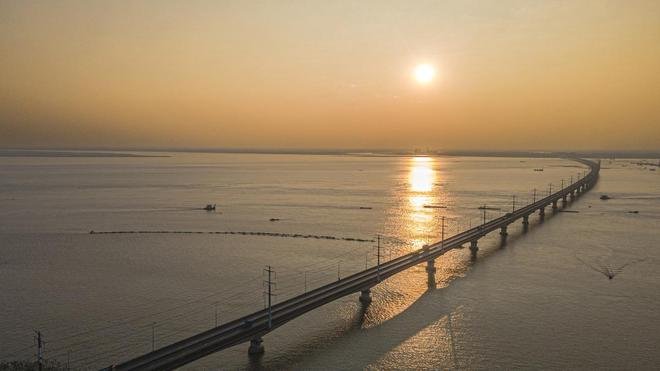
India and Bangladesh face a crucial diplomatic deadline as the 30-year Ganga Water Sharing Treaty, signed in December 1996, is scheduled to expire on December 12, 2026. The agreement governs how the two neighbouring countries share the Ganga’s water during the dry season, when falling river levels make water allocation particularly sensitive for agriculture, drinking supplies, navigation and other needs.
With less than three weeks remaining before the treaty’s scheduled expiry, representatives from both countries met in Dhaka on November 21 and 22 for the 91st routine meeting of the India-Bangladesh Joint Committee. The meeting was an important opportunity to discuss water management, but neither government issued an official confirmation that negotiations over renewing the 1996 agreement had taken place.
Reports have suggested that Bangladesh may be willing to renew the existing treaty rather than negotiate an entirely new agreement. However, the two countries still have differences over minimum water guarantees, seasonal allocations, the duration of a renewed pact and the sharing of hydrological information.
The negotiations are taking place against a complicated diplomatic backdrop. Political tensions, disagreements over former Bangladesh prime minister Sheikh Hasina and concerns about India’s water-sharing arrangements with other neighbours could influence the atmosphere surrounding the discussions.
The central question is whether New Delhi and Dhaka can preserve the framework established three decades ago while adapting it to changing water availability, growing populations and climate-related uncertainty.
How the Ganga Water Dispute Between India and Bangladesh Began
The dispute over sharing the Ganga’s water predates the independence of Bangladesh. Tensions began building in the 1950s, when India proposed constructing a barrage at Farakka in West Bengal, approximately 18 kilometres from what would later become the international border with East Pakistan.
Construction of the Farakka Barrage began in 1961 and was completed in 1975. Its primary purpose was to divert water from the Ganga into the Hooghly River, helping flush out accumulated silt around Kolkata Port and maintain the waterway’s navigability for commercial shipping.
Although India viewed the project as important for maintaining the operational capacity of Kolkata Port, the proposed diversion raised concerns in East Pakistan and later Bangladesh, which depends on the Ganga as a major source of water.
After Bangladesh became independent in 1971, the disagreement continued. The Farakka Barrage became a prominent political issue, with concerns that reduced downstream flows could affect agriculture, river navigation, fisheries and the wider ecological conditions of the Ganga-Padma river system.
The dispute reached a major flashpoint in 1976 when Maulana Bhashani, a prominent Bangladeshi political leader, led the Farakka Long March against India’s water policies. He demanded the demolition of the barrage and argued that water diversion was contributing to the drying of the Padma River, the Ganga’s main distributary in Bangladesh, and increasing the risk of desertification.
Both countries subsequently attempted to manage the disagreement through temporary arrangements. Agreements were reached in 1977, 1982 and 1985, but these did not provide a permanent solution to the competing demands for water.
The need for a more stable arrangement eventually led to negotiations between the governments of Indian Prime Minister H D Deve Gowda and Bangladeshi Prime Minister Sheikh Hasina. In December 1996, the two countries signed the Ganga Water Sharing Treaty, establishing a 30-year framework for distributing river water during the annual dry season.
What Does the 1996 Ganga Water Sharing Treaty Provide?
The 1996 treaty introduced a structured mechanism for sharing the Ganga’s flow at Farakka during the dry season, generally covering January to May. Its allocation formula was based on historical data relating to average water flows over 10-day periods between 1949 and 1988.
The agreement established a three-tier allocation system, with the amount of water available to each country determined by the measured flow at Farakka.
- When the flow is 70,000 cusecs or lower: India and Bangladesh are required to share the available water equally.
- When the flow is between 70,000 and 75,000 cusecs: Bangladesh receives 35,000 cusecs, while India receives the remaining flow.
- When the flow reaches 75,000 cusecs or more: India receives 40,000 cusecs, while Bangladesh receives the balance.
The allocation system is intended to provide a predictable mechanism for distributing water during periods when river flows are relatively low. Instead of relying on separate negotiations every season, both countries follow an agreed formula based on measured availability.
Special Allocation During the March-May Dry Season
The treaty also includes a special arrangement for the period between March 11 and May 10, when water availability can become particularly contentious.
During this period, the agreement provides for each country to receive a guaranteed allocation of 35,000 cusecs in alternate 10-day periods. The arrangement is intended to distribute water more predictably during a critical part of the dry season.
However, the treaty does not contain a general minimum-flow guarantee that ensures Bangladesh receives a fixed quantity regardless of the actual availability of water in the river.
What Happens If Ganga Water Levels Fall Below 50,000 Cusecs?
The agreement recognises that exceptionally low river flows could make the normal allocation formula difficult to implement. Article II(iii) therefore establishes an emergency consultation mechanism.
It states that if the flow at Farakka falls below 50,000 cusecs during any 10-day period, the two governments must enter into immediate consultations to make emergency adjustments. These adjustments are to be guided by the principles of equity, fair play and avoiding harm to either country.
This provision is important because it acknowledges that the river’s actual availability may not always match the historical averages used to design the treaty. However, it requires both governments to negotiate an adjustment rather than automatically guaranteeing a particular minimum quantity to either side.
How India and Bangladesh Resolve Water-Sharing Disputes
The 1996 treaty created an institutional framework to monitor water allocation and address disagreements. Its primary mechanism is the Joint Committee, which consists of an equal number of representatives nominated by the Indian and Bangladeshi governments.
The committee is responsible for monitoring the implementation of the agreement and examining issues that arise during the water-sharing process. If a dispute cannot be resolved through the committee, it can be referred to the Joint Rivers Commission.
The Joint Rivers Commission was established in 1972 as a bilateral mechanism for discussing and managing water-related issues involving the 54 rivers shared by India and Bangladesh.
Although the two countries share numerous rivers, the Ganga remains the only one governed by a formal bilateral water-sharing treaty under the arrangement described in the source material. This makes the Ganga agreement particularly important within the wider framework of India-Bangladesh river cooperation.
The existing institutional structure could play a significant role in any renewed agreement. Both countries may need stronger arrangements for monitoring river flows, exchanging information, addressing emergencies and resolving disagreements as environmental conditions become more unpredictable.
Why Bangladesh Wants Changes to the Existing Treaty
Over the past three decades, the 1996 treaty has faced criticism in Bangladesh over whether its allocation formula adequately protects downstream water requirements during periods of low flow.
One of the main concerns is the absence of a binding minimum water guarantee. Bangladesh has argued for a provision that would ensure a minimum level of supply even when the actual flow of the Ganga falls below the quantities assumed in the treaty’s allocation formula.
Dhaka has also sought changes to the seasonal allocation arrangements. According to reports about earlier discussions at the Joint Rivers Commission, Bangladesh asked for a guaranteed release of 40,000 cusecs between February and May, alongside a longer renewal period and improved sharing of flood-related information.
Bangladesh’s position reflects the importance of the Ganga-Padma river system to its downstream communities. Water availability affects agricultural production, fisheries, river transport and livelihoods, making the dry-season allocation a sensitive issue for the country’s economy and population.
Climate change and changing patterns of rainfall have added another dimension to the disagreement. A formula based largely on historical river-flow averages may become harder to apply if seasonal flows become less predictable or periods of water scarcity become more frequent.
Bangladesh is therefore seeking an arrangement that it believes can provide greater certainty about water availability and improve its ability to plan for future shortages.
Why India Is Cautious About a Fixed Minimum Water Guarantee
India also faces growing water requirements and has reasons to be cautious about accepting a fixed minimum allocation that applies regardless of actual river flows.
Reports from last year suggested that India was seeking an additional 30,000 to 35,000 cusecs during the March 11-May 10 period to address its increasing domestic requirements. There were also indications that New Delhi might favour a shorter renewed agreement, potentially lasting 10 to 15 years rather than another 30-year term.
The difference between the two positions reflects a fundamental challenge in transboundary water management. Bangladesh wants greater certainty about the minimum amount of water it can receive, while India is concerned about accepting an obligation that could become difficult to fulfil during periods of severe scarcity.
Nilanjan Ghosh, who heads Development Studies at the Observer Research Foundation, has argued that a fixed volumetric guarantee could place an unequal burden of hydrological risk on the upstream country.
In his analysis, Ghosh wrote: “A fixed volumetric guarantee that remains binding irrespective of actual flows could impose an asymmetric burden of hydrological risk on the upstream country. India therefore cannot commit to such an impracticable demand. This could leave India bearing a disproportionate share of climate-induced shortages, regardless of its domestic needs.”
His argument highlights India’s concern that a guaranteed quantity could become difficult to maintain if the river experiences unusually low flows. Any renewed agreement will therefore have to address how water scarcity is managed without placing an unacceptable burden on either side.
Political Tensions Could Complicate the Treaty Renewal
The negotiations over the Ganga treaty are taking place during a period of political change in Bangladesh and continuing diplomatic friction between the two neighbours.
Following the Bangladesh Nationalist Party’s landslide victory in the February 2026 general election, reports suggested that renewing the Ganga Water Sharing Treaty would be among the priorities of the new government led by Tarique Rahman.
However, discussions on the treaty have not produced a publicly confirmed breakthrough. Relations have also remained strained over the question of former Bangladeshi prime minister Sheikh Hasina, who has been living in exile in New Delhi since her removal from power in August 2024.
Bangladesh has sought her extradition, while the issue has become a significant point of disagreement between the two governments. The diplomatic tensions were also reported to have affected a proposed official visit by Tarique Rahman in August 2026, which would have been his first since becoming prime minister.
Although the Ganga treaty is a technical agreement involving water allocation, its future cannot be separated entirely from the political relationship between the two countries. Cooperation requires regular communication, institutional trust and a willingness to compromise on issues that affect communities on both sides of the border.
Bihar’s Concerns Add Another Dimension to India’s Position
The proposed renewal has also attracted political opposition within India. In August, the Janata Dal (United), a BJP ally, raised objections to extending the existing agreement, arguing that the treaty had been detrimental to Bihar’s interests.
The concerns underline the fact that India’s position in negotiations is shaped not only by its relationship with Bangladesh but also by the water requirements and political interests of states within the country.
Any changes to the treaty could therefore involve domestic consultations alongside bilateral negotiations. India’s central government would need to consider how a revised arrangement affects different regions and their water requirements.
This domestic dimension could make negotiations more complicated, particularly if proposals for additional releases to Bangladesh are perceived as limiting water availability for Indian states.
Indus Waters Treaty Suspension Has Made Bangladesh More Cautious
Another development influencing the regional water-sharing environment is India’s decision to place the 1960 Indus Waters Treaty with Pakistan in abeyance following the Pahalgam terror attack in April 2025.
The Indus agreement had governed water-sharing arrangements between India and Pakistan for decades. India’s decision to suspend its participation in the treaty’s normal framework has drawn attention to the relationship between water cooperation, national security and diplomatic relations.
For Bangladesh, the development may reinforce concerns about the long-term reliability of cross-border water arrangements, particularly when political relations deteriorate.
However, the Ganga and Indus agreements involve different rivers, countries and treaty structures. The circumstances surrounding the Indus decision do not automatically determine the future of the 1996 Ganga agreement.
Nevertheless, the regional context makes it important for India and Bangladesh to establish a clear and durable framework that can withstand political disagreements and changing environmental conditions.
What Happens If the Ganga Treaty Expires on December 12?
The treaty allows renewal through mutual consent at the end of its 30-year period. This means both countries must agree on the continuation of the arrangement and any changes they want to introduce.
If the agreement expires without a mutually accepted renewal, the existing 1996 framework would no longer provide the same treaty-based mechanism for seasonal water allocation. That could create uncertainty over how the two countries manage dry-season flows at Farakka and resolve disagreements.
The expiry would not remove the geographical reality that India and Bangladesh share the Ganga and depend on its water. Both governments would still have strong reasons to communicate and coordinate river management, but the absence of an updated agreement could make those discussions more difficult.
The November 21-22 Joint Committee meeting was therefore significant, even though no formal announcement about renewal discussions emerged. With the deadline approaching, the two sides have limited time to settle differences or agree on a process for continuing negotiations.
Can India and Bangladesh Build a More Climate-Resilient Water Agreement?
Beyond the immediate question of renewal, experts have argued that the next agreement should address a broader set of challenges than the original treaty was designed to handle.
Srinivas Chokkakula, president and chief executive of the Centre for Policy Research, has described the renewal process as an opportunity to rethink the wider framework of regional cooperation on shared water resources.
In a July 2026 opinion article, he argued that the next treaty should not be treated merely as an extension of the existing water-sharing arrangement. Instead, it could provide an opportunity to develop stronger institutions for dealing with shared vulnerabilities and changing regional conditions.
Chokkakula has emphasised the need for more robust systems covering water allocation, data collection, monitoring, dispute resolution and responses to emerging risks. He has also argued that both countries must rebuild the political trust that made the 1996 agreement possible.
Such an approach could help move negotiations beyond the question of how many cusecs each country receives. A more comprehensive framework could also address the quality and reliability of river-flow data, advance warning systems, flood information exchange and procedures for managing extreme shortages.
For both countries, access to reliable information is essential. Better monitoring could help governments distinguish between temporary fluctuations and longer-term changes in water availability, making it easier to plan agricultural activity and manage emergencies.
Ganga Treaty Renewal Could Shape India-Bangladesh Relations for Decades
The 1996 Ganga Water Sharing Treaty was an important diplomatic achievement because it converted a long-running dispute into a structured system of cooperation. Its approaching expiry presents India and Bangladesh with an opportunity to preserve that framework while addressing weaknesses that have become more apparent over the past three decades.
Bangladesh wants stronger guarantees and greater certainty over dry-season water supplies. India is concerned about the implications of fixed allocations when actual river flows decline and domestic requirements increase. Both countries also need to account for climate-related uncertainty, growing populations and competing demands on shared water resources.
The immediate priority is to establish whether the two governments can agree on renewal before December 12 or create a clear path towards continued negotiations. A rushed arrangement that leaves major disagreements unresolved could create further friction, while a prolonged absence of an agreed framework could weaken cooperation over an essential shared resource.
The future of the Ganga treaty will ultimately depend on whether New Delhi and Dhaka can balance national water requirements with the principle of equitable use of a shared river. The challenge is not simply to extend a 30-year-old agreement, but to build a system capable of managing the Ganga’s water in a period of greater environmental and political uncertainty.
For breaking news and live news updates, like us on Facebook or follow us on Twitter and Instagram. Read more on Latest India on thefoxdaily.com.






COMMENTS 0