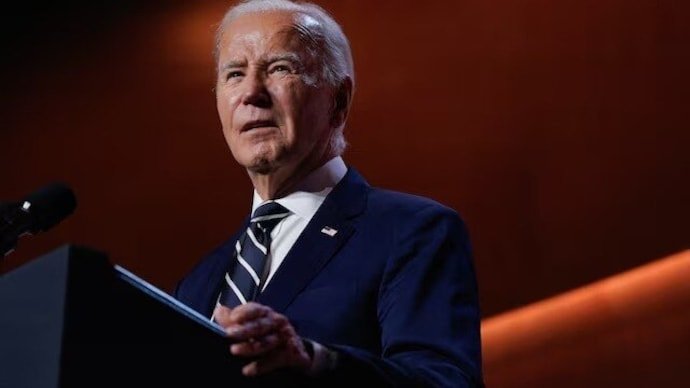
Former US President Joe Biden has launched a significant legal challenge against the US Department of Justice, seeking to stop the public release of private interview recordings and transcripts connected to conversations he had with his biographer nearly a decade ago. The lawsuit, filed in federal court in Washington DC, arrives at a politically sensitive moment as the Justice Department prepares to hand over the materials to the House Judiciary Committee and the conservative Heritage Foundation.
The dispute centers on audio recordings captured during interviews conducted in 2016 and 2017 while Biden was working on his memoir,
Now, the legal fight is no longer just about documents. It has evolved into a broader constitutional and political showdown involving executive privacy, congressional power, Freedom of Information Act limitations, and the use of federal investigations in modern partisan warfare.
Why Joe Biden Is Suing the Justice Department
Biden’s lawsuit argues that the Justice Department’s planned release of the interview materials violates legal protections surrounding sensitive investigative records and private communications. According to court filings, Biden claims the House Judiciary Committee’s request for the records is merely a “pretext” designed to bypass existing federal disclosure restrictions.
The former president is asking the court to permanently block the release of the recordings and transcripts, arguing that disclosure would set a dangerous precedent for future presidents, public officials, authors, and investigative subjects.
The timing is especially important. The Justice Department is reportedly scheduled to transfer the materials on June 15 following requests from congressional Republicans and the Heritage Foundation, a conservative policy organization that has aggressively pursued transparency-related lawsuits involving the Biden administration.
The lawsuit reflects growing concerns among former White House officials that investigative materials once considered protected could increasingly become tools for political opposition research.
The Robert Hur Investigation and Why the Audio Matters
The Controversy traces back to Special Counsel Robert Hur’s investigation into Biden’s handling of classified documents discovered at his Delaware home and former office. The investigation became one of the most politically explosive inquiries of Biden’s presidency.
Although Hur declined to recommend criminal charges, his final report generated intense controversy because it described Biden as an elderly man with a “poor memory,” language that quickly became political ammunition during the 2024 presidential campaign cycle.
Republicans argued that the audio recordings could provide insight into Biden’s mental sharpness and memory during questioning. Democrats countered that selective release of investigative audio could distort context and weaponize private testimony.
Unlike written transcripts, audio recordings often carry emotional nuance, pauses, tone, and conversational dynamics that can dramatically shape public perception. That is one reason the fight over the tapes has become far more contentious than a typical records dispute.
How the Heritage Foundation Became Involved
The Heritage Foundation played a central role in escalating the dispute. The organization initially requested access to the recordings through legal channels tied to public records laws and congressional oversight efforts.
For years, the Justice Department resisted releasing the materials, reportedly arguing that they fell under exemptions within the Freedom of Information Act. Those exemptions commonly protect law enforcement records, investigative integrity, and personal privacy.
However, Biden’s lawsuit claims the department’s position shifted after Donald Trump returned to office, creating what Biden’s legal team views as politically motivated inconsistency.
The case highlights how think tanks and advocacy organizations have become increasingly influential players in modern American legal battles. Rather than merely shaping public policy through reports and lobbying, many organizations now actively use litigation and records requests to influence national political narratives.
The Bigger Constitutional Question: Privacy vs Transparency
At the center of the legal battle lies a larger constitutional issue: how far transparency laws should extend when they intersect with presidential privacy and sensitive investigative materials.
Supporters of releasing the recordings argue that public accountability demands greater transparency, especially when investigations involve current or former presidents. They contend that voters deserve direct access to evidence surrounding high-profile federal inquiries.
Critics, however, warn that releasing private interview recordings could discourage cooperation in future investigations and erode legal protections traditionally afforded to witnesses and public officials.
The dispute also raises important questions about executive privilege, even though Biden’s legal team has not framed the lawsuit solely around that doctrine.
Historically, American presidents from both parties have fiercely guarded private communications. From Richard Nixon’s tapes to Bill Clinton’s grand jury testimony and Donald Trump’s classified documents investigations, disputes over presidential records have repeatedly shaped the balance between accountability and privacy.
How Presidential Records Laws Have Changed Over Time
The Biden lawsuit arrives during an era of unprecedented scrutiny over presidential documents and archival practices.
After the Watergate scandal, Congress passed the Presidential Records Act in 1978, fundamentally changing ownership of presidential materials. Before that law, presidents often treated many records as personal property.
Today, presidential records are generally considered public property managed by the National Archives and Records Administration. However, the law still leaves gray areas regarding personal notes, memoir research, private conversations, and investigative materials.
Biden’s interviews with his biographer occupy a legally complicated space because they blend personal storytelling, memoir preparation, and subjects later examined during a criminal investigation.
| Key Issue | Biden’s Position | Opponents’ Position |
|---|---|---|
| Audio Release | Violates privacy and investigative protections | Necessary for public transparency |
| Congressional Request | Politically motivated and legally invalid | Legitimate oversight authority |
| FOIA Exemptions | Should continue protecting the records | Public interest outweighs exemptions |
| Political Impact | Could weaponize investigations | Could expose important information |
Why the Case Matters Beyond Joe Biden
Although the lawsuit directly concerns Biden, its long-term implications could affect every future president, vice president, cabinet official, and senior government figure.
If courts permit the release of sensitive interview recordings tied to investigations, future administrations may become far more cautious about cooperating with federal inquiries or speaking candidly with biographers, historians, and journalists.
Legal experts have also noted that the outcome could redefine how Congress accesses investigative materials involving former presidents.
In recent years, Congress has increasingly used subpoenas, oversight hearings, and document demands as tools in broader political battles. A ruling favoring expansive disclosure could strengthen congressional power significantly.
On the other hand, a ruling favoring Biden could reinforce privacy protections but trigger criticism that public officials receive special treatment unavailable to ordinary citizens.
The Political Context Behind the Lawsuit
The legal clash cannot be separated from America’s deeply polarized political climate.
Investigations involving presidents have become recurring features of modern US Politics. Donald Trump faced multiple criminal investigations after leaving office, while Biden encountered scrutiny over classified documents and family-related controversies.
As a result, legal disputes increasingly carry electoral consequences. Even procedural battles over records, subpoenas, and transcripts now shape campaign narratives and media coverage.
For Republicans, the Biden recordings could potentially reinforce longstanding criticisms about the former president’s age and cognitive abilities.
For Democrats, the release effort represents another example of institutions being leveraged for political spectacle rather than legitimate oversight.
This broader environment explains why the lawsuit has attracted attention far beyond legal circles.
The Media and Public Perception Challenge
One overlooked aspect of the controversy involves how audio recordings influence public opinion differently from written documents.
Psychological research consistently shows that voters react more emotionally to spoken communication than text alone. Tone of voice, hesitation, emotional expression, and conversational flow can dramatically alter perceptions.
That dynamic became especially important after Robert Hur’s report raised questions about Biden’s memory. Even if the transcripts contain no major revelations, audio snippets could quickly dominate Social Media, political advertisements, and cable news coverage.
Modern political communication increasingly rewards short, emotionally charged clips rather than detailed legal analysis. That reality likely contributes to Biden’s determination to block the recordings’ release.
Comparison With Previous Presidential Legal Battles
The Biden case shares similarities with several historic presidential disputes but also differs in important ways.
Richard Nixon’s Watergate tapes involved direct evidence connected to criminal conduct and abuse of power. Bill Clinton’s controversies centered around sworn testimony and impeachment proceedings. Donald Trump’s document-related cases focused on classified material retention after leaving office.
Biden’s situation is more unusual because the recordings originated from memoir interviews rather than official government proceedings.
This distinction could become critical in court because judges may need to decide whether personal biographical interviews deserve stronger privacy protections than standard investigative interviews.
The case may ultimately create new legal standards for how memoir-related materials are treated when they later become relevant to federal investigations.
What Happens Next in the Court Battle
The immediate focus now shifts to federal court proceedings in Washington DC.
Biden’s legal team will likely seek emergency intervention before the scheduled June 15 release date. The Justice Department and congressional lawyers are expected to argue that the requests fall within lawful oversight authority.
The court could issue a temporary restraining order, delay the release while litigation continues, or permit disclosure under specific limitations.
Legal observers expect the case to move quickly because of the political sensitivity and approaching disclosure deadline.
Depending on the ruling, the dispute could eventually reach higher appellate courts and potentially even the US Supreme Court if broader constitutional questions emerge.
The Real-World Impact on Government Transparency
Beyond politics, the case could shape how Americans access government-related information for years to come.
Transparency advocates worry that excessive secrecy weakens democratic accountability. Yet privacy advocates warn that aggressive disclosure standards may discourage honest communication and undermine investigative fairness.
The Biden lawsuit illustrates how difficult that balance has become in the digital era, where leaked recordings and viral clips can influence public opinion within hours.
Government officials increasingly operate under the assumption that nearly every private conversation could eventually become public. That reality may fundamentally change how leaders communicate, document decisions, and interact with investigators.
Conclusion: A High-Stakes Legal Fight With Lasting Political Consequences
Joe Biden’s lawsuit against the Justice Department is about far more than a set of interview recordings. It represents a defining clash between transparency, privacy, congressional oversight, and modern political warfare.
The outcome could establish important new precedents governing presidential records, investigative confidentiality, and the legal boundaries of congressional power.
At the same time, the dispute reflects a broader transformation in American politics, where legal proceedings increasingly function as extensions of political campaigns and media battles.
Whether the courts ultimately side with Biden or permit the release of the recordings, the decision is likely to influence future administrations, federal investigations, and public expectations surrounding Government Transparency.
In an era where every document, recording, and transcript can instantly become a national political flashpoint, this case may prove to be one of the most consequential presidential records disputes in years.
For breaking news and live news updates, like us on Facebook or follow us on Twitter and Instagram. Read more on Latest World on thefoxdaily.com.






COMMENTS 0