The first half of the 2020s has challenged governments across the world in ways few policymakers could have imagined. The Covid-19 pandemic brought economies to a standstill, wars disrupted trade routes and supply chains, inflation surged across major economies, and an unprecedented Energy Crisis exposed vulnerabilities in global dependence on imported fuel.
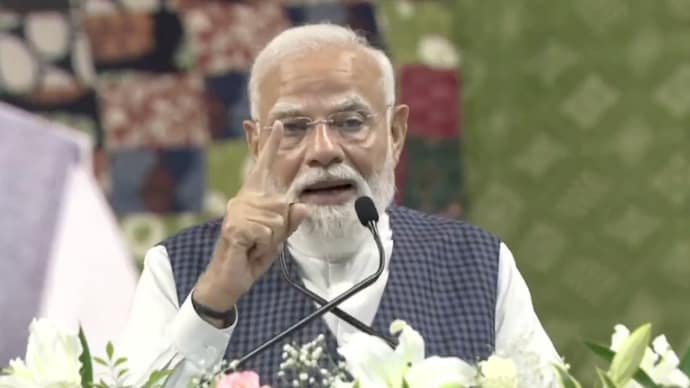
Speaking on World Environment Day in Surat, Prime Minister Narendra Modi described the current era as a “decade of disasters,” a phrase that captures the scale of disruptions experienced globally since 2020. Yet his speech was not merely a reflection on crises. It was also a broader argument that India has managed to navigate these shocks through collective effort, infrastructure investment, energy diversification, and a growing emphasis on self-reliance.
As nations continue to grapple with economic uncertainty and geopolitical instability, India’s experience offers insights into how large developing economies can build resilience while pursuing growth, sustainability, and strategic independence.
Understanding the “Decade of Disasters”
The phrase “decade of disasters” reflects a reality that extends far beyond any single country. Since 2020, the world has witnessed a series of interconnected crises that have reshaped economic priorities and government policies.
The Covid-19 pandemic caused one of the deepest global economic contractions in modern history. Lockdowns disrupted production, Healthcare systems came under immense pressure, and international travel nearly stopped.
Even as countries emerged from the pandemic, geopolitical tensions and conflicts in various regions triggered new challenges. Global supply chains became vulnerable, food prices rose, shipping costs increased, and energy markets experienced significant volatility.
The result has been a decade marked by uncertainty, where governments have been forced to balance economic recovery with long-term strategic planning.
How the Covid-19 Pandemic Changed Economic Thinking
Before 2020, globalization was widely viewed as the most efficient model for economic growth. Businesses optimized supply chains across continents, relying on just-in-time manufacturing and international trade networks.
The pandemic exposed weaknesses in this system.
Medical equipment shortages, semiconductor supply disruptions, pharmaceutical bottlenecks, and shipping delays demonstrated the risks of excessive dependence on global supply chains.
For India, the pandemic accelerated discussions around domestic manufacturing, healthcare capacity, digital infrastructure, and economic resilience.
Government initiatives aimed at boosting local production gained momentum as policymakers recognized the importance of reducing vulnerabilities to external shocks.
The Global Energy Crisis and Why It Matters
One of the most significant consequences of recent geopolitical tensions has been the global energy crisis. Rising fuel prices affected households, industries, transportation systems, and government budgets across both developed and developing nations.
Energy Security became a strategic priority worldwide.
Countries that relied heavily on imported oil, gas, and coal found themselves vulnerable to supply disruptions and price fluctuations. The crisis reinforced the importance of diversifying energy sources and investing in domestic capacity.
India, one of the world’s largest energy consumers, faced the challenge of maintaining economic growth while ensuring affordable energy access for its population.
This balancing act required a combination of traditional energy investments, Renewable Energy expansion, and infrastructure modernization.
India’s Push for Energy Self-Reliance
A central theme of Modi’s address was energy self-reliance. Over the past decade, India has significantly expanded investments in power generation, transmission infrastructure, renewable energy projects, and strategic energy assets.
The goal is not complete isolation from global energy markets but reducing vulnerability to external shocks.
India’s energy strategy increasingly focuses on:
- Expanding solar power generation.
- Increasing wind energy capacity.
- Strengthening nuclear energy infrastructure.
- Modernizing electricity transmission networks.
- Developing green hydrogen capabilities.
- Improving energy efficiency across industries.
These efforts are designed to support long-term economic growth while reducing exposure to global fuel market volatility.
Why Atmanirbhar Bharat Has Become More Relevant
The concept of Atmanirbhar Bharat, or self-reliant India, has often been debated within economic and political circles. Critics sometimes view it as protectionist, while supporters see it as a strategy for strengthening domestic capabilities.
The global disruptions of recent years have given the idea renewed relevance.
Many countries, including the United States, Japan, European nations, and china, have implemented policies aimed at strengthening domestic manufacturing and reducing strategic dependencies.
In this context, India’s self-reliance strategy reflects a broader global trend rather than an isolated policy approach.
The objective is to ensure that critical sectors such as defense, electronics, pharmaceuticals, semiconductors, energy, and logistics possess sufficient domestic capacity to withstand international disruptions.
Surat: A Model of Urban Development and Environmental Management
While much of the attention focused on global crises, Modi’s speech also highlighted Surat’s role as an example of urban innovation and environmental management.
Surat has emerged as one of India’s cleanest and fastest-growing cities. The city has gained recognition for combining industrial growth with improvements in public infrastructure, sanitation, and environmental sustainability.
One notable initiative involves wastewater treatment and reuse.
Instead of treating wastewater solely as a disposal challenge, Surat has developed systems that process and sell treated water to industries. This approach helps conserve freshwater resources while generating revenue for local authorities.
Such models demonstrate how cities can transform environmental challenges into economic opportunities.
The Green Growth Strategy: Economic Development Meets Sustainability
Environmental sustainability has become increasingly important in economic policymaking.
Climate change, extreme weather events, water scarcity, and environmental degradation are now viewed not only as ecological concerns but also as economic risks.
India’s green growth strategy seeks to address both challenges simultaneously.
The approach focuses on creating economic opportunities through sustainable development while minimizing environmental impact.
| Green Growth Area | Objective | Expected Impact |
|---|---|---|
| Renewable Energy | Reduce fossil fuel dependence | Lower emissions and improved energy security |
| Green Hydrogen | Develop clean industrial fuel | Long-term industrial transformation |
| Waste Management | Improve urban sustainability | Cleaner cities and resource efficiency |
| Water Recycling | Conserve freshwater resources | Enhanced water security |
| Electric Mobility | Reduce transportation emissions | Cleaner urban environments |
The integration of economic growth and sustainability is increasingly viewed as essential for long-term development.
Why Gujarat’s Climate Initiatives Matter
Modi highlighted Gujarat‘s early efforts to address climate change, noting that the state established a dedicated climate change department years before environmental concerns became mainstream policy priorities.
Gujarat has often served as a testing ground for large-scale infrastructure projects, renewable energy investments, industrial development, and urban modernization.
The state’s experience illustrates how economic expansion and environmental planning can coexist when supported by long-term policy frameworks.
As climate-related risks continue to grow globally, such examples are likely to become increasingly important for policymakers across India and other developing economies.
The Strategic Importance of Hazira
The Prime Minister’s reference to Hazira reflects another critical dimension of India’s development strategy: maritime infrastructure.
Ports, shipping corridors, and logistics hubs play a vital role in international trade and supply chain resilience.
As global trade patterns evolve, countries with efficient maritime infrastructure gain significant competitive advantages.
Hazira’s emergence as a major industrial and maritime hub strengthens India’s position within global supply chains while supporting manufacturing, exports, and regional development.
This aligns with broader efforts to transform India into a global manufacturing and logistics powerhouse.
The Real Lesson from Recent Global Crises
The most important lesson from the pandemic, energy disruptions, and geopolitical conflicts is that resilience matters as much as growth.
For decades, economic success was often measured primarily through GDP growth rates. Today, governments are increasingly focused on resilience indicators such as healthcare capacity, energy security, food sufficiency, infrastructure strength, technological capabilities, and supply chain reliability.
Countries that can absorb shocks and recover quickly are better positioned to sustain long-term prosperity.
This shift in thinking is influencing policy decisions across the world and shaping investment priorities for the coming decade.
What It Means for India’s Future
India enters the second half of the decade with significant opportunities and challenges.
The country remains one of the world’s fastest-growing major economies, benefits from favorable demographics, and is expanding its influence in global trade, technology, and Diplomacy.
At the same time, India must continue addressing challenges related to infrastructure, energy demand, urbanization, environmental sustainability, and employment generation.
The success of initiatives focused on self-reliance, green growth, manufacturing expansion, and technological innovation will play a crucial role in determining India’s trajectory over the next decade.
Conclusion
Prime Minister Narendra Modi’s remarks in Surat reflect a broader global reality: the world is navigating an era of extraordinary disruption. The Covid-19 pandemic, geopolitical conflicts, and the energy crisis have exposed vulnerabilities that many nations previously overlooked.
India’s response has increasingly focused on resilience, self-reliance, energy security, environmental sustainability, and infrastructure development. From renewable energy investments and green growth initiatives to maritime infrastructure and urban innovation, the country is attempting to transform global challenges into opportunities for long-term development.
The decade may indeed be remembered as a period of crises. However, it may also be remembered as the decade when nations redefined how they measure strength not merely through economic output, but through their ability to adapt, endure, and emerge stronger from uncertainty.
For breaking news and live news updates, like us on Facebook or follow us on Twitter and Instagram. Read more on Latest India on thefoxdaily.com.






COMMENTS 0