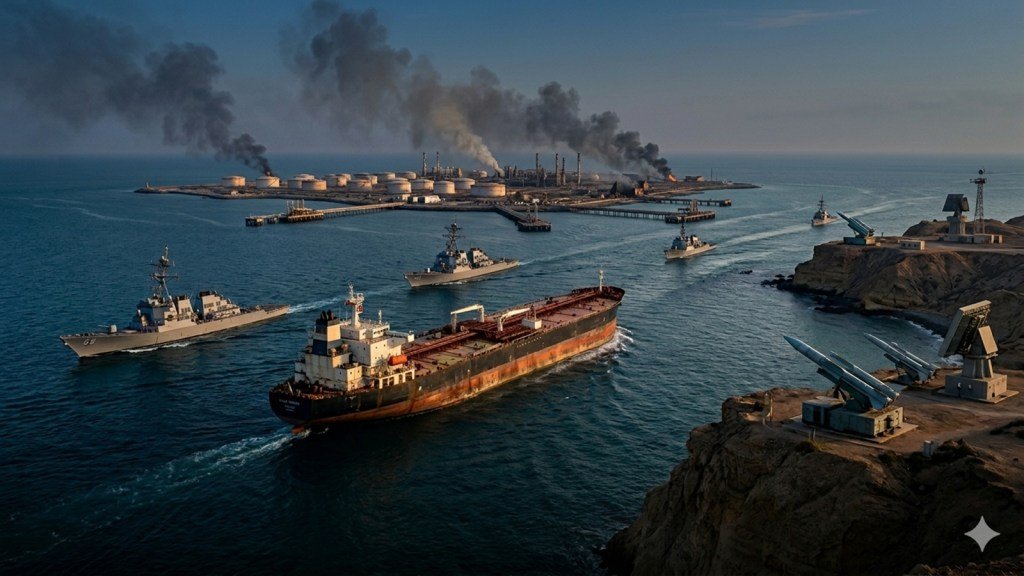
The ongoing conflict involving Iran, the United States, and regional allies has transformed the Strait of Hormuz from a strategic chokepoint into one of the world’s most closely watched geopolitical flashpoints. With shipping disruptions threatening global energy supplies, Gulf Arab nations are increasingly seeking China’s diplomatic and economic leverage to encourage de-escalation and restore maritime trade.
This shift represents more than a short-term diplomatic move. It reflects changing global power dynamics, where economic influence is becoming as important as military strength in resolving international crises. As China deepens its commercial ties across the Middle East, Gulf states are testing whether Beijing can convert its economic relationship with Iran into meaningful diplomatic influence.
Why the Strait of Hormuz Matters to the World
The Strait of Hormuz is one of the world’s most strategically important maritime passages. Located between Iran and Oman, the narrow waterway connects the Persian Gulf to the Gulf of Oman and the Arabian Sea.
Its importance stems from the enormous volume of energy exports passing through it every day.
- It serves as the primary export route for oil produced by Gulf countries.
- Liquefied natural gas (LNG) shipments from Qatar also rely heavily on the passage.
- Energy supplies destined for Asia, Europe, and other global markets transit through the strait.
- Disruptions immediately affect shipping costs, insurance premiums, and global oil prices.
Because few practical alternatives exist for transporting such large volumes of crude oil, any instability in the region quickly becomes a global economic concern.
How the Iran Conflict Has Disrupted Regional Shipping
Months of military escalation have significantly increased risks for commercial shipping in both the Strait of Hormuz and nearby maritime routes.
Beyond Hormuz, concerns have also extended to the Bab el-Mandeb Strait, which connects the Red Sea to the Gulf of Aden and serves as another critical international shipping corridor.
Shipping companies operating in these waters have faced:
- Higher insurance costs.
- Longer shipping routes.
- Greater security risks.
- Potential delays in cargo deliveries.
- Increased transportation expenses.
These disruptions have affected not only regional exporters but also global supply chains that depend on uninterrupted maritime trade.
Why Gulf Nations Are Looking to China
Although the United States remains a major security partner for several Gulf countries, regional governments increasingly recognize that China possesses a different kind of influence over Iran.
Unlike military leverage, China’s influence is primarily economic.
Several factors explain why Gulf states believe Beijing could play a constructive role:
- China is one of the world’s largest energy importers.
- It maintains extensive trade relations with Gulf economies.
- It is among Iran’s largest commercial partners.
- It has preserved diplomatic relations with multiple sides in the regional conflict.
This unique position allows China to communicate with governments that may have limited direct diplomatic engagement with one another.
China’s Growing Influence in the Middle East
Over the past decade, China has significantly expanded its economic presence across West Asia.
Rather than emphasizing military alliances, Beijing has focused on:
- Trade partnerships.
- Infrastructure investment.
- Energy cooperation.
- Industrial development.
- Long-term commercial agreements.
This approach has enabled China to strengthen relationships simultaneously with Gulf monarchies and Iran two sides that often find themselves on opposing ends of regional disputes.
China’s Economic Relationship with Iran
Iran has become an important trading partner for China despite years of international sanctions and geopolitical tensions.
Economic cooperation has included sectors such as:
- Energy.
- Manufacturing.
- Infrastructure.
- Industrial equipment.
- Technology.
Because energy exports remain vital to Iran’s economy, China’s role as a major buyer provides Beijing with significant economic influence, even if that influence does not automatically translate into political leverage.
Why Oil Markets Are Watching Closely
Global Energy Markets closely monitor developments in the Strait of Hormuz because even limited disruptions can affect worldwide prices.
| Area | Global Importance |
|---|---|
| Strait of Hormuz | Primary route for Gulf oil exports. |
| Bab el-Mandeb Strait | Critical link between the Red Sea and global shipping routes. |
| Persian Gulf | Home to several of the world’s largest oil producers. |
| Red Sea | Major corridor connecting Europe, Asia, and Africa. |
Even temporary interruptions can create uncertainty for financial markets, shipping companies, refiners, and energy consumers worldwide.
China’s Diplomatic Efforts
Chinese diplomats have increased engagement with governments throughout the region.
Diplomatic activity has included:
- High-level discussions with Gulf states.
- Meetings with Iranian officials.
- Communication with regional foreign ministers.
- Calls for dialogue and peaceful resolution.
Beijing has consistently stated that it supports negotiations and political solutions rather than military escalation.
Can China Actually Influence Iran?
This remains one of the most important questions facing policymakers.
Economic dependence does not necessarily guarantee political influence. While China is an important commercial partner for Iran, Tehran ultimately makes security decisions based on its own strategic interests.
Analysts generally note that China’s influence is strongest in areas involving trade and investment, while its ability to shape military or geopolitical decisions is more uncertain.
Changing Global Diplomacy in the Middle East
The current crisis reflects broader changes in international diplomacy.
For decades, the United States served as the dominant external power influencing Gulf security.
Today, however, regional governments increasingly engage with multiple global powers simultaneously, including:
- United States.
- China.
- European partners.
- India.
- Other Asian economies.
This diversification allows countries to pursue economic opportunities while reducing dependence on any single international partner.
Economic Consequences of Prolonged Shipping Disruptions
If instability around the Strait of Hormuz continues, the effects could extend far beyond the Middle East.
Potential consequences include:
- Higher global energy prices.
- Increased inflation.
- Rising transportation costs.
- More expensive imported goods.
- Supply chain disruptions.
- Greater uncertainty in financial markets.
Countries that rely heavily on imported oil would likely experience the greatest economic pressure.
What This Means for Global Energy Security
The crisis underscores why governments worldwide continue investing in energy diversification.
Many nations are expanding:
- Strategic petroleum reserves.
- Renewable energy capacity.
- Alternative shipping routes.
- Liquefied natural gas infrastructure.
- Domestic energy production.
Reducing reliance on a single maritime corridor has become an increasingly important objective for long-term energy security.
Future Outlook
Whether China can successfully encourage de-escalation remains uncertain, but its expanding diplomatic engagement demonstrates its growing role in Middle Eastern affairs.
For Gulf nations, the immediate priority is restoring safe maritime navigation and protecting energy exports that underpin their economies. At the same time, Beijing faces a delicate balancing act maintaining strong economic relationships with both Iran and Gulf Arab states while avoiding direct involvement in the military aspects of the conflict.
Conclusion
The growing willingness of Gulf countries to seek China’s assistance in addressing tensions surrounding the Strait of Hormuz reflects broader shifts in global geopolitics. As economic influence becomes increasingly central to international diplomacy, Beijing’s extensive commercial ties with both Iran and Gulf states position it as a potentially important mediator during periods of regional instability.
However, reopening critical shipping routes and reducing tensions will ultimately depend on political decisions by the parties directly involved in the conflict. While China may be able to facilitate dialogue through its economic relationships, achieving lasting maritime security will require sustained diplomatic engagement from multiple international stakeholders. The outcome will have significant implications not only for the Middle East but also for global energy markets, international trade, and economic stability worldwide.
For breaking news and live news updates, like us on Facebook or follow us on Twitter and Instagram. Read more on Latest World on thefoxdaily.com.





COMMENTS 0