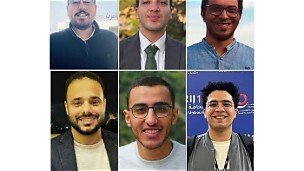
Egyptian authorities have arrested all six journalists working for Matsadaash, an independent fact-checking and investigative media platform, in a sweeping security operation that has intensified concerns over Press Freedom and the treatment of independent journalists in the country.
The arrests took place across several locations in Egypt between September 28 and September 29, with security personnel also confiscating phones, computers and other electronic devices. The Egyptian Initiative for Personal Rights (EIPR), which is providing legal representation to the journalists, said their whereabouts remained unknown and that they had not been allowed to contact their families or lawyers.
Egypt’s Interior Ministry has accused the journalists of being part of a Muslim Brotherhood-linked media operation and of producing fabricated news with foreign funding. Matsadaash co-founder Abdelrahman Mansour, WHO is outside Egypt, rejected the allegations.
“The claims are false,” Mansour said.
The arrests have triggered condemnation from rights organisations and independent media groups, which say detaining an entire newsroom represents a serious escalation against independent Journalism in Egypt.
Why Egypt Arrested the Matsadaash Journalists
Egypt’s Interior Ministry said Matsadaash was an unlicensed online platform managed from abroad by Mansour, whom it described as a fugitive member of the Muslim Brotherhood.
The ministry accused the six detained journalists of belonging to a Brotherhood “media committee” that prepared what it described as false and fabricated reports for publication. It also alleged that the material was produced in exchange for funding from abroad.
The ministry said legal procedures had been completed and that legal action had been taken against those arrested. However, the statement did not specify the charges filed against the journalists.
The accusations have been rejected by Matsadaash. The platform has maintained that it operates as a fact-checking and investigative journalism organisation and has denied being affiliated with the Muslim Brotherhood.
The distinction is significant because Egypt banned the Muslim Brotherhood as a terrorist organisation in 2013, following the military removal of then-President Mohammed Morsi, a senior figure in the organisation.
Since then, Egyptian authorities have frequently accused critics, activists and journalists of links to the Brotherhood or of spreading false information. The latest arrests have therefore raised questions among rights groups about whether the allegations against Matsadaash journalists are being used as part of a broader crackdown on independent reporting.
Entire Matsadaash Editorial Team Detained
The arrests unfolded over roughly 24 hours, according to EIPR and statements from Mansour.
The first arrests involved Abdallah Qadry and Mohamed Ashraf Abu Emaira. Security personnel went to Qadry’s home on the evening of September 28, while Abu Emaira was taken from his home during the early hours of September 29.
Mansour said Abu Emaira’s library and internet router were damaged during the arrest. He also said that his phone and computer were confiscated.
The operation then expanded to other members of the Matsadaash team. Omar Helal was arrested in Port Said, while Islam Barakat was detained in Gharbia Governorate. Mohamed Mahmoud and Mohamed Adel were arrested in Cairo.
EIPR said security personnel confiscated electronic devices during the raids and that some officers did not disclose where the journalists were being taken.
The organisation said its lawyers represent all six journalists but had not been permitted to meet them. Their families were also unable to establish contact with them.
The six arrests effectively removed the entire Matsadaash newsroom from operation at the same time.
Who Are the Six Journalists Arrested?
The detained newsroom members are Mohamed Ashraf Abu Emaira, Abdallah Qadry, Omar Helal, Islam Barakat, Mohamed Mahmoud and Mohamed Adel.
According to Egypt’s Interior Ministry, only one of the six is registered with the country’s Journalists’ Syndicate. The ministry said the syndicate’s leadership was informed about the arrest of that journalist.
EIPR, however, has raised concerns about the circumstances surrounding the detentions, including the lack of information available to families and lawyers about the journalists’ locations.
Mansour also pointed to an earlier episode involving Matsadaash journalists. He said two of the outlet’s editors were arrested in 2023 and subsequently released without charge after State Security investigators found no links between them and the Muslim Brotherhood.
“It’s very difficult for us to understand why this is happening,” Mansour said.
The earlier arrests have become part of the outlet’s response to the latest allegations, particularly because Matsadaash says it has continued operating publicly despite the risks associated with investigative reporting in Egypt.
What Is Matsadaash?
Matsadaash, whose name is commonly translated as “Don’t Believe,” was founded in 2018 as a fact-checking platform.
Over the years, it expanded beyond fact-checking to investigative journalism covering Egypt and other Arab countries. Its reporting has focused on public-interest issues and on checking claims and information circulated by officials, media organisations and other public figures.
The platform has built a substantial audience despite operating in a highly restricted Egyptian media environment. Its website is blocked inside Egypt, while its Facebook page has more than one million followers.
The size of its audience has made Matsadaash one of the more visible independent digital media platforms accessible to Egyptian readers through Social Media.
Its supporters argue that its work has been particularly important in an environment where traditional newspapers and television networks face extensive state oversight.
Authorities, however, have characterised the platform differently, describing it as an unlicensed page operated from abroad and accusing it of publishing fabricated information.
The competing descriptions of Matsadaash lie at the centre of the current dispute. The government presents the arrests as a security and misinformation case, while the platform’s founders and rights groups view the detentions as an attack on independent journalism.
Rights Groups Demand Release of Journalists
The arrests have prompted a coordinated response from international and regional rights organisations, civil society groups and independent media outlets.
More than 80 organisations signed a joint appeal calling for the release of the six journalists and criticising the treatment of the Matsadaash newsroom.
Among the organisations involved were Human Rights Watch and Reporters Without Borders. The groups described Matsadaash as an outlet that had operated openly for years and developed a reputation for fact-checking and reporting on public-interest issues.
The Egyptian Initiative for Personal Rights described the arrest of the entire newsroom as unprecedented in its assessment of Egypt’s recent treatment of journalists.
The group said the journalists had not been allowed to contact their families or legal representatives and called for urgent clarification of where they were being held.
ARTICLE 19 and other organisations have also joined calls for the journalists to be released, describing the case as part of growing pressure on independent investigative journalism in Egypt.
Egypt’s Long-Running Press Freedom Concerns
The Matsadaash arrests have taken place against a broader backdrop of restrictions on independent journalism in Egypt.
Journalists and activists in the country have previously faced detention and prosecution over allegations including spreading false news, spreading rumours and involvement with prohibited organisations.
The Committee to Protect Journalists has continued to list Egypt among countries where significant numbers of journalists are detained. EIPR said the latest arrests brought the number of journalists detained in connection with their work in Egypt to 26.
Different organisations use different methodologies and definitions when counting detained journalists, meaning their totals can vary. Nevertheless, the broader picture has remained one of significant restrictions on independent reporting.
The political context is especially important when examining accusations of Muslim Brotherhood membership. The organisation has been banned in Egypt since 2013, and the government has treated suspected Brotherhood activity as a major national-security issue.
For independent journalists, however, rights organisations argue that allegations involving National Security should not replace transparent legal procedures or prevent detainees from accessing lawyers and family members.
Why the Matsadaash Case Matters for Independent Media
The significance of the case extends beyond the six individuals who were arrested.
When an entire newsroom is detained simultaneously, the impact can reach an outlet’s ability to publish, protect sources, verify information and continue investigations.
For independent digital media organisations operating in restrictive environments, journalists often rely heavily on encrypted communication, computers, phones and cloud-based systems. Confiscation of those devices can therefore disrupt not only individual journalists but also the wider reporting operation.
The case also highlights the difficult position faced by fact-checking organisations. Their work frequently involves challenging claims made by governments, political organisations and other influential actors. That role can make them particularly vulnerable when authorities accuse them of spreading misinformation.
In the Matsadaash case, the Egyptian government says the journalists were part of a Brotherhood media structure. The platform denies the allegation and says its work has included correcting misinformation regardless of where it originated.
Those competing claims remain central to the case, while the lack of publicly specified charges has added to concerns raised by rights groups.
Previous Arrests Had Already Raised Concerns
The latest crackdown is not the first time Matsadaash journalists have faced detention.
Mansour said two editors were arrested in 2023 and later released without charge after State Security investigators determined that they had no links to the Muslim Brotherhood.
EIPR has separately documented the earlier detention of a Matsadaash editor, saying he was arrested during a home raid in August 2023 and held for 48 hours before being released.
The previous cases have become particularly relevant because the latest government allegations again centre on alleged Brotherhood connections.
For Matsadaash’s founders, the recurrence of such allegations has made it difficult to understand the legal basis for the latest arrests.
Egypt’s Government and Journalists Offer Conflicting Accounts
The dispute over Matsadaash reflects two sharply different accounts of what the platform represents.
The Interior Ministry says the platform was unlicensed, managed from abroad and connected to a banned organisation. It says the journalists prepared fabricated reports as part of a Brotherhood media operation.
Matsadaash rejects those accusations and says it is an independent journalistic platform focused on fact-checking and investigative reporting.
Rights organisations have largely supported the platform’s account, focusing on the journalists’ detention conditions, the absence of publicly specified charges and the inability of lawyers and relatives to contact them.
The available information does not establish the allegations against the six journalists as proven facts. The legal proceedings and any evidence presented by authorities will be important in determining how the accusations are ultimately handled.
What Happens Next for the Matsadaash Journalists?
The immediate concern for rights groups is establishing where the six journalists are being held and ensuring they have access to legal representation and their families.
EIPR has called on Egypt’s Public Prosecution to investigate the circumstances of the arrests and establish the journalists’ locations.
International and regional organisations are also continuing to demand their release, while Egypt’s Interior Ministry maintains that legal measures have been taken against them.
The case is likely to remain closely watched because of the unusual scale of the arrests. Rather than involving an individual journalist or editor, the operation has removed an entire independent newsroom at once.
For Matsadaash, a platform founded around verifying information, the irony is particularly stark: the organisation is now at the centre of a major dispute over competing claims about what constitutes false information, independent journalism and legitimate security concerns.
For Egypt’s wider media landscape, the outcome will also be significant. The treatment of the six journalists will provide a clearer indication of how authorities intend to handle independent digital outlets that challenge or scrutinise official narratives.
Until the journalists are brought before the relevant legal authorities and the allegations are formally addressed, the central facts remain that all six members of the Matsadaash newsroom have been detained, the government has accused them of Brotherhood-linked activity and fabricated reporting, and the journalists’ representatives have rejected those claims while rights groups demand transparency and access to legal counsel.
For breaking news and live news updates, like us on Facebook or follow us on Twitter and Instagram. Read more on Latest World on thefoxdaily.com.



COMMENTS 0