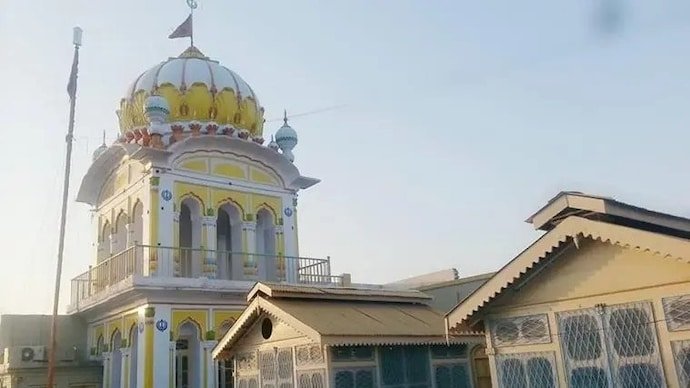
The shocking murder of an elderly Sikh couple inside a gurudwara in Pakistan’s Khyber Pakhtunkhwa province has triggered widespread outrage across South Asia and among Sikh communities worldwide. The victims, 70-year-old Jagannath and his wife Asma Wanti, were serving as caretakers of the gurudwara when unidentified gunmen entered the premises and opened fire before fleeing.
The attack has once again placed the spotlight on the safety of religious minorities in Pakistan, a country that has faced repeated criticism from international rights groups over incidents involving Sikhs, Hindus, Christians, Ahmadis, and Shia Muslims. While authorities have launched an Investigation, the killings have raised difficult questions about Security failures, accountability, and the long-term protection of minority communities.
What Happened Inside the Gurudwara in Mardan?
The attack occurred at a Sikh gurudwara located in Babu Mohalla, Khwaja Ganj Bazaar, in Mardan district of Khyber Pakhtunkhwa. According to initial reports, armed assailants entered the religious complex and targeted the elderly couple who had been entrusted with maintaining and safeguarding the site.
After carrying out the attack, the perpetrators reportedly escaped before security personnel arrived. Investigators later discovered that although CCTV cameras had been installed at the premises, the recording system was not functioning properly, creating an additional challenge for law enforcement authorities.
The incident has drawn attention to another troubling detail: a police guard assigned to the gurudwara was reportedly absent when the attack took place. This has intensified scrutiny over whether existing security measures for minority religious sites are adequate.
Why This Attack Matters Beyond One Crime Scene
While the murder of any civilian is tragic, attacks inside places of worship carry deeper implications. Religious sites are often viewed as sanctuaries where communities gather for prayer, cultural activities, and social support. When violence enters these spaces, it creates fear that extends far beyond the immediate victims.
For Pakistan’s Sikh community, the attack is particularly significant because the population is relatively small and concentrated in specific regions. Any targeted act of violence can have a disproportionate psychological impact, affecting thousands of families who already live as a minority.
The incident also comes at a time when governments around the world are increasingly emphasizing the protection of Religious Freedom as a core Human Rights principle.
The Historical Presence of Sikhs in Pakistan
The Sikh faith has deep historical roots in the region that now forms Pakistan. Several of Sikhism’s most important religious sites are located there, including Nankana Sahib, the birthplace of Guru Nanak, the founder of Sikhism.
Before the Partition of India in 1947, large Sikh populations lived across present-day Pakistan. The Partition triggered one of the largest migrations in human history, leading millions of Sikhs and Hindus to move to India while Muslims migrated to Pakistan.
Today, Pakistan remains home to a smaller but culturally significant Sikh population that continues to maintain religious institutions, businesses, and community networks.
The protection of these communities is viewed as especially important because many of Sikhism’s most sacred heritage sites are located within Pakistan’s borders.
Security Challenges Facing Religious Minorities
The Mardan killings are not occurring in isolation. Religious minorities in Pakistan have long reported concerns about discrimination, targeted violence, and inadequate protection.
Human rights organizations have documented various challenges faced by minority groups, including:
- Attacks on places of worship
- Religious discrimination
- Forced conversions allegations
- Abductions and coercive marriages involving minority women
- Blasphemy-related accusations and prosecutions
- Sectarian violence
Although Pakistan’s constitution guarantees religious freedom, implementation and enforcement often remain subjects of debate among domestic and international observers.
Security Lapses Raise Difficult Questions
One of the most concerning aspects of the incident is the apparent breakdown of security mechanisms that were already in place.
| Security Measure | Status Reported After Attack | Potential Concern |
|---|---|---|
| Police Protection | Assigned guard reportedly absent | Immediate response gap |
| CCTV Cameras | Installed | Recording system reportedly not functioning |
| Investigation Team | Activated after attack | Focus now on identifying attackers |
| Community Protection | Under review | Questions about preventive measures |
Security experts often emphasize that protecting vulnerable religious sites requires multiple layers of Defense. When several safeguards fail simultaneously, attackers can exploit those weaknesses.
Political and Religious Reactions
The killings triggered strong reactions from religious leaders, political figures, and civil society members.
The Akal Takht, one of Sikhism’s highest temporal authorities, condemned the attack and called upon Pakistani authorities to conduct a thorough investigation. Religious leaders emphasized that minority communities should be able to worship without fear.
Political leaders in India also reacted strongly, describing the attack as evidence of ongoing concerns regarding minority protection in Pakistan. Calls were made for accountability, transparency, and swift justice.
At the same time, voices within Pakistan also condemned the killings. Political leaders, activists, and former lawmakers demanded that authorities identify the perpetrators and ensure they face legal consequences.
The Broader Human Rights Dimension
The attack highlights a broader international conversation about religious freedom and Minority Rights.
Globally, governments and human rights institutions increasingly track incidents involving violence against religious minorities. Such incidents often become indicators used to evaluate a country’s human rights Environment.
When attacks occur against vulnerable communities, they can influence:
- International human rights assessments
- Diplomatic relations
- Foreign policy discussions
- Global perceptions of religious freedom
- Community migration decisions
For Pakistan, which has sought to improve its international image and promote religious tourism through initiatives such as the Kartarpur Corridor, incidents like the Mardan killings present significant reputational challenges.
The Economic and Cultural Impact of Minority Insecurity
Beyond the immediate human tragedy, insecurity among minority communities can have long-term economic and cultural consequences.
Religious heritage sites contribute to tourism, local employment, and cultural preservation. Pakistan has invested considerable effort in promoting Sikh pilgrimage tourism, attracting visitors from India, Europe, North America, and other regions.
If minority communities perceive religious sites as unsafe, the impact can extend to:
- Pilgrimage tourism
- Local business activity
- International cultural exchanges
- Community confidence
- Preservation of religious heritage
Security therefore becomes not only a law-and-order issue but also a matter of economic development and cultural Diplomacy.
Comparison With Global Protection Standards
Many countries with diverse religious populations have adopted specialized security protocols for vulnerable places of worship.
These often include:
- Dedicated security personnel
- Real-time surveillance systems
- Emergency response protocols
- Regular security audits
- Community-police coordination programs
The reported absence of a security guard and malfunctioning surveillance equipment in Mardan demonstrates why consistent maintenance and oversight are essential components of religious site protection.
The incident may prompt renewed discussions about whether similar standards should be expanded and strengthened across sensitive locations in Pakistan.
Why the Investigation Will Be Closely Watched
The coming weeks will be critical as investigators attempt to determine who carried out the attack and why.
Several key questions remain unanswered:
- Was the attack specifically motivated by religious identity?
- Were the victims targeted personally or symbolically?
- Did attackers exploit known security weaknesses?
- Were there prior threats against the gurudwara?
- Could the attack have been prevented?
The answers will likely shape both public perception and policy responses.
A transparent investigation could help restore confidence among minority communities. Conversely, unresolved questions may deepen concerns about safety and accountability.
A Critical Moment for Minority Protection Policy
The Mardan tragedy may become a turning point in discussions surrounding minority rights and security in Pakistan.
Historically, major incidents often trigger policy reviews, security upgrades, and renewed commitments from governments. Whether this attack leads to lasting reforms will depend on the actions taken in its aftermath.
Experts argue that protecting minority communities requires more than reactive policing. It also demands long-term strategies involving education, community engagement, legal safeguards, and institutional accountability.
In an increasingly interconnected world, governments are judged not only by how they respond to crises but also by how effectively they prevent them.
Conclusion: Justice, Accountability, and the Road Ahead
The killing of Jagannath and Asma Wanti inside a gurudwara in Mardan is a deeply disturbing incident that has resonated far beyond Pakistan’s borders. It highlights enduring concerns about minority security, protection of religious institutions, and the challenges of maintaining communal harmony in a diverse society.
As investigators work to identify the perpetrators, the case has become more than a criminal inquiry. It is now a test of accountability, Governance, and commitment to religious freedom.
The outcome of the investigation, the speed of justice, and the measures adopted to strengthen security at minority religious sites will determine whether this tragedy becomes another unresolved chapter or a catalyst for meaningful change. For Pakistan’s Sikh community and other minority groups, that distinction may prove crucial for the future.
For breaking news and live news updates, like us on Facebook or follow us on Twitter and Instagram. Read more on Latest World on thefoxdaily.com.






COMMENTS 0