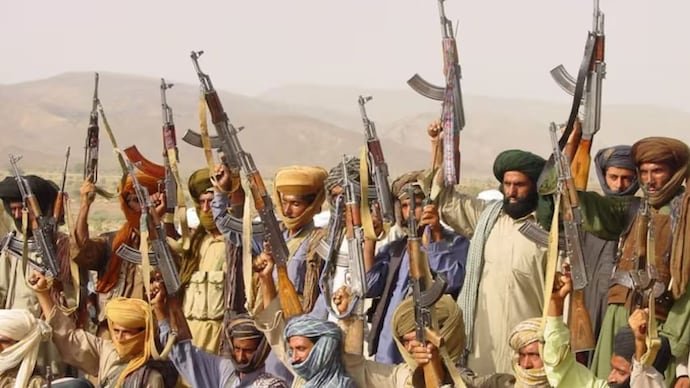
Pakistan’s Balochistan province is again at the centre of a debate over who holds real power across its vast and troubled territory after an armed attack targeted Home Minister Mir Ziaullah Langove on August 14.
Langove was returning from an Independence Day event in Kalat when his convoy came under fire in Mastung district. The minister escaped unharmed, while at least six people, including three police personnel, were injured.
The attack itself is the latest episode in a much larger Security crisis. Balochistan has faced a persistent separatist insurgency, attacks on security forces and Infrastructure, and allegations of enforced disappearances and abuses by state security institutions. At the same time, separatist groups such as the Balochistan Liberation Army (BLA) have been accused of carrying out attacks against security personnel, civilians, Chinese nationals and development projects.
Fresh claims have now added another dimension to the crisis. Pakistani journalist Muzamal Suharwardy has alleged that politicians in some parts of Balochistan have paid “bhatta”, or extortion money, to the BLA. Separately, a report by The Balochistan Post, citing Iran’s semi-official Tasnim News Agency, alleged that Pakistan’s military and intelligence agencies have used armed groups, including former Afghan military personnel, in operations against Baloch pro-independence groups.
Those claims have not been independently established and should not be treated as confirmed facts. But they point to a central question surrounding Balochistan: how much authority does the provincial government actually exercise in areas where militants, tribal networks and security institutions all compete for influence?
Home Minister Langove escapes attack in Mastung
The August 14 attack occurred as Langove’s convoy travelled through Mastung district after an Independence Day programme in Kalat.
The minister was not injured, but six people were reportedly wounded, including three police officers. The incident underscores the risks facing even senior provincial officials in a region where armed groups have repeatedly demonstrated the ability to strike government and security targets.
Mastung has experienced repeated violence in recent years. The district has also been the scene of attacks against government officials and security personnel, making the assault on the home minister more than an isolated security incident.
For Balochistan’s provincial administration, an attack on the person responsible for internal security is particularly damaging symbolically. It raises questions about intelligence gathering, convoy protection and the state’s ability to secure major roads and population centres.
Why the Balochistan crisis is difficult to contain
Balochistan is Pakistan’s largest province by area and has borders with both Afghanistan and Iran. It is also home to substantial mineral and energy resources and contains the strategically important port of Gwadar.
The province has been affected by separatist violence for decades, with the modern insurgency involving several Baloch armed organisations. The BLA is among the most prominent of these groups.
The conflict is driven by a combination of political, economic, ethnic and security grievances. Baloch separatists have long accused Islamabad of exploiting the province’s resources while failing to provide sufficient political autonomy, economic development and control over local affairs.
Pakistan’s authorities, meanwhile, describe armed separatist organisations as militant or terrorist groups and have conducted extensive security operations against them.
The result is a cycle in which attacks by insurgents lead to security operations, while allegations of disappearances and heavy-handed measures deepen resentment among sections of the Baloch population.
Violence in Balochistan remains severe
The scale of the problem is reflected in independent security data.
The Pakistan-based Centre for Research and Security Studies recorded 386 incidents of violence in Balochistan during 2025, resulting in 956 fatalities and 717 injuries. The number of fatalities was about 22% higher than in 2024, when 787 deaths were recorded. :contentReference[oaicite:0]{index=0}
The European Union Agency for Asylum, citing Pakistani security research, also reported that the Pakistan Institute for Peace Studies recorded 225 attacks by Baloch insurgent groups in 2025, causing 338 deaths and 462 injuries across 27 districts. :contentReference[oaicite:1]{index=1}
These figures do not establish that every incident was connected to the BLA, nor do they settle the competing political narratives surrounding the conflict. They do, however, demonstrate that Balochistan remains one of Pakistan’s principal centres of violent instability.
What is the “bhatta” allegation?
One of the most striking claims in the latest debate came from journalist Muzamal Suharwardy, who discussed Balochistan’s security and political situation with journalist and policy analyst Raza Rumi.
Suharwardy referred to former Balochistan minister Abdul Rehman Khetran and alleged that Khetran had paid extortion money to the BLA. He further suggested that the practice was not limited to one individual and questioned how authorities could be unaware if influential political figures were making such payments.
That allegation requires caution. There is no established evidence in the supplied material proving that Khetran paid the BLA, and his removal from the provincial cabinet was not officially attributed to such a payment.
However, the claim has gained attention because Khetran himself publicly alleged in October 2024 that the BLA was demanding payments from coal-mine owners in Balochistan.
According to reporting cited in the supplied material, Khetran said mine owners were being charged Rs 500 per tonne of coal and alleged that approximately Rs 4 million was being collected each day.
That earlier allegation is different from the later claim that politicians themselves paid the BLA. The distinction matters. A politician publicly alleging that militants extort businesses does not, by itself, establish that the politician or other government officials were personally paying militants.
Why extortion claims matter for governance
If the broader allegations were independently confirmed, they would point to a serious problem beyond conventional terrorism.
Extortion is one way armed groups can turn territorial influence into financial power. A militant organisation that can demand payments from businesses, transport operators, mine owners or other economic actors can build an informal system of control even when it does not formally govern an area.
That kind of influence can be difficult for governments to dismantle because economic relationships can continue quietly even when armed confrontations are taking place.
But it is important not to turn allegations into established facts. The available evidence supports reporting that such claims have been made; it does not establish that every minister, legislator or government official in Balochistan pays the BLA.
Questions over alleged “lashkars”
A second and potentially more serious allegation concerns the use of armed groups described as “lashkars”.
The Balochistan Post, citing Iran’s semi-official Tasnim News Agency, reported allegations that Pakistan’s military and intelligence agencies have used armed groups, including former Afghan military personnel, in operations against Baloch pro-independence organisations.
The report described these groups as “death squads” and alleged that they were involved in enforced disappearances and operations against dissidents.
These are serious allegations and have not been independently verified. The distinction is particularly important because claims involving enforced disappearances and covert armed groups carry major human-rights implications.
The supplied reporting also does not establish the identity, command structure or activities of every group described as a “lashkar”. Consequently, it would be misleading to state as fact that the Pakistan Army has formally deployed former Afghan soldiers as death squads.
Why former Afghan personnel would be significant if the claim were confirmed
The alleged involvement of former Afghan military personnel would be notable because many former members of Afghanistan’s security forces fled or became vulnerable after the Taliban takeover of Kabul in 2021.
Former Afghan soldiers and security personnel possess military experience and, in some cases, knowledge of the mountainous and border regions surrounding Afghanistan and Pakistan.
That background could theoretically make such personnel valuable to armed organisations or security structures. But this is a matter of context, not evidence that former Afghan military personnel are currently operating in Balochistan on behalf of Pakistan’s security agencies.
Any definitive claim about recruitment, command or deployment would require independent documentation.
Balochistan’s security crisis is also an economic problem
The conflict has consequences beyond casualties and attacks.
Balochistan contains major natural resources and is central to Pakistan’s plans for regional trade and infrastructure development. The province is also a key component of the China-Pakistan Economic Corridor (CPEC), with Gwadar serving as one of the project’s most strategically important locations.
Chinese workers and projects have repeatedly become targets of militant violence, creating security concerns for Beijing and Islamabad.
Instability can therefore affect investment, infrastructure construction, transport and the broader economic prospects of the province.
For Pakistan, the challenge is especially complicated because the government’s development ambitions depend on a degree of security that has remained difficult to establish.
The BLA’s role in the conflict
The BLA is a separatist organisation seeking independence for Balochistan. It has carried out attacks against Pakistani security forces and has also targeted infrastructure and Chinese interests.
The United States designated the BLA as a Foreign Terrorist Organization in 2019, a designation that reflects Washington’s assessment of the group and its activities.
The organisation has demonstrated the ability to conduct coordinated attacks rather than relying only on isolated assaults. This has made it a major security concern for Pakistan.
At the same time, understanding the Baloch insurgency only through the lens of militant attacks leaves out the political grievances that have helped sustain separatist sentiment.
The security problem and the political problem are closely connected. Military operations can target armed groups, but they cannot by themselves resolve questions about political representation, resource distribution, local autonomy or allegations of abuses.
Who controls Balochistan?
This is perhaps the most important question raised by the latest controversy.
Suharwardy has argued that authority in Balochistan is fragmented, with different institutions exercising influence in different areas. He questioned how much autonomy elected representatives have when security and political decisions involve provincial authorities, Islamabad and the military establishment.
That argument should be viewed as political analysis rather than a measurable fact about every district in the province.
Still, the attack on a provincial home minister illustrates the difficulty of maintaining state authority in an area where armed groups have demonstrated the ability to operate despite security deployments.
For a government, control is not simply the ability to deploy soldiers after an attack. It also involves preventing attacks, protecting officials and civilians, maintaining functioning institutions and ensuring that businesses can operate without coercion.
Why the conflict cannot be reduced to terrorism alone
Pakistan’s security establishment has focused heavily on militant violence and counterterrorism. That approach is understandable given the attacks carried out by separatist organisations.
But Balochistan’s problems extend beyond the immediate question of armed attacks.
There are longstanding disputes over natural resources, development, political representation and the relationship between the provincial government and federal institutions. Human-rights organisations and Baloch activists have also repeatedly raised concerns over enforced disappearances and missing persons.
These issues create a difficult political environment in which security operations may suppress individual militant networks without eliminating the grievances that sustain support for separatism.
What the latest attack means for Pakistan
The attack on Langove’s convoy carries significance because the target was not an ordinary government employee. He is the provincial official responsible for the home and security portfolio.
If militants can successfully attack a senior security minister’s convoy, it can undermine public confidence in the government’s ability to protect its own representatives.
It can also have a psychological effect on other officials, local politicians and communities, particularly in districts that have experienced repeated attacks.
At the same time, one successful attack does not by itself demonstrate that the Pakistani state has lost control of Balochistan. The province is enormous, security forces remain deployed and government institutions continue to function.
The more accurate conclusion is that state authority is being contested in parts of the province and that the persistence of violence demonstrates how difficult it has been to establish lasting security.
The bigger question is what happens next
The immediate priority following the Mastung attack will be identifying those responsible and determining how the convoy was targeted.
The longer-term challenge is much harder. Pakistan must contend simultaneously with militant attacks, political grievances, economic underdevelopment, security concerns surrounding CPEC and Gwadar, and allegations of abuses by state institutions.
The allegations about political extortion and alleged armed “lashkars” add another layer to that problem, but they should remain clearly separated from established facts until independently corroborated.
The available security data nevertheless leaves little doubt that Balochistan is facing a serious and persistent crisis. Violence-related fatalities increased from 787 in 2024 to 956 in 2025, according to CRSS data cited by the European Union Agency for Asylum. :contentReference[oaicite:2]{index=2}
For Islamabad, the challenge is therefore not simply to respond to the next attack. It is to restore enough security and political confidence that armed groups cannot continue exploiting gaps between the provincial administration, federal government and security establishment.
For Balochistan’s residents, the consequences are more immediate: insecurity, disrupted economic activity, fear of violence and continuing uncertainty over who can protect them.
The attack on Mir Ziaullah Langove has once again exposed that unresolved contest over authority. Whether Pakistan addresses it primarily through security operations or combines them with a broader political and Governance strategy will shape the province’s trajectory in the years ahead.
For breaking news and live news updates, like us on Facebook or follow us on Twitter and Instagram. Read more on Latest World on thefoxdaily.com.





COMMENTS 0