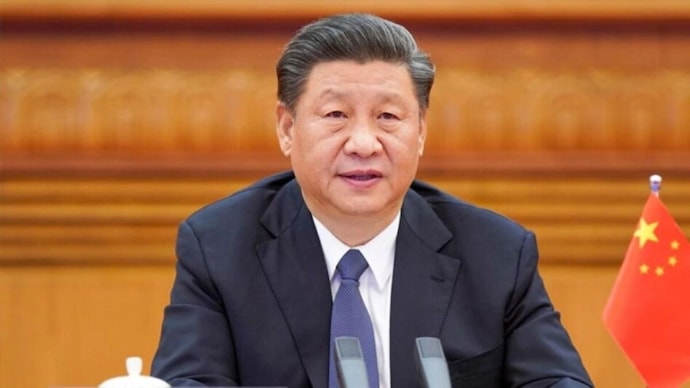
China‘s latest diplomatic outreach to Bangladesh marks another significant moment in South Asia‘s rapidly evolving geopolitical landscape. During Prime Minister Tarique Rahman‘s official visit to Beijing, Chinese President Xi Jinping reaffirmed support for Bangladesh’s sovereignty, territorial integrity and independent development path while both countries signed 13 agreements covering trade, investment, education, connectivity and strategic cooperation.
The visit goes well beyond routine Diplomacy. It signals China’s continued effort to deepen its influence across the Bay of Bengal through infrastructure investment, regional connectivity and long-term economic partnerships. For Bangladesh, stronger ties with the world’s second-largest economy offer new opportunities for investment, exports and infrastructure development. However, the growing relationship also carries broader strategic implications for neighbouring India, regional security and the future balance of power in South Asia.
As global competition between major powers intensifies, Bangladesh increasingly finds itself at the centre of competing strategic interests involving China, India, the United States and regional organisations. Understanding what emerged from the Beijing visit requires looking beyond the headlines and examining the economic, political and security dimensions shaping the relationship.
Key Highlights of the Bangladesh-China Summit
The meetings between Xi Jinping and Tarique Rahman produced one of the most comprehensive bilateral engagement packages in recent years. Rather than focusing on a single sector, both governments expanded cooperation across multiple strategic areas.
| Area | Key Development | Strategic Importance |
|---|---|---|
| Trade | Expanded economic cooperation | Supports Bangladesh’s export-led growth |
| Investment | Chinese investment commitments | Industrial development and employment |
| Infrastructure | Port modernization discussions | Improves regional connectivity |
| River Management | Teesta cooperation | Agriculture and water security |
| Education | Academic and language collaboration | Long-term human capital development |
| Defence | New 2+2 dialogue mechanism | Regular strategic consultations |
Together, these initiatives indicate that both countries are attempting to broaden their relationship from traditional economic cooperation into a more comprehensive strategic partnership.
Why Bangladesh Matters More Than Ever to China
Bangladesh occupies one of the most strategically valuable locations in Asia. Positioned along the Bay of Bengal, it connects South Asia with Southeast Asia while serving as an important gateway to the Indian Ocean.
For China, closer engagement with Bangladesh supports several long-term objectives.
- Expanding Belt and Road Initiative connectivity.
- Increasing trade routes toward the Indian Ocean.
- Strengthening manufacturing partnerships.
- Diversifying regional supply chains.
- Enhancing diplomatic influence across South Asia.
Bangladesh’s economy has also become increasingly attractive for foreign investors. Its large workforce, expanding manufacturing sector and growing consumer market make it an important destination for industrial relocation as global companies diversify production beyond China.
Chinese companies have already invested across power generation, bridges, highways, industrial parks and telecommunications, making Bangladesh one of Beijing’s most significant economic partners in South Asia.
The Economic Dimension Behind the 13 Agreements
Although headlines often focus on Geopolitics, economics remains the strongest driver of China-Bangladesh relations.
Bangladesh has experienced sustained economic transformation over the past two decades, driven by garment exports, infrastructure investment and rising domestic consumption. Continued industrialisation requires substantial foreign capital, advanced technology and improved logistics.
China offers all three.
The newly signed agreements aim to facilitate investment, strengthen educational cooperation and encourage greater business engagement between companies from both countries. Improved infrastructure could also reduce logistics costs while supporting Bangladesh’s ambition to become a regional manufacturing hub.
If implemented effectively, these projects may contribute to long-term economic growth, employment generation and export competitiveness.
The Strategic Importance of Chittagong and Mongla Ports
Among the most closely watched discussions were proposals concerning the modernization of Chittagong and Mongla ports.
Ports have become central to modern geopolitics because they influence trade routes, Energy Security and regional logistics.
Modern port infrastructure allows countries to:
- Handle larger cargo volumes.
- Reduce shipping costs.
- Improve regional trade connectivity.
- Support industrial exports.
- Attract foreign manufacturing investment.
For Bangladesh, upgraded ports could strengthen its role as a logistics hub serving South Asia and Southeast Asia.
For China, improved maritime connectivity aligns with broader regional trade ambitions under its Belt and Road framework.
Why the Teesta River Cooperation Draws Regional Attention
One of the most politically sensitive aspects of the visit involved cooperation on the Teesta River.
The river originates in the Himalayas before flowing through India’s Sikkim and West Bengal into Bangladesh, where it supports agriculture, irrigation and millions of livelihoods.
Water-sharing issues have long influenced India-Bangladesh relations. Any new international cooperation involving the river naturally attracts close attention because water security increasingly shapes regional diplomacy.
China described its participation as support for development and river management while emphasising that bilateral cooperation does not target any third country.
Nevertheless, analysts believe projects involving transboundary rivers often carry broader strategic implications beyond engineering and environmental management.
The New 2+2 Dialogue: More Than Symbolism?
Perhaps one of the most significant long-term announcements was the decision to establish a “2+2 dialogue” involving foreign affairs and defence officials.
This format has become increasingly common among countries seeking deeper strategic consultations.
Rather than representing a military alliance, such dialogues generally provide structured discussions on:
- Regional security.
- Defence cooperation.
- Maritime issues.
- Disaster response.
- Strategic planning.
If implemented regularly, the mechanism could institutionalise higher-level strategic engagement between Dhaka and Beijing.
How India Is Likely to View These Developments
India has traditionally maintained close political, economic and cultural ties with Bangladesh. Stability in Bangladesh remains an important element of New Delhi’s neighbourhood policy.
While India and China continue to compete for influence across parts of South Asia, Bangladesh has generally pursued a balanced foreign policy by engaging multiple partners simultaneously.
New Delhi is likely to monitor several aspects of the visit closely.
- Infrastructure cooperation near strategically important regions.
- Expansion of defence dialogue.
- Port modernization.
- River management initiatives.
- Regional connectivity proposals.
At the same time, Bangladesh has consistently stated that its partnerships are driven by economic development rather than geopolitical alignment.
The China-Myanmar-Bangladesh Economic Corridor Explained
Xi Jinping also reiterated support for a China-Myanmar-Bangladesh Economic Corridor.
The proposal resembles earlier regional connectivity concepts designed to improve transportation, trade and industrial cooperation.
If eventually realised, such a corridor could:
- Reduce transportation costs.
- Improve cross-border trade.
- Strengthen manufacturing supply chains.
- Create new investment opportunities.
- Improve regional infrastructure integration.
However, implementation would depend upon political stability, financing, security conditions and regional cooperation.
Education and Human Capital Receive Greater Attention
Beyond infrastructure and diplomacy, education emerged as another important pillar of cooperation.
Greater emphasis on Mandarin language education, vocational training and academic exchanges reflects a broader trend in international partnerships where countries increasingly invest in people-to-people connections alongside physical infrastructure.
Educational collaboration often produces long-term economic benefits by creating skilled workforces capable of supporting industrial growth and technological development.
Why This Visit Matters for the Indo-Pacific
South Asia has become one of the world’s most strategically competitive regions.
Major powers increasingly view infrastructure, digital connectivity, ports, energy corridors and supply chains as critical components of National Security.
Bangladesh’s growing economic importance means decisions made in Dhaka increasingly attract international attention.
Rather than choosing one geopolitical bloc, Bangladesh appears to be pursuing a pragmatic foreign policy that seeks investment from multiple partners while preserving strategic autonomy.
This balancing approach resembles strategies adopted by several middle powers seeking economic growth without becoming overly dependent on any single country.
Comparison: Bangladesh’s Multi-Vector Foreign Policy
| Partner | Primary Focus | Strategic Value |
|---|---|---|
| China | Infrastructure, investment, manufacturing | Economic development |
| India | Trade, connectivity, border cooperation | Regional stability |
| United States | Trade, governance, Indo-Pacific engagement | Global market access |
| Japan | Infrastructure and development financing | Quality investment |
This diversified engagement reduces dependence on any single partner while expanding economic opportunities.
Expert Insight: Why the Visit Represents a Long-Term Strategy
One important aspect often overlooked in immediate news coverage is that diplomatic visits rarely produce instant transformation. Instead, they establish frameworks that guide cooperation over many years.
The agreements signed in Beijing should therefore be viewed less as isolated announcements and more as building blocks for a broader strategic relationship.
The real measure of success will depend on implementation, investment flows, project completion and continued political commitment from both governments.
Future Outlook
Several developments are worth watching over the coming months.
- Implementation of the 13 signed agreements.
- Progress on port modernization projects.
- Expansion of bilateral investment.
- Launch of the new 2+2 strategic dialogue.
- Movement on river management cooperation.
- Regional responses from India and other Indo-Pacific partners.
Each of these areas will influence not only Bangladesh-China relations but also the wider strategic landscape across South Asia.
Conclusion
The Beijing visit represents an important chapter in the evolving relationship between China and Bangladesh. By expanding cooperation across trade, infrastructure, education, river management, connectivity and strategic dialogue, both countries have signalled their intention to deepen engagement beyond traditional diplomacy.
For Bangladesh, the agreements present opportunities to attract investment, strengthen infrastructure and accelerate economic development. For China, they reinforce its long-term strategy of expanding regional connectivity and economic influence. At the same time, the visit underscores the increasingly complex geopolitical environment in South Asia, where economic cooperation, strategic competition and diplomatic balancing often move together.
Whether these announcements ultimately reshape regional dynamics will depend less on diplomatic symbolism and more on how effectively both governments translate agreements into tangible outcomes. As South Asia continues to gain strategic importance in global politics, the Bangladesh-China partnership is likely to remain a key relationship closely watched by policymakers, investors and regional observers alike.
For breaking news and live news updates, like us on Facebook or follow us on Twitter and Instagram. Read more on Latest World on thefoxdaily.com.






COMMENTS 0