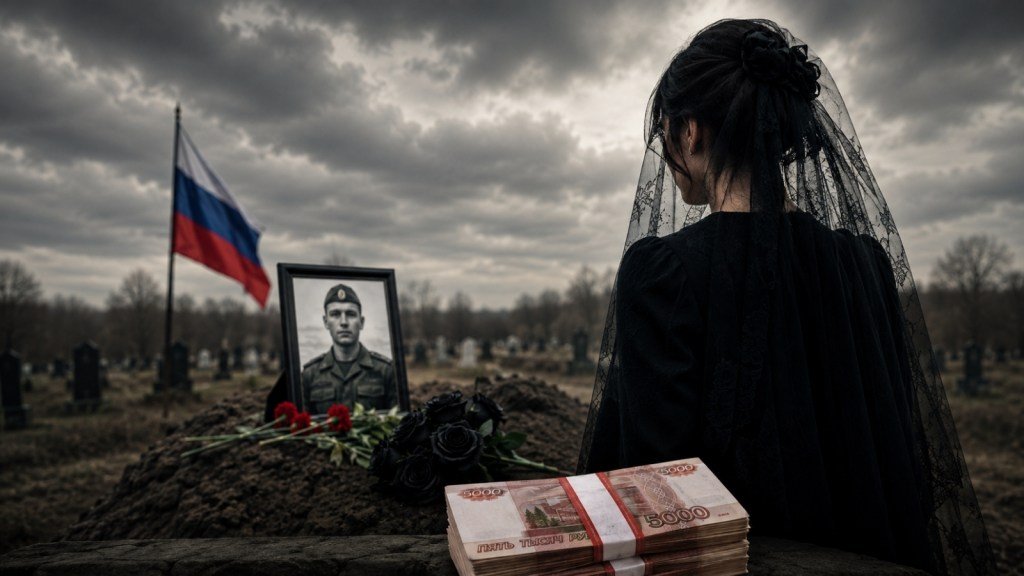
As Russia‘s war in Ukraine continues to produce heavy military casualties, a disturbing trend has emerged alongside the human cost of the conflict. Families of deceased Russian servicemen are increasingly alleging that opportunistic marriages often arranged shortly before deployment or even while soldiers were hospitalized are being used to claim government death compensation. The phenomenon, widely referred to in Russian media as the “black widow” scam, has triggered public outrage, legal disputes and calls for tighter safeguards over survivor benefits.
What Is Russia’s ‘Black Widow’ Scam?
The term “black widow” has been used to describe women accused of entering into rushed marriages with Russian soldiers shortly before they are deployed to fight in Ukraine. Under Russian law, a legal spouse generally becomes the deceased soldier’s next of kin, making them eligible to receive substantial government compensation if the serviceman is killed in combat.
According to CNN’s reporting, relatives of fallen soldiers increasingly claim that these marriages are being arranged primarily to secure financial payouts rather than to establish genuine family relationships. In many cases, parents or adult children say they discovered the marriages only after the soldier’s death, when compensation and inheritance had already been redirected to the surviving spouse.
The Controversy has grown as wartime casualties continue to mount, placing greater attention on how military compensation is distributed and whether existing legal safeguards adequately protect soldiers and their families.
How Russia’s Combat Death Benefit System Works
Russian law provides financial compensation to the legal survivors of military personnel killed while serving.
According to the information cited in the source material, the baseline lump-sum compensation begins at approximately 5 million rubles (around USD 64,000) for a combat death.
Because the legal spouse is generally recognized as the primary next of kin, a marriage even one conducted only days before deployment can significantly alter WHO receives the compensation.
This legal framework, originally intended to provide Financial Security for bereaved families, is now at the center of allegations that some individuals are exploiting the system for personal gain.
Why Families Say the System Is Vulnerable
The complaints emerging from across Russia share a common pattern.
- A soldier reportedly enters into a rapid marriage shortly before deployment.
- The marriage may be unknown to parents, children or other close relatives.
- The serviceman is later killed during military service.
- The surviving spouse becomes legally entitled to compensation and, in some situations, inheritance rights.
- Biological family members find themselves excluded from benefits they believed would be shared.
While every case involves its own circumstances, critics argue that the speed of some marriages and the timing relative to military deployment have raised questions about whether financial incentives are encouraging abuse of the system.
Case Spotlight: A Daughter Learns About Her Father’s Secret Marriage
One of the most widely discussed examples cited by CNN involves Maria, a 37-year-old woman from St. Petersburg.
According to the report, Maria only discovered after her 59-year-old father Yury’s death that he had quietly enlisted in the military and married a woman 22 years younger than himself just two days before leaving for the front.
Under Russian succession rules, the newly married wife became the legal next of kin.
Maria reportedly said she had never heard of the woman before her father’s death.
The situation became even more complicated when she later visited her father’s apartment and found it had already been sold. According to CNN, the new owners maintained that the transaction had been carried out legally, leaving Maria unable to reclaim the property.
The case has become one of the most prominent examples cited by families who argue that legal marriages entered into shortly before deployment can dramatically reshape inheritance and compensation rights.
Hospital Marriage Allegations Raise Further Questions
Another case highlighted by CNN concerns a military hospital nurse who was dismissed after being accused of marrying five wounded servicemen receiving treatment under her care.
According to the report, each of the soldiers later died from their injuries.
The allegations attracted widespread public attention because they suggested that vulnerable hospitalized soldiers might have been targeted while receiving medical care.
The source material does not indicate that criminal findings have been made regarding these allegations, but the case has contributed to broader concerns over oversight.
Podcast Comments Spark Public Outrage
In Tomsk, a separate controversy emerged after real-estate agent Marina Orlova appeared on a podcast discussing the idea of marrying a deployed soldier in order to obtain survivor compensation.
According to CNN, the comments suggested that such a marriage could provide enough money to help finance the purchase of a low-cost apartment.
The remarks generated widespread criticism.
The report states that Orlova and the podcast host were later prosecuted, sentenced to community service and ordered to apologize publicly to soldiers and their families.
The incident intensified public debate by demonstrating that wartime compensation was being openly discussed by some people as a potential financial opportunity rather than solely as support for bereaved families.
A Marriage, a Pending Divorce and a Court Battle
Another case reported by CNN involves soldier Georgy Kostyrko and Angelina Varyukhina.
The pair reportedly married only ten days after meeting online during one of Kostyrko’s periods of military leave.
Accordingly, Kostyrko later sought a divorce after objecting to Social Media posts involving other men. However, he was killed before the divorce proceedings were finalized.
Varyukhina reportedly argued that the online posts had been intended to provoke jealousy and claimed the couple had reconciled.
Kostyrko’s mother subsequently challenged her status as the legal next of kin in court.
The dispute illustrates how unresolved family-law proceedings can become highly significant once military compensation and inheritance are involved.
More Serious Allegations Under Investigation
The most serious allegations referenced in the source concern Primorsky Krai in Russia’s Far East.
According to media reports cited by CNN, investigators have examined allegations involving a warrant officer, a sergeant and a military accountant.
The trio has allegedly been accused of identifying recruits who lacked close family members, arranging rapid marriages for them and then assigning them to particularly dangerous combat missions with the intention of triggering survivor compensation sooner.
No official update on the reported Investigation has been released.
Because the investigation remains unresolved, these allegations should not be treated as established findings.
Why the Legal System Is at the Center of the Dispute
The controversy does not necessarily stem from the compensation itself but from how Russian family law determines who qualifies as the legal beneficiary.
A legally recognized spouse often receives priority in succession matters, meaning that parents, siblings or adult children may receive little or no financial support depending on the circumstances.
Critics argue that while these rules function normally in long-established marriages, they become controversial when marriages occur only days before deployment or shortly before a soldier dies.
The resulting legal disputes frequently place grieving families into lengthy court battles over compensation and inheritance.
Growing Political Pressure for Reform
The issue has reached Russia’s Parliament.
According to CNN, lawmaker Leonid Slutsky has argued that servicemen’s families require stronger protection against individuals seeking to exploit wartime compensation.
He reportedly warned that fraudulent activity surrounding military survivor benefits is becoming increasingly significant.
Although no specific legislative reforms were outlined in the source material, political attention suggests that the issue has moved beyond isolated family disputes into a broader public policy debate.
Why the Issue Resonates Across Russian Society
The controversy has emerged during a period of considerable strain for Russian society.
The country continues to deal with the consequences of the war in Ukraine, including military casualties, economic pressures, fuel-related concerns and cross-Border Security developments.
Against this backdrop, disputes over survivor compensation carry emotional weight because they involve families already coping with loss.
For many relatives, the concern extends beyond financial compensation. They argue that long-standing family relationships are being displaced by marriages entered into shortly before deployment, fundamentally changing who is legally recognized after a soldier’s death.
Understanding the Financial Incentive
The compensation involved is substantial enough to explain why authorities and lawmakers have become increasingly concerned about possible abuse.
| Payment | Approximate Value | Purpose |
|---|---|---|
| Combat death compensation | From 5 million rubles (approximately USD 64,000) | Government survivor benefit for eligible next of kin |
| Amounts discussed in reported scam examples | Approximately 5 million to 8 million rubles (exchange rates vary) | Figures referenced in reported discussions surrounding alleged financial motives |
The exact amount ultimately received may vary depending on legal circumstances and applicable benefits. Exchange-rate conversions also fluctuate over time.
Confirmed Facts, Allegations and Ongoing Investigations
It is important to distinguish between established facts and allegations.
- It is confirmed that Russia provides financial compensation to eligible survivors of military personnel killed in combat.
- It is confirmed that public disputes have arisen regarding who qualifies for those payments.
- Several individual cases have been reported by CNN and other media outlets.
- Some of the most serious accusations including claims of organized schemes targeting soldiers remain under investigation or have not received official public conclusions.
This distinction is essential because not every reported case has resulted in criminal findings or judicial determinations.
What Could Happen Next?
The next phase of the controversy will likely depend on whether Russian authorities introduce additional legal safeguards governing wartime marriages, survivor compensation or inheritance rights.
Lawmakers could consider measures such as enhanced verification procedures for recently registered marriages, revised eligibility rules for compensation or additional protections for parents and children of deceased servicemen. However, no such reforms were confirmed in the source material.
Separately, ongoing court disputes involving individual families may continue to shape public discussion as judges inte
For breaking news and live news updates, like us on Facebook or follow us on Twitter and Instagram. Read more on Latest World on thefoxdaily.com.






COMMENTS 0