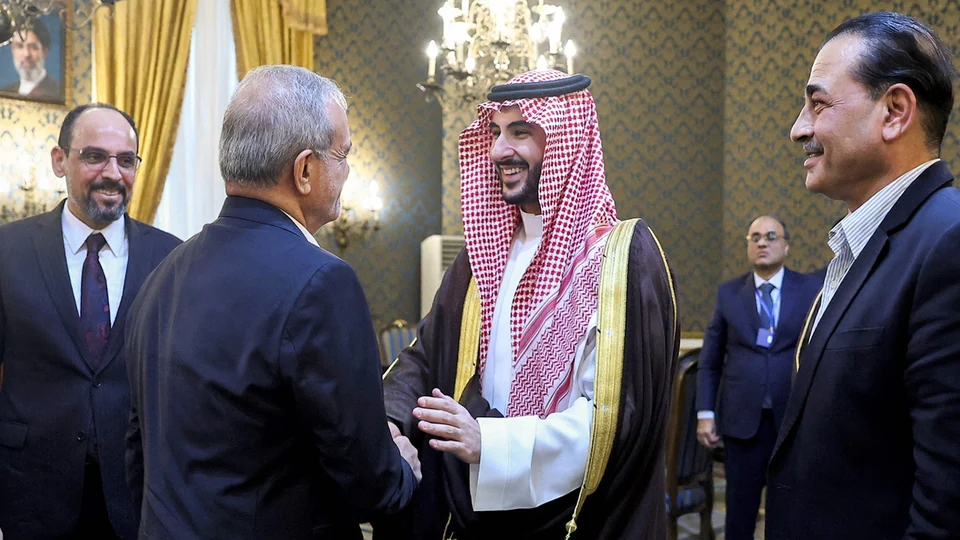
Saudi Arabia has reportedly offered Yemen’s Houthi rebels a $1 billion financial package as part of diplomatic efforts to secure a ceasefire and end attacks on the kingdom’s critical infrastructure, according to Israeli newspaper Israel Hayom. The alleged proposal involves Iran acting as a mediator between Riyadh and the Houthis amid escalating regional tensions and disruptions to energy exports.
The reported initiative comes as Houthi attacks on Saudi targets, including oil facilities and airports, have raised security and economic concerns. At the same time, tensions involving Iran and disruptions to shipping through the Strait of Hormuz have added pressure to regional energy supplies.
According to a report published on Monday, Gulf diplomatic sources said Saudi Defence Minister Prince Khalid bin Salman travelled to Tehran for discussions aimed at ending Houthi attacks on Saudi territory. One source alleged that the minister transported the proposed funds aboard a Hercules military transport aircraft.
However, Saudi Arabia’s Foreign Ministry has not confirmed the reported $1 billion offer. Its statement acknowledged diplomatic engagement with Iran but did not establish that a financial agreement with the Houthis had been reached. The alleged package and its terms therefore remain unverified publicly.
Saudi Arabia Confirms Diplomatic Engagement With Iran
Saudi Arabia’s Foreign Ministry confirmed that Prince Khalid bin Salman visited Tehran alongside representatives of countries associated with the Mecca Joint Defence Alliance. The ministry said the visit was intended to support efforts to reduce tensions, encourage dialogue and pursue diplomatic solutions to regional disputes.
The statement also referred to mediation efforts involving Qatar and Pakistan. It did not mention the alleged $1 billion financial package or confirm that Saudi Arabia had agreed to make a payment to the Houthis in exchange for a ceasefire.
According to Israel Hayom, the discussions involved senior officials from Saudi Arabia, Pakistan and Turkey. The reported participants included Pakistan Army Chief Field Marshal Asim Munir and Turkish intelligence chief Ibrahim Kalin.
Iran was reportedly represented by President Masoud Pezeshkian, Supreme National Security Council secretary Mohsen Rezaei and senior officials from the Islamic Revolutionary Guard Corps (IRGC).
The presence of senior representatives from several countries suggests that the diplomatic discussions extended beyond a bilateral meeting. However, the precise agenda, the commitments made by participants and the status of any proposed agreement have not been independently established in the supplied account.
Israel Hayom reported that Iran had offered to facilitate negotiations between Riyadh and the Houthis as part of broader efforts to contain the conflict in Yemen and reduce attacks on Saudi targets.
Iran’s reported role as a mediator is significant because the regional conflict involves competing security interests and relationships among several Middle Eastern powers. A diplomatic channel involving Tehran could provide a way to communicate with the Houthis, although the existence of such a channel does not necessarily mean the parties have agreed on the terms of a ceasefire.
Why Is Saudi Arabia Reportedly Offering $1 Billion?
The alleged financial package is linked to earlier understandings between Saudi Arabia and the Houthis, according to Israel Hayom. A Saudi official cited by the newspaper said the dispute partly reflects the failure to implement agreements reached around three years ago.
Under the reported understandings, Saudi Arabia was expected to provide financial assistance intended to support a political settlement in Yemen. The proposed assistance reportedly included funding to help pay public-sector salaries in areas controlled by the Houthis and support the reconstruction of civilian infrastructure.
In return, the Houthis were expected to maintain a ceasefire and stop attacks on Saudi Arabia.
The latest proposal, if accurately reported, would therefore involve more than a one-time financial transfer. It would form part of a broader attempt to connect financial assistance with security commitments and progress towards a political settlement.
Public-sector salary payments are an important issue in conflicts where competing authorities exercise control over different parts of a country. Regular salaries can affect the livelihoods of civil servants and other workers, while reconstruction funding can help restore damaged infrastructure and essential services.
However, the reported proposal does not establish how the money would be distributed, which institutions would administer the payments or what safeguards would ensure that the funds reached their intended recipients. Those details would be central to assessing the practical implications of any agreement.
According to the newspaper’s account, the Houthis have cited Saudi Arabia’s alleged failure to fulfil earlier commitments as a justification for renewed attacks. The latest diplomatic initiative is reportedly intended to address that dispute and create conditions for a renewed ceasefire.
Neither the exact terms of the alleged $1 billion offer nor the extent to which the Houthis have accepted or rejected it has been established in the supplied report. It remains unclear whether the discussions have produced a formal agreement or whether negotiations are still at an exploratory stage.
Houthi Attacks on Saudi Oil Facilities and Airports Increase Pressure
Attacks attributed to the Houthis on Saudi airports and oil facilities have intensified concerns about the kingdom’s security and the reliability of its critical infrastructure. Such facilities are important not only to Saudi Arabia’s domestic economy but also to its role in international energy markets.
Oil infrastructure is particularly sensitive because damage to production, processing or export facilities can disrupt the movement of energy supplies. Airports and other transport hubs also support commercial activity, tourism, business travel and the movement of essential goods and personnel.
According to Israel Hayom, the reported attacks have contributed to the closure of Riyadh airport for several days and the postponement of a major investment conference. These disruptions have increased the urgency of efforts to restore security and maintain the flow of energy exports.
The economic consequences of attacks on critical infrastructure can extend beyond immediate repair costs. Disruptions to transport and business events may affect commercial confidence, while uncertainty surrounding energy exports can complicate planning for producers, traders and governments.
For Saudi Arabia, a ceasefire could help reduce the immediate threat to infrastructure and create a more stable environment for economic activity. For the Houthis, any proposed financial arrangement could potentially provide resources for public-sector salaries and reconstruction, provided the terms were agreed and implemented.
Nevertheless, a financial package alone would not guarantee a lasting end to attacks. Its effectiveness would depend on the commitments made by the parties, the mechanisms used to monitor compliance and the broader political conditions in Yemen.
Strait of Hormuz Disruptions Add to Regional Energy Concerns
The reported Saudi-Houthi negotiations are unfolding amid wider regional tensions involving Iran and disruptions to shipping through the Strait of Hormuz, one of the world’s most important routes for oil transportation.
The strait connects the Persian Gulf with the Gulf of Oman and the Arabian Sea. A significant share of internationally traded oil passes through this narrow maritime corridor, making the uninterrupted movement of tankers important to energy producers, importers and global markets.
Disruptions to shipping can delay deliveries, increase transportation risks and place upward pressure on energy costs. The scale of the effect depends on the duration of the disruption, the volume of oil affected and the availability of alternative transport routes.
When maritime insecurity coincides with attacks on energy infrastructure, the combined effect can increase uncertainty across regional oil markets. Even when production remains available, difficulties moving oil safely to international buyers can complicate exports and supply planning.
Saudi Arabia’s reported effort to secure a ceasefire with the Houthis must be understood within this broader security environment. Reducing attacks on Saudi territory could address one source of risk, but it would not by itself resolve the wider tensions affecting shipping and energy infrastructure across the Gulf.
The reported Iranian mediation effort could therefore have implications beyond the immediate dispute between Saudi Arabia and the Houthis. If it produces an effective agreement, it could contribute to a reduction in one area of regional instability. However, the supplied information does not establish that such an outcome has been achieved.
What Role Is Iran Playing in the Proposed Ceasefire?
Iran is reportedly seeking to facilitate negotiations between Saudi Arabia and the Houthis, according to Israel Hayom. Under the reported initiative, Tehran would help bring the parties together to address the dispute over earlier commitments and reduce attacks on Saudi targets.
The proposed mediation comes against the background of regional rivalries and competing security interests. Saudi Arabia and Iran have historically supported opposing sides in several regional conflicts, including Yemen, where the Houthis control significant territory.
Direct or indirect communication between regional rivals can create opportunities to discuss security concerns that might otherwise remain unresolved. Mediation may also help establish channels through which parties can communicate proposed concessions, clarify disputed commitments and explore possible arrangements.
However, mediation does not guarantee agreement. Saudi Arabia would need confidence that any commitments made by the Houthis would be implemented, while the Houthis would need to determine whether the proposed financial assistance and other conditions met their expectations.
The alleged proposal also raises questions about how a ceasefire would be monitored and enforced. A durable arrangement would generally require clarity on the attacks covered by the agreement, the responsibilities of each side and the process for responding to alleged violations.
The supplied report does not provide details of any monitoring mechanism, enforcement provisions or timetable for implementing the proposed financial package. It also does not confirm whether all relevant parties have formally endorsed the reported terms.
Can the Reported $1 Billion Package Secure a Lasting Ceasefire?
The reported offer highlights the potential connection between economic assistance and security arrangements in Yemen. By linking funding for salaries and reconstruction to a halt in attacks, the proposed package would seek to address both economic grievances and immediate security concerns.
For civilians living in areas affected by the conflict, the potential benefits of a lasting ceasefire could include fewer attacks, improved access to essential services and more predictable payment of public-sector salaries. Reconstruction funding could also help support the restoration of infrastructure damaged during years of conflict.
For Saudi Arabia, a sustained reduction in attacks could help protect airports, oil facilities and other critical assets. It could also reduce the security risks associated with operating major infrastructure during a period of regional instability.
Yet the proposed arrangement faces significant uncertainties. The earlier understandings cited in the report were reportedly not fully implemented, and the parties appear to disagree over responsibility for that failure. Any new agreement would need to address those disputes rather than simply repeat earlier commitments.
The scale of the proposed package also makes transparency important. Without publicly confirmed terms, it is difficult to determine whether the reported $1 billion would be paid in a single transfer, distributed over time or linked to specific milestones. The available account does not establish those details.
It is also unclear whether the proposed funding would be conditional on a complete cessation of attacks, a phased reduction in hostilities or a broader political agreement. These distinctions could influence both the implementation of the package and the likelihood of a durable ceasefire.
What Happens Next in Saudi Arabia-Houthi Relations?
The next stage will depend on whether the reported diplomatic discussions lead to a formal proposal accepted by the relevant parties. Saudi Arabia has confirmed that its defence minister visited Tehran as part of diplomatic engagement, but it has not publicly confirmed the alleged $1 billion offer described by Israel Hayom.
Iran’s reported mediation role could help maintain communication between Riyadh and the Houthis, but the outcome will depend on whether the parties can resolve their differences over earlier commitments and agree on enforceable conditions for a ceasefire.
Several questions remain unanswered: whether the financial package has been formally proposed, how the money would be administered, what specific security commitments the Houthis would make and how compliance would be verified. The supplied report does not provide confirmed answers to these questions.
The wider regional situation will also influence the negotiations. Continued threats to oil facilities, airports and shipping routes could increase the pressure to find a diplomatic solution, while further attacks could make it harder to establish trust between the parties.
For now, the reported $1 billion package remains an alleged element of an ongoing diplomatic effort rather than a confirmed agreement. Saudi Arabia has acknowledged engagement with Iran, and the reported discussions indicate an attempt to reduce tensions, but the details and status of the proposed financial arrangement remain unclear.
Whether the initiative can secure a lasting ceasefire will depend on more than the amount of money reportedly offered. The decisive issues will include the implementation of earlier commitments, the terms of any new agreement, the protection of critical infrastructure and the willingness of the parties to sustain a halt in attacks.
For breaking news and live news updates, like us on Facebook or follow us on Twitter and Instagram. Read more on Latest World on thefoxdaily.com.



COMMENTS 0