High-level delegations from Saudi Arabia, Pakistan and Turkey arrived in Tehran on Monday for talks with Iranian officials aimed at preventing renewed fighting involving Iran, Israel and the United States, according to Iran’s Foreign Ministry. The diplomatic effort comes amid heightened military warnings, stalled negotiations and growing concerns about the conflict spreading across the Middle East.
The discussions are also taking place against a backdrop of escalating violence in Yemen, where Houthi rebels and forces aligned with Yemen’s internationally recognised government remain engaged in fighting. Regional officials say the diplomatic contacts are intended to explore ways to reduce tensions and improve regional security.
Iranian Foreign Ministry spokesperson Esmail Baghaei said the meeting’s agenda had not been finalised but would address major security concerns. Saudi Arabia separately said the delegations hoped to identify ways to de-escalate tensions and promote regional stability.
Iran Talks Bring Saudi Arabia, Pakistan and Turkey Together
The visiting officials included Saudi Defence Minister Khalid bin Salman, Pakistan’s army chief Field Marshal Asim Munir and Ibrahim Kalin, head of Turkey’s intelligence service. They were expected to meet Iranian security officials and negotiators as part of efforts to encourage an agreement between Tehran and Washington.
The involvement of the three countries reflects wider regional concern about the consequences of another major confrontation. Saudi Arabia shares a long-standing security rivalry with Iran, Pakistan has maintained diplomatic channels with regional powers, and Turkey has pursued its own regional security and diplomatic interests.
According to two regional officials cited in the supplied report, discussions were also expected to cover the war in Yemen and attacks by Iran-backed Houthi rebels against Saudi Arabia. The officials spoke anonymously because they were not authorised to discuss the talks publicly.
Baghaei said the agenda had not been set, but the meetings would “undoubtedly address the most pressing threats to regional security.” Saudi Arabia’s statement described the objective as finding “ways to de-escalate tensions, enhance regional security and promote its stability.”
Qatari mediators had also travelled to Tehran on Sunday, working in coordination with the United States, according to a regional official. Qatar has previously played a mediation role in regional disputes, while Pakistan has also participated in diplomatic efforts concerning Iran and Washington.
Why Diplomacy Is Under Pressure
The meetings come as Iranian officials express concern about the possibility of a return to full-scale fighting. Israeli and American leaders have issued increasingly forceful warnings, while Iran’s leadership has maintained a defiant public position.
Diplomatic efforts face significant obstacles. According to the supplied report, an agreement reached in June was intended to secure the full reopening of the Strait of Hormuz to shipping, end a US blockade of Iranian ports and open negotiations on a broader settlement that included Iran’s nuclear programme. The arrangement quickly unravelled as both sides resumed attacks.
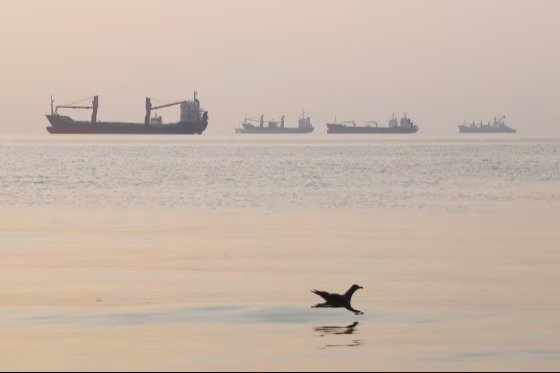
The Strait of Hormuz is a critical maritime passage for global energy supplies. Any disruption to shipping through the waterway can have consequences beyond the immediate region, including risks to energy markets, transport costs and commercial confidence.
The failure of the earlier arrangement has left regional governments trying to prevent further escalation while negotiations remain stalled. The latest meetings provide another channel for diplomatic contact, although the available information does not establish that the delegations have reached a new agreement.
Baghaei said Iran had not closed the door to diplomacy and that messages were being conveyed to the United States through intermediaries. He also accused Washington of continuing to make unilateral demands.
Referring to statements by President Donald Trump and other US officials, Baghaei said the phrase “complete surrender” was unacceptable to Iran. The remarks underline the gap between the two sides’ public positions and the difficulty of finding terms that could support a lasting settlement.
Netanyahu Warns Iran Against Attacks Ahead of Israeli Election
Israeli Prime Minister Benjamin Netanyahu renewed his warnings on Sunday, saying Iran or groups aligned with Tehran could attempt an attack ahead of Israel’s election on Tuesday to disrupt the vote. He cited intelligence in support of his warning.
In a video statement, Netanyahu said Israel’s military was prepared to respond to potential threats. “The (military) is ready both to defend and to strike,” he said, warning that any attack would prompt a forceful response.
His remarks added to concerns that political developments could coincide with a renewed military confrontation. However, Netanyahu’s warning did not establish that an Iranian attack was imminent, and Iranian officials did not confirm plans to launch one.
Israeli media outlet Channel 12 reported on Sunday night that Netanyahu and Israel’s military chief of staff had clashed over an instruction to carry out an operation that military officials reportedly believed could quickly trigger a resumption of hostilities with Iran.
Netanyahu’s office rejected the report, describing it as “fake news.” Defence Minister Israel Katz also denied claims of disagreements between the political leadership and the Israel Defense Forces over Iran.
In a post on X, Katz said reports of a rift were “completely baseless and false.” He added that Israel had no intention of initiating an attack on Iran before the election, while warning that an Iranian attack would draw a forceful Israeli response.
The competing statements highlight the uncertainty surrounding Israel’s intentions and the possibility of further escalation. While Israeli officials have emphasised military readiness, Katz’s public remarks sought to distinguish preparedness to respond from an intention to launch a pre-election attack.
Iran Says It Remains Ready to Defend Its Sovereignty
Asked on Monday whether Iran was planning attacks, Foreign Ministry spokesperson Baghaei did not directly confirm or deny any specific military plans. Instead, he accused Israel of conducting what he described as false-flag operations.
Baghaei said Iran would exercise its right to self-defence to protect its sovereignty, territorial integrity and independence. The statement reflected Tehran’s continued insistence that it would respond to threats, even as Iranian officials said diplomatic channels remained open.
The distinction between public threats and confirmed military decisions is important as regional governments attempt to prevent another round of fighting. Neither the Israeli allegations about possible Iranian attacks nor the Iranian accusations against Israel independently establish that a specific operation is being prepared.
The latest diplomatic meetings therefore face a difficult task: reducing the risk of miscalculation while the parties continue to issue warnings and disagree over the conditions needed to restart negotiations.
Yemen Conflict Adds Another Front to Regional Tensions
Yemen has become an increasingly important part of the wider regional confrontation, with Houthi rebels stepping up attacks against Saudi Arabia, which supports Yemen’s internationally recognised government. The developments have added pressure to Saudi security at a time when Riyadh is also involved in diplomatic efforts concerning Iran.
The supplied report links the latest escalation in Yemen to airstrikes launched in July by forces associated with the internationally recognised government and the Saudi-led coalition against Houthi-held Sanaa International Airport. Those strikes reportedly shattered a ceasefire arrangement dating from 2022 that had largely reduced fighting in Yemen’s civil war.
On Monday, Houthi military spokesperson Yahya Saree said the group had fired ballistic missiles at military gatherings and weapons depots belonging to Saudi-backed government forces in Aden and Lahj provinces.
Saree claimed the attacks destroyed military equipment and caused casualties but did not provide evidence supporting those claims. The Associated Press said it could not independently verify the account.
Meanwhile, residents in Houthi-controlled Sanaa and along Yemen’s Red Sea coast reported a series of explosions. Houthi media said airstrikes had targeted a solar power system and a water well in Sanaa, but the reports were not accompanied by independently verified evidence in the supplied account.
In the port city of Mokha, which the report said had recently been seized by the Houthis, residents reported that rockets struck several buildings, including a hospital. Houthi-run al-Masirah television also reported strikes in Saada province in northern Yemen and Taiz province in the southwest, where fighting between the rebels and Saudi-backed government forces had continued for weeks.
The separate accounts of missile attacks and airstrikes underline the difficulty of establishing a complete picture of fast-moving conflict conditions. Claims by parties involved in the fighting require independent verification, particularly when casualty figures, damage assessments and responsibility for individual strikes remain unclear.
Saudi-Led Coalition Reports Strikes on Missile Infrastructure
A spokesperson for the Saudi-led coalition said an operation in Houthi-controlled territory had destroyed five tunnels used to store ballistic missiles, four ballistic missile launchers and another missile storage facility.
The statement indicated that the coalition was targeting infrastructure it associated with Houthi missile capabilities. However, the supplied report did not provide independent confirmation of the reported destruction or additional details about the operation’s location and consequences.
The continued exchanges between the Houthis and Saudi-backed forces raise the risk that fighting in Yemen could complicate wider efforts to contain the confrontation involving Iran, Israel and the United States. Attacks on Saudi territory also place additional pressure on Riyadh as it participates in diplomacy with Tehran.
What the Tehran Talks Could Mean for Regional Security
The Tehran meetings bring together countries with significant security interests in the Middle East at a moment when military threats, stalled negotiations and fighting in Yemen are contributing to regional uncertainty. Saudi Arabia, Pakistan and Turkey are seeking ways to reduce tensions, while Qatar is also involved in mediation efforts coordinated with Washington.
The immediate challenge is to create conditions in which diplomatic messages can lead to practical steps rather than another exchange of attacks. The earlier agreement concerning the Strait of Hormuz and negotiations on Iran’s nuclear programme illustrates both the potential for mediation and the fragility of arrangements that lack a durable settlement.
For Iran, the public position remains that diplomacy is possible but that Tehran will reject demands it considers equivalent to surrender. Israel, meanwhile, has emphasised its readiness to defend itself and retaliate against attacks, while denying reports that it intends to initiate a strike before its election.
The situation in Yemen adds another layer of complexity because military actions there involve Saudi-backed forces and Houthi rebels aligned with Iran. Continued attacks could undermine confidence between regional governments and make broader de-escalation more difficult.
As the delegations meet, there is no confirmed indication in the supplied report that a comprehensive agreement has been reached. The outcome will depend on whether the participants can narrow their differences, reduce immediate military risks and establish a basis for renewed negotiations between Tehran and Washington.
For now, the diplomatic initiative represents an effort to prevent a wider confrontation rather than evidence that the risk of renewed fighting has passed. Developments in Iran, Israel, the United States and Yemen will remain central to determining whether regional tensions ease or intensify.
For breaking news and live news updates, like us on Facebook or follow us on Twitter and Instagram. Read more on Latest World on thefoxdaily.com.





COMMENTS 0