India has strongly criticised Turkiye over the way negotiations were conducted on a United Nations resolution concerning cooperation with the Organisation of Islamic Cooperation (OIC). New Delhi accused the facilitator of deliberately excluding India and several other UN member states from consultations before the draft was put to a vote at the General Assembly.
India voted against the resolution, titled ‘Cooperation between the United Nations and the Organisation of Islamic Cooperation’, arguing that the negotiation process violated the principles of inclusivity and transparency expected in multilateral diplomacy.
The resolution, introduced by Iraq, was adopted by the UN General Assembly on Monday with 112 votes in favour, six against and 39 abstentions. Armenia, Cyprus, Greece, India, Israel and the United States voted against it. Turkiye had served as the facilitator of the negotiations.
India’s objection was not limited to the resolution’s contents. Its delegation also challenged the working methods used during negotiations, saying that the exclusion of certain countries had undermined the credibility of the process.
Why India Voted Against the UN-OIC Resolution
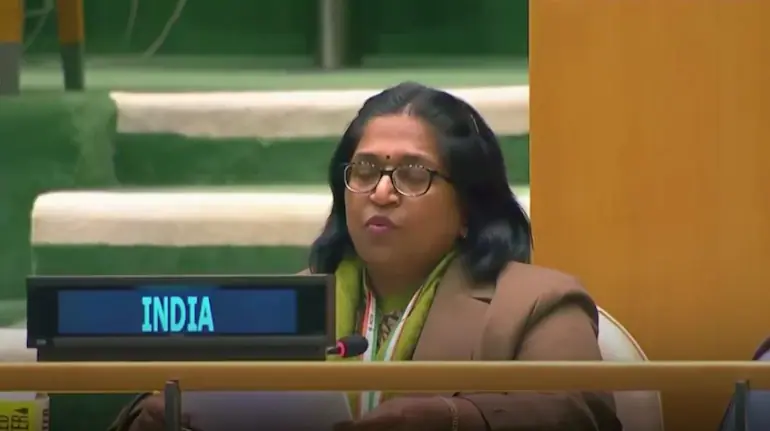
India’s Deputy Permanent Representative to the United Nations, Ambassador Yojna Patel, delivered the country’s explanation of vote and expressed deep dismay over the consultation process.
Patel said the OIC’s Permanent Observer Mission had excluded the Indian delegation and several other countries while circulating successive drafts of the resolution. She also alleged that objections raised by some delegations during later rounds of negotiations were not adequately addressed.
According to India’s explanation, basic procedural practices, including acknowledging inputs from participating delegations, were disregarded. New Delhi argued that the repeated exclusion could not be treated as an accidental oversight.
Patel described the conduct as a “blatant and intentional” exclusion and said India had voted against the resolution both because of its substantive provisions and the manner in which it had been negotiated.
She called on the President of the UN General Assembly to examine the process and ensure that similar practices were not repeated in future negotiations.
India maintained that disagreements between member states are a normal part of multilateral diplomacy. Such differences, it argued, cannot be used to justify excluding particular countries from discussions on matters being considered by the General Assembly.
India Says Exclusion Sets a Dangerous Precedent
Patel warned that allowing facilitators to decide which countries can participate in consultations could create a damaging precedent for the United Nations.
India argued that negotiations at the General Assembly must provide an opportunity for all member states to express their views, including countries that disagree with the proposed language or have concerns about specific provisions.
New Delhi also objected to what it described as an attempt to present the process as a technical update rather than a substantive negotiation. Patel said this approach could mislead excluded delegations and prevent them from meaningfully responding to changes in draft documents.
The dispute therefore raises a broader question about the responsibilities of countries appointed to facilitate UN negotiations. A facilitator is expected to help bridge differences and encourage agreement, not restrict participation based on political disagreements.
India Questions the OIC’s Role in International Conflicts
India also challenged the substance of the resolution, particularly its attempt to expand the OIC’s role in addressing conflicts beyond its existing areas of engagement.
Patel questioned the rationale for extending the organisation’s involvement in this manner, arguing that the OIC is not a regional organisation under Chapter VIII of the UN Charter.
Chapter VIII provides for cooperation between the United Nations and regional arrangements or agencies in matters related to international peace and security. India’s objection reflects its position that the OIC should not be treated as having the authority or standing of a regional organisation under that framework.
New Delhi also rejected references concerning India in documents and statements associated with the OIC’s ninth Ministerial Conference on Women, held in Islamabad in July.
A declaration adopted at the conference included references to Jammu and Kashmir. India described those references as unwarranted and factually incorrect and said the OIC had no standing to comment on the country’s internal affairs.
India Accuses Pakistan of Using the OIC Platform Against New Delhi
India’s criticism also focused on what it described as the politicisation of the OIC by one of its member states. Although Patel did not name Pakistan directly in the relevant remarks, her comments were widely understood as referring to Islamabad’s role in raising issues concerning Jammu and Kashmir through the organisation.
Pakistan is a founding and prominent member of the 57-member OIC. The organisation has repeatedly issued statements and adopted declarations concerning Kashmir, drawing strong objections from New Delhi.
India accused the grouping of allowing its platform to be used for what it called narrow political purposes. It argued that resolutions and declarations should encourage constructive engagement rather than become instruments for advancing one country’s position against another.
New Delhi called on the OIC to follow principles of objectivity, dialogue and mutual respect and avoid adopting language that could deepen political divisions.
India Rejects the Idea That Religious Identity Determines Representation
Another important part of India’s explanation of vote concerned the principle of protecting citizens regardless of their religious identity.
Patel said India, as a secular, democratic and diverse country, did not accept the argument that only people belonging to a particular religious community could protect the interests of followers of that faith.
India’s position was that sovereign governments are responsible for safeguarding the rights and interests of all their citizens, irrespective of religion. The statement was also a response to the OIC’s broader claims about representing the interests of Muslim communities across different countries.
The remarks reflect New Delhi’s long-standing objection to the OIC commenting on matters that India considers internal, particularly issues relating to Jammu and Kashmir and the treatment of religious communities.
Cyprus and Greece Also Criticise Turkiye’s Negotiation Process
India was not the only country to question the transparency of the negotiations. Cyprus and Greece also raised objections, saying that the process under Turkiye’s facilitation had not provided all delegations with an equal opportunity to participate.
Cyprus said it had repeatedly been excluded from communications and negotiations despite requesting inclusion. Its representative argued that participation by all UN member states was a principle established by the UN Charter, not a matter that could be left to the political discretion of a facilitator.
Greece also expressed serious concerns over the handling of the draft. Its delegate said comments and amendments submitted by the European Union in good faith had not been meaningfully addressed. The delegation also criticised the circulation of revised drafts without adequate consultation.
Greece argued that excluding certain delegations from the circulation of draft texts fell short of the transparency and good faith expected during General Assembly negotiations.
European Union Raises Concerns Over Lack of Inclusivity
Ireland, speaking on behalf of the European Union, said the bloc and several of its member states regretted the lack of transparency and inclusivity during the negotiations.
The EU said it had been excluded from relevant communications and had consequently not received a meaningful opportunity to participate in the process. Its concerns added to the objections raised by India, Cyprus and Greece.
The United States also expressed reservations about the resolution’s language. Washington said it hoped future versions would remove excessive and contentious wording and concentrate on practical areas of cooperation that could attract broader agreement.
These interventions showed that concerns about the negotiation process extended beyond India’s bilateral disagreements with the OIC or Pakistan. Several delegations questioned whether the draft had been developed through a sufficiently open and consultative process.
What the UNGA Vote Means for India and the OIC
The adoption of the resolution by 112 votes indicates that it received substantial support among UN member states. However, the objections raised during the negotiations expose disagreements over both the OIC’s engagement with the United Nations and the procedures used to develop the text.
For India, the issue has two dimensions. The first concerns the organisation’s statements on Jammu and Kashmir and what New Delhi views as interference in its internal affairs. The second concerns the broader principle that every UN member state should have an opportunity to participate in negotiations, regardless of its position on the subject.
The criticism from Cyprus, Greece and the European Union gives the procedural dispute a wider diplomatic significance. It suggests that concerns over transparency and participation cannot be dismissed solely as part of India’s disagreement with the OIC.
At the same time, the vote does not mean that the General Assembly rejected cooperation between the United Nations and the OIC. The resolution was adopted despite opposition from six countries. India’s objection focused on the wording and institutional implications of the resolution as well as the process through which it was negotiated.
India Calls for Transparent and Inclusive UN Negotiations
India’s strong response to Turkiye highlights the importance New Delhi places on equal participation in multilateral institutions. Its delegation argued that countries should not be excluded from consultations simply because their views differ from those of the facilitator or the group sponsoring a resolution.
The dispute also reflects continuing tensions between India and the OIC over references to Jammu and Kashmir, alongside wider disagreements about the organisation’s role in international affairs.
Although the resolution has been adopted, the objections raised by India and other delegations could influence future discussions on UN-OIC cooperation. New Delhi’s central demand is that future negotiations follow transparent procedures and allow all member states a meaningful opportunity to contribute.
For breaking news and live news updates, like us on Facebook or follow us on Twitter and Instagram. Read more on Latest World on thefoxdaily.com.





COMMENTS 0