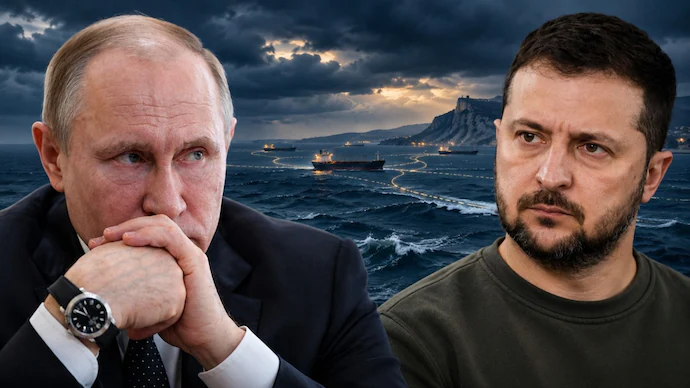
India has confirmed that it is holding diplomatic discussions with both Russia and Ukraine at the highest level as efforts to end the nearly four-year war continue. New Delhi has also proposed specific measures to protect commercial shipping in the Black Sea, maintain grain and energy supplies, and explore a possible non-attack arrangement between the warring sides.
The disclosure comes as US-mediated peace negotiations between Russia and Ukraine resume in Abu Dhabi, United Arab Emirates. While India is not part of the trilateral negotiating table, its engagement with Moscow, Kyiv and other stakeholders suggests that it is pursuing a diplomatic role beyond repeatedly calling for dialogue.
India’s proposals reportedly focus on reducing attacks on critical infrastructure and commercial vessels while protecting the movement of essential commodities. These issues are particularly important for countries that depend on international energy and food supplies, including India and several other developing economies.
Recent conversations between Prime Minister Narendra Modi and Ukrainian President Volodymyr Zelenskyy, along with discussions between External Affairs Minister S Jaishankar and Russian Foreign Minister Sergey Lavrov, have added momentum to New Delhi’s diplomatic efforts.
India Confirms High-Level Talks With Russia and Ukraine
India’s Ministry of External Affairs confirmed on Tuesday that New Delhi remains engaged with both countries and other stakeholders involved in efforts to end the conflict.
During a media briefing, MEA spokesperson Randhir Jaiswal said India was pursuing diplomatic initiatives with Moscow and Kyiv, with discussions taking place at the highest level.
Jaiswal said India had already explained several initiatives being undertaken to support peace efforts and was continuing conversations with both countries and other interested parties.
He also confirmed that New Delhi had conveyed specific ideas to the two sides as part of its efforts to encourage an end to hostilities.
The statement is significant because it provides a clearer picture of India’s diplomatic engagement. Although New Delhi has consistently supported dialogue and diplomacy, the latest remarks indicate that it has also discussed practical measures related to maritime security, food supplies and energy exports.
India’s diplomatic activity has intensified alongside the latest round of international negotiations. On November 9, Modi spoke with Zelenskyy, while Jaishankar held discussions with Lavrov. The conversations came just before US, Russian and Ukrainian officials resumed negotiations in Abu Dhabi.
What Has India Proposed to End the Russia-Ukraine War?
According to Jaiswal, India’s proposals focus on three interconnected areas: protecting commercial shipping in the Black Sea, addressing immediate concerns surrounding grain and energy exports, and exploring a possible non-attack arrangement.
These measures are intended to reduce the economic and humanitarian consequences of the war while creating conditions that could support wider de-escalation.
1. Protecting Commercial Shipping in the Black Sea
The safety of commercial vessels in the Black Sea is a major concern because the region plays an important role in international trade. Attacks on merchant ships can disrupt the movement of essential goods, increase shipping risks and raise transportation costs.
India has therefore discussed measures with both sides to improve the safety of commercial shipping. Protecting vessels could help maintain trade routes and reduce the risks faced by sailors and shipping companies operating in the region.
The issue also has a direct connection to India’s interests. Indian seafarers have been affected by attacks linked to the conflict, while disruptions to maritime trade can create wider economic consequences for countries dependent on imported commodities.
2. Keeping Grain and Energy Supplies Moving
India has also proposed addressing disruptions to grain and energy exports. The movement of food and fuel through regional ports has been affected by the conflict, creating uncertainty for international buyers and import-dependent economies.
Grain supplies are particularly important for countries that rely on imports to meet domestic food requirements. Any interruption to shipments can increase market uncertainty and put pressure on food prices.
Energy exports are equally important because disruptions can affect international supply chains and increase the cost of securing fuel. Maintaining predictable trade flows could help reduce some of the economic consequences of the conflict.
For India, which imports substantial quantities of crude oil, stable maritime trade routes and energy supplies are important considerations in its diplomatic approach.
3. Exploring a Possible Non-Attack Arrangement
The third element of India’s proposed approach involves a possible non-attack arrangement. Such an understanding could focus on reducing attacks against specific categories of targets or commercial infrastructure.
The idea is relevant because strikes affecting energy facilities, critical infrastructure and merchant vessels can deepen economic disruption even when diplomatic negotiations are underway.
However, India has not announced that Russia and Ukraine have accepted such an arrangement. The proposal should therefore be understood as part of New Delhi’s diplomatic discussions rather than an agreed ceasefire mechanism.
What Is India’s Three-Part Truce Plan?
India’s latest diplomatic engagement follows reports that New Delhi had proposed a three-part truce framework several weeks earlier.
On October 7, a report by Hindustan Times, citing people familiar with the discussions, said India had put forward a proposal aimed at reducing attacks on critical infrastructure and protecting commercial activity in the Black Sea.
The reported framework included three main elements:
- Protection of critical infrastructure: Halting attacks on energy facilities and other important infrastructure.
- Maritime security: Stopping strikes against commercial vessels operating in the Black Sea.
- Continued commodity supplies: Maintaining the movement of grain and energy through regional ports.
According to the report, Jaishankar had conveyed the proposal during his September 3 visit to Kyiv, where he met Zelenskyy and Ukrainian Foreign Minister Andrii Sybiha.
On October 2, Sybiha acknowledged that Ukraine had received ceasefire proposals from India, Egypt, Turkey and the United States. He described India’s proposal as the most comprehensive among those received.
Russian President Vladimir Putin also acknowledged Modi’s diplomatic efforts in early October, saying the Indian Prime Minister had excellent ideas aimed at finding mutually acceptable solutions.
These statements suggest that India’s proposals have received attention from both sides. However, acknowledgement of a proposal does not mean that either country has accepted it as a formal ceasefire agreement.
Why the Black Sea Is Important for India’s Peace Initiative
The Black Sea has become a central issue in discussions about the economic consequences of the Russia-Ukraine war. Its maritime routes are important for commercial shipping, including the movement of agricultural commodities and energy-related supplies.
When vessels face the threat of attacks, shipping companies may have to reconsider routes, insurance arrangements and operational costs. These disruptions can affect international commodity markets even in countries geographically distant from the conflict.
India has a direct interest in protecting commercial shipping because its economy depends on international trade for energy and other essential commodities. Disruptions to maritime routes can increase costs and create uncertainty for importers and businesses.
The human cost has also been significant. On November 3, MEA spokesperson Randhir Jaiswal said five Indian seafarers had been killed and two remained missing in Black Sea shipping attacks linked to the war.
Protecting commercial vessels is therefore not simply an economic priority for New Delhi. It is also connected to the safety of Indian nationals working in international shipping.
India’s Energy Interests Give It a Direct Stake in De-escalation
India’s position as a major energy importer provides another reason for its interest in reducing disruptions to maritime trade.
According to commodity intelligence firm Kpler, India imported approximately 1.97 million barrels of Russian crude oil per day in October. This represented around 35% of the country’s total oil imports.
The scale of these purchases highlights the importance of stable energy trade between India and Russia. Any disruption to shipping routes or changes in the international energy environment can have implications for India’s import costs and supply arrangements.
At the same time, New Delhi has to consider the broader consequences of the war for global food and energy markets. Higher transportation costs and disrupted commodity flows can affect developing economies that have limited capacity to absorb sudden price increases.
At the Kautilya Economic Conclave in early October, Jaishankar discussed how disruptions involving fuel, food, fertilisers and finance were disproportionately affecting countries in the Global South.
This wider economic concern helps explain why India’s proposals focus on protecting essential supplies rather than limiting their scope to military de-escalation alone.
Modi Speaks With Zelenskyy as India Steps Up Diplomatic Engagement
Prime Minister Narendra Modi’s November 9 conversation with Zelenskyy was another important development in India’s diplomatic efforts.
The two leaders discussed the Russia-Ukraine conflict, its humanitarian consequences and ongoing attempts to find a peaceful resolution.
Following the conversation, Zelenskyy indicated that Ukraine wanted India to use its diplomatic relationships with other international leaders to help bring the war to an end.
He also identified food security as an area where India could contribute, particularly through efforts to establish food corridors in the Black Sea region.
Zelenskyy’s comments suggest that Kyiv sees New Delhi’s relationships with major international players as a potential diplomatic asset. India’s longstanding engagement with both Russia and Western countries gives it channels of communication that could be useful in discussions about de-escalation.
However, any mediation effort would depend on the willingness of the countries involved to consider proposals and make the compromises required for progress.
Jaishankar Holds Talks With Russian Foreign Minister Sergey Lavrov
Alongside Modi’s conversation with Zelenskyy, External Affairs Minister S Jaishankar held discussions with Russian Foreign Minister Sergey Lavrov.
The talks covered the war and ongoing diplomatic initiatives. They came as India continued its engagement with both Moscow and Kyiv over maritime security and the disruption of essential commodity supplies.
Maintaining communication with Russia is particularly important because New Delhi has longstanding diplomatic, economic and defence ties with Moscow. At the same time, India has expanded its engagement with Ukraine and other international partners.
This diplomatic position allows India to communicate with both sides without formally joining either country’s military or political alignment in the conflict.
It also creates an opportunity for New Delhi to raise issues that directly affect its economic and humanitarian interests, including the safety of shipping, energy security and food supplies.
What Is Happening at the Russia-Ukraine Peace Talks in Abu Dhabi?
While India has been pursuing its own diplomatic engagement, officials from the United States, Russia and Ukraine have resumed trilateral negotiations in Abu Dhabi.
The talks began on November 10 and are scheduled to continue on November 11. They represent the latest US-mediated attempt to bring the two sides closer to an agreement after earlier negotiations broke down in February.
The American delegation includes US President Donald Trump’s envoys Steve Witkoff and Jared Kushner. Discussions are focused on ending the war, reducing hostilities, humanitarian measures and possible post-war security arrangements.
The negotiations are taking place against the backdrop of major disagreements between Moscow and Kyiv. These differences have made a comprehensive settlement difficult despite repeated diplomatic efforts.
Russia Wants Territorial Concessions and Military Restrictions
Russia has continued to seek territorial concessions and restrictions on Ukraine’s future military capabilities as part of a possible settlement.
These demands remain among the most difficult issues in negotiations because they concern Ukraine’s territorial integrity and its ability to defend itself in the future.
Ukraine Seeks Security Guarantees
Ukraine has rejected surrendering territory and wants credible security guarantees that could protect it against another Russian attack.
Kyiv’s position reflects concerns that an agreement without enforceable security arrangements could leave the country vulnerable to renewed military action.
The difference between Russia’s demands and Ukraine’s security requirements remains a major obstacle to a comprehensive peace settlement.
Is India Part of the Abu Dhabi Peace Negotiations?
Despite its increased diplomatic activity, India is not part of the trilateral negotiations involving the United States, Russia and Ukraine in Abu Dhabi.
There is also no confirmation that Moscow or Kyiv has accepted India’s reported three-part proposal as a formal ceasefire arrangement.
It is therefore important to distinguish between India’s diplomatic engagement and its participation in the formal peace negotiations. New Delhi has confirmed discussions with both countries and other interested parties, but it has not been identified as a member of the negotiating delegations.
India’s role currently centres on maintaining communication, conveying proposals and highlighting practical measures that could reduce the economic and humanitarian consequences of the conflict.
Its approach also reflects its position as a country with significant relationships with both Moscow and Kyiv, as well as substantial interests in global energy and food security.
Why India’s Diplomatic Role Matters for the Global South
The Russia-Ukraine war has affected countries far beyond Europe. Disruptions to grain, energy, fertiliser and shipping markets have created economic challenges for import-dependent economies, particularly across the Global South.
Higher commodity prices can increase pressure on household budgets, government spending and businesses. Countries with limited financial resources may find it particularly difficult to manage sudden increases in food and fuel costs.
India’s proposals focus on issues that extend beyond the immediate military confrontation. Protecting commercial shipping and maintaining the movement of essential commodities could help reduce some of these wider consequences.
For New Delhi, this approach also connects its diplomatic priorities with its economic interests. A more stable international trading environment would benefit India while potentially helping other developing economies that rely on predictable food and energy supplies.
What Happens Next in India’s Peace Efforts?
The immediate focus will remain on the Abu Dhabi negotiations and whether the United States, Russia and Ukraine can make progress on the most difficult issues separating them.
India is likely to continue its engagement with both sides, particularly on the proposals involving Black Sea shipping, grain exports, energy supplies and possible non-attack arrangements.
Several questions will determine whether New Delhi’s initiatives can translate into practical outcomes:
- Whether Russia and Ukraine are willing to consider India’s proposals on maritime security and critical infrastructure.
- Whether a practical arrangement can be developed to protect commercial vessels in the Black Sea.
- Whether grain and energy exports can continue with fewer security risks.
- Whether the US-mediated negotiations can narrow disagreements over territory and Ukraine’s future security.
- Whether India can use its diplomatic relationships to encourage further dialogue between the parties.
None of these outcomes is guaranteed. The positions of Russia and Ukraine remain far apart, and any agreement will require decisions by the countries directly involved in the conflict.
India Is Pursuing an Active Diplomatic Role, but a Peace Deal Remains Uncertain
India’s latest statements indicate that its involvement in the Russia-Ukraine peace process extends beyond general appeals for dialogue. New Delhi has confirmed high-level engagement with both countries and has discussed specific proposals involving commercial shipping, grain and energy supplies, and possible non-attack arrangements.
Modi’s conversation with Zelenskyy and Jaishankar’s discussions with Lavrov further demonstrate India’s effort to maintain communication with both sides. The reported three-part truce proposal has also received public acknowledgement from Ukrainian and Russian leadership.
However, India is not sitting at the trilateral negotiating table in Abu Dhabi, and neither side has formally accepted its proposals as a ceasefire agreement. The outcome of the US-mediated talks will depend primarily on whether Moscow and Kyiv can resolve their fundamental disagreements.
For now, New Delhi is seeking to contribute through diplomacy and practical proposals that address the wider consequences of the war. Its ability to maintain relationships with both countries gives it channels for engagement, but whether those efforts can help produce a lasting peace remains to be seen.
For breaking news and live news updates, like us on Facebook or follow us on Twitter and Instagram. Read more on Latest World on thefoxdaily.com.






COMMENTS 0