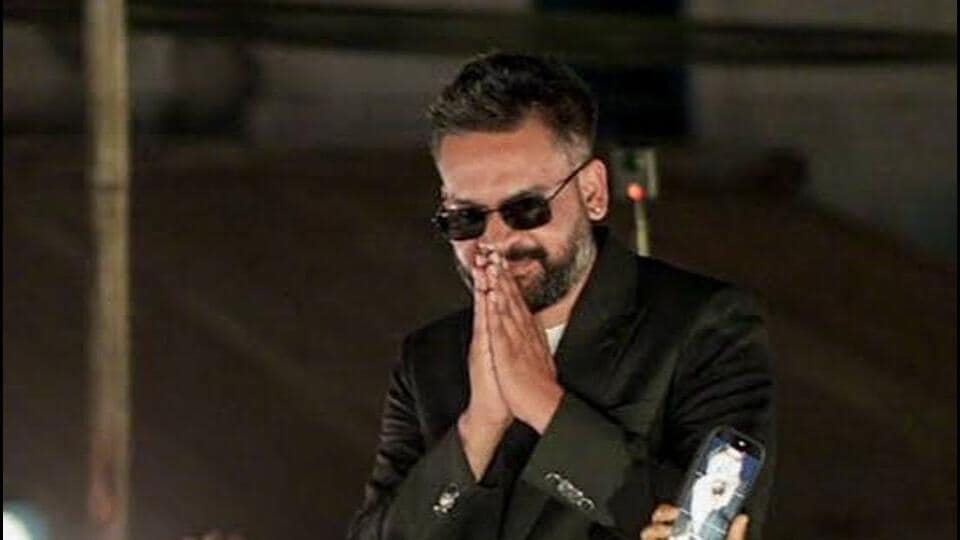
India has proposed a joint vision document covering economic cooperation, investment, trade, transit, energy, digital connectivity, healthcare and education ahead of Nepal Prime Minister Balen Shah’s first visit to New Delhi next week. The proposed framework is intended to establish long-term priorities for bilateral cooperation and give fresh direction to relations between the neighbouring countries.
Shah is expected to arrive in India on November 22 and depart the following day after a visit lasting slightly more than 24 hours. Although both governments have yet to formally announce the trip, preparations are underway, with discussions focused on economic development, connectivity, employment opportunities and outstanding bilateral differences.
The visit is being viewed as an opportunity to reset India-Nepal relations under Shah’s government. Kathmandu has also proposed a $2 billion economic package, including $1 billion in grants, to support development projects and reconstruction in areas affected by the Bhote Koshi flash floods. However, the scale and structure of any financial assistance remain subjects for further discussion.
What Is India’s Proposed Joint Vision Document?
The proposed joint vision document is intended to provide a framework for cooperation between India and Nepal across several sectors. Indian officials have suggested that it could be formally adopted at the conclusion of Shah’s visit, giving both governments a shared set of priorities for their bilateral relationship.
The proposed areas of cooperation include economic relations and trade, investment, transit arrangements, energy, digital connectivity, healthcare, education and people-to-people exchanges. The document is also expected to consolidate existing cooperation and establish targets for development projects supported by India.
Rather than focusing exclusively on immediate financial assistance, the framework is expected to address longer-term economic and infrastructure priorities. Its emphasis on specific sectors and measurable project targets could help both governments organise cooperation around practical outcomes.
Connectivity is likely to be an important part of the discussions. For Nepal, which is landlocked, reliable transit arrangements and improved transport links are essential to trade and access to regional markets. Better air, land and digital connectivity could also support tourism, business activity, education and cross-border services.
Energy cooperation is another significant area. Both countries have an established interest in developing cross-border energy links, while investment and trade arrangements remain central to Nepal’s efforts to expand economic opportunities.
Nepal Seeks $2 Billion Economic Package From India
One of the major issues expected to feature during Shah’s visit is Nepal’s proposal for a $2 billion economic package from India. The request includes $1 billion in grants, with the remaining assistance expected to involve financial support such as soft loans.
Kathmandu has presented the proposal as part of its efforts to accelerate development projects and rebuild areas damaged by the Bhote Koshi flash floods. The proposed assistance could support reconstruction and broader infrastructure requirements, although the final allocation would depend on project-level discussions.
People familiar with the matter have indicated that detailed project reports would be necessary before India could consider financial grants or concessional loans. Such reports would help establish the cost, feasibility, implementation requirements and expected benefits of individual projects.
India would also need to assess Nepal’s capacity to absorb and effectively utilise assistance on this scale. The availability of funds alone does not guarantee successful project implementation. Administrative capacity, project preparation, execution timelines and monitoring arrangements are important factors in determining whether financial support produces the intended results.
Indian officials have also pointed out that New Delhi has not extended such a large economic package in a single instalment to any of its partners. This suggests that Nepal’s proposal is likely to require careful examination rather than an automatic commitment during the visit.
The distinction between the requested package and any assistance that India eventually approves will be important. The $2 billion figure represents Nepal’s proposal, not a confirmed Indian financial commitment.
Balen Shah’s First India Visit as Nepal Prime Minister
Shah’s planned trip will be his first visit to India since becoming Nepal’s prime minister in March. The rapper-turned-politician has largely avoided foreign travel since taking office, making the visit an important early opportunity for direct engagement with India’s leadership.
The proposed itinerary is expected to last a little over 24 hours, with Shah scheduled to arrive on November 22 and leave the next day. The visit has not yet been formally announced by the two governments, but diplomatic preparations have already begun.
India’s new ambassador to Nepal, Sudhakar Dalela, met Shah in Kathmandu on Wednesday. According to the Indian embassy, the meeting covered ways to advance bilateral relations and cooperation. Dalela also briefed the Nepalese prime minister on preparations for the upcoming high-level visit.
The meeting indicates that both sides are working towards establishing an agenda before the leaders’ discussions. The focus is expected to include economic cooperation, air and land connectivity, digital links, border management, employment and educational opportunities.
For Shah, the visit will also provide an opportunity to engage directly with India’s senior leadership and discuss Nepal’s priorities with its largest neighbour. For New Delhi, the proposed joint vision document offers a framework to translate diplomatic engagement into sector-specific cooperation.
Nepal’s New Political Leadership Wants a Focus on Concrete Outcomes
Shah’s visit comes after a major political transition in Nepal. His party, the Rastriya Swatantra Party (RSP), came to power following elections held after the Gen Z uprising in 2025, which led to the removal of the government led by KP Sharma Oli.
Leaders of the ruling party have repeatedly indicated that they want Nepal’s relationship with India to focus on practical outcomes rather than remain constrained by historical disputes and political baggage.
The priorities highlighted by the RSP leadership include creating economic opportunities, expanding connectivity and improving access to markets and services. Additional air connectivity has also featured among the issues Nepal wants to advance.
This approach places economic development at the centre of the proposed diplomatic reset. Improved transport links and investment could help Nepal strengthen trade, tourism and employment opportunities, while cooperation in education and healthcare could expand cross-border institutional and people-to-people connections.
However, a focus on economic cooperation does not mean that longstanding disagreements will disappear. The two countries continue to have differences over territorial claims, border management and other bilateral matters that may require sustained diplomatic engagement.
Kalapani, Lipulekh and Limpiyadhura Dispute Remains Sensitive
One of the longstanding issues between India and Nepal concerns the disputed border areas of Limpiyadhura, Lipulekh and Kalapani. The territorial disagreement has periodically affected bilateral relations and remains a sensitive subject for both governments.
The dispute is rooted in differing interpretations of the historical boundary between the two countries. Nepal has maintained claims over the three areas, while India has its own position on the boundary. The disagreement has remained unresolved despite diplomatic engagement.
Shah’s visit could provide an opportunity for the two sides to discuss the issue, although there is no indication that a final settlement is expected during the short trip.
For both governments, the challenge is to maintain cooperation in areas where interests overlap while continuing to manage disagreements through diplomatic channels. Economic partnerships, connectivity and energy cooperation may progress even as territorial questions remain under discussion.
Gurkha Recruitment in the Indian Army Could Also Feature in Talks
Another issue that may come up during the visit concerns the recruitment of Nepal’s Gurkhas into the Indian Army. The subject has historical significance in India-Nepal relations and has been affected by differences over the recruitment framework.
The two countries have a long-established military association involving Gurkha soldiers, but the recruitment process has become a point of disagreement in recent years. Differences over the arrangements could form part of the wider discussions between the two governments.
Addressing the issue would require diplomatic engagement and an understanding of the concerns on both sides. Its inclusion alongside economic and connectivity matters would underline the breadth of the relationship, which extends beyond trade and development assistance.
Why Connectivity and Border Management Matter to Both Countries
Connectivity is expected to be among the central themes of the visit because it directly affects Nepal’s economic relationship with India. As a landlocked country, Nepal depends on cross-border transport and transit arrangements to move goods and connect businesses with wider markets.
Improved land connectivity could make the movement of people and commercial goods more efficient, while additional air links could support tourism, business travel and educational exchanges. Digital connectivity could complement these arrangements by making cross-border services and cooperation easier.
Border management is also important. A more coordinated approach could help address practical challenges associated with movement, trade and security while supporting legitimate cross-border activity.
These issues are closely connected to Nepal’s demand for greater economic opportunities. Infrastructure investment and smoother transit arrangements can influence the cost of doing business, the movement of goods and the ability of businesses to access markets.
The proposed joint vision document could therefore serve as a mechanism for bringing these priorities together under a longer-term bilateral framework.
What to Watch During Balen Shah’s India Visit
The main outcome to watch will be whether India and Nepal formally adopt the proposed joint vision document and what specific commitments it contains. Its practical value will depend on whether it identifies clear areas of cooperation, project targets and mechanisms for implementation.
The $2 billion economic package will be another key issue. Nepal has put forward its request, but India’s assessment of project reports, financing requirements and implementation capacity will influence how much assistance can be considered and through what arrangements.
Discussions on air and land connectivity, energy, digital links, education, healthcare and employment could also indicate the direction of the relationship under Shah’s leadership. At the same time, the territorial dispute and differences over Gurkha recruitment will test the two governments’ ability to address sensitive matters alongside economic cooperation.
Ultimately, the visit offers India and Nepal an opportunity to define practical priorities for their relationship after a major political transition in Kathmandu. The proposed vision document could provide a foundation for that effort, but its significance will depend on whether the commitments made during the visit translate into funded projects, improved connectivity and sustained cooperation.
For breaking news and live news updates, like us on Facebook or follow us on Twitter and Instagram. Read more on Latest India on thefoxdaily.com.






COMMENTS 0