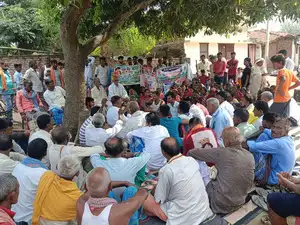
Gram Panchayats across India generate only around 10% of their revenue from their own sources, while the remaining 90% comes through government transfers, highlighting the limited financial independence of the country’s grassroots institutions. A Reserve Bank of India (RBI) report has drawn attention to the funding structure of these local bodies, where public spending is heavily shaped by government grants, Finance Commission recommendations and centrally sponsored schemes.
The findings underline a major challenge for rural local governance: although Gram Panchayats are responsible for delivering essential services and supporting development at the village level, their ability to raise and independently allocate funds remains limited. Their dependence on transfers also means that the availability and use of resources are influenced by funding rules and priorities established beyond the village administration.
What the RBI Report Says About Gram Panchayat Finances
The RBI’s second biennial report, titled Finances of Panchayati Raj Institutions: Local Finances and Capacity Building in Rural India, examines the financial position of rural local bodies. It uses a balanced panel of approximately 2.25 lakh Gram Panchayats covering the financial years 2022-23 to 2024-25.
The report indicates that the financial position of Gram Panchayats improved during 2022-23 and 2023-24, but their dependence on transfers from higher levels of government remained substantial. Their own-source revenue accounted for only about 10% of total receipts.
Significantly, the limited own-source revenue does not come primarily from local taxes. Non-tax receipts, including interest income, Panchayati Raj programme funds and user charges, make up a major part of this revenue. This suggests that the capacity of many village-level institutions to raise money through their own taxation and other local revenue mechanisms remains underdeveloped.
The figures also highlight the difference between having administrative responsibilities and having the financial resources to fulfil them independently. Gram Panchayats are expected to support local infrastructure and essential services, but their financial decisions remain closely connected to the availability and conditions of government funding.
Gram Panchayat Receipts Declined While Expenditure Continued to Rise
The financial figures for the three-year period covered by the report reveal another important pressure on rural local bodies: the gap between revenue receipts and expenditure.
Aggregate receipts increased from approximately Rs 48,625 crore in 2022-23 to Rs 52,014 crore in 2023-24. However, they declined to around Rs 43,537 crore in 2024-25.
Expenditure followed a different direction, rising from approximately Rs 46,368 crore in 2022-23 to Rs 48,794 crore in 2023-24 and Rs 50,457 crore in 2024-25.
As a result, Gram Panchayats recorded a deficit equivalent to 15.9% of total receipts in 2024-25, compared with surpluses of 4.6% and 6.2% in the previous two financial years.
This shift matters because local bodies need predictable funding to maintain services and complete development projects. When expenditure rises while receipts fall, Panchayats can face greater pressure to prioritise essential activities and manage outstanding financial commitments.
Government Grants Account for Nearly 90% of Panchayat Income
Government transfers remain the principal source of funding for Gram Panchayats. In 2024-25, grants-in-aid accounted for approximately 89.1% of their total receipts, while own-source revenue contributed around 10.9%.
Central government grants represented approximately 62.5% of total receipts, while state government grants accounted for around 24.1%. The remaining receipts included the Panchayats’ own revenue and other sources.
This funding structure demonstrates the importance of both the Union and state governments in supporting village-level administration. Finance Commission grants and government programmes provide resources for development activities that many Gram Panchayats may struggle to finance independently.
However, heavy dependence on transfers can also restrict financial flexibility. The availability of funds may be linked to allocation rules, programme guidelines, eligibility requirements and conditions imposed by funding authorities. Panchayats therefore may have limited freedom to redirect resources towards local priorities that fall outside the permitted purposes of particular grants.
Strengthening local revenue collection could give Panchayats an additional financial base and help them respond more effectively to the needs of their communities.
Water Supply and Sanitation Take the Largest Share of Panchayat Spending
Water supply and sanitation have emerged as the largest areas of expenditure for Gram Panchayats. The RBI report highlights that spending on these services accounted for approximately 40% of total expenditure, reflecting their importance in rural infrastructure and public service delivery.
Expenditure on water supply and sanitation increased from around Rs 18,129 crore in 2022-23 to Rs 22,446 crore in 2024-25. Their share of total expenditure rose from 39.1% to 44.5% over the same period.
This increase reflects the financial importance of services such as drinking water provision, sanitation facilities and related infrastructure. These are essential responsibilities for rural local bodies because their quality directly affects everyday living conditions in villages.
At the same time, expenditure on Panchayati Raj programmes declined from approximately Rs 18,668 crore in 2022-23 to Rs 12,983 crore in 2024-25. Its share of total expenditure fell from 40.3% to 25.7%.
The RBI noted that overall expenditure patterns were influenced by the mandates of the 15th Finance Commission and the convergence of Panchayat activities with national schemes and missions. This means that the way local bodies spend their funds is shaped not only by village-level requirements but also by broader government programme priorities.
Why Financial Disparities Between States Matter
The RBI report also highlights differences in the financial resources and service-delivery outcomes of Gram Panchayats across states. While progress has been made in areas such as rural connectivity, electrification, water supply, sanitation and community assets, access to resources and the quality and functionality of services remain uneven.
These differences matter because Gram Panchayats operate in widely varying economic and administrative conditions. Their ability to raise revenue, manage projects and deliver public services can depend on local economic activity, administrative capacity, available infrastructure and the financial support provided by state governments.
Consequently, a uniform approach to strengthening Panchayat finances may not address the specific challenges faced by every state or village. Areas with limited economic activity may have fewer opportunities to collect property taxes, licence fees and user charges, while larger or economically stronger Panchayats may have a broader revenue base.
The concentration of resources is another concern. The report’s analysis indicates that the largest 25% of Gram Panchayats account for approximately 52% of aggregate receipts and expenditure. This highlights the uneven distribution of financial activity among local bodies.
Improving financial capacity therefore requires attention to both revenue generation and the ability of weaker Panchayats to access and manage public funds.
RBI Highlights Need to Strengthen Local Revenue Collection
The findings point towards the need to improve the ability of Gram Panchayats to mobilise their own resources without undermining the importance of government grants.
Property taxes, licence fees and user charges are among the instruments available to local bodies. However, raising more revenue requires effective administration, accurate records, transparent assessment and efficient collection systems.
For example, updated property registers can help Panchayats identify taxable properties and improve the accuracy of assessments. Better collection systems can reduce revenue leakages, while rationalised tax and licence-fee structures can help local bodies generate funds in a more systematic manner.
At the same time, revenue mobilisation must take local economic conditions into account. Excessive charges could place an unnecessary burden on households and small businesses, particularly in economically weaker rural areas. The objective is to improve collection efficiency and strengthen the local revenue base rather than simply increase the financial burden on residents.
Administrative capacity is equally important. Panchayats need trained personnel, reliable accounting systems and better financial planning to manage funds effectively. Stronger record-keeping and transparent reporting can also improve public accountability and help identify areas where spending needs greater attention.
Growing Gram Panchayats Face Challenges When They Become Urban Local Bodies
The RBI has also drawn attention to the challenges faced by larger Gram Panchayats that transition into Town Panchayats or other small urban local bodies.
Such transitions can expand the responsibilities of local administrations. Urban areas generally require more extensive arrangements for water supply, sanitation, solid waste management, roads, public infrastructure and staffing.
Although a change in status may provide access to a broader urban tax base and different infrastructure programmes, administrative and financial responsibilities can grow faster than the capacity to manage them.
Newly constituted Town Panchayats may also lose access to certain Rural Development programmes, creating additional pressure during the transition. Without adequate financial planning and administrative preparation, the change in status could leave local bodies struggling to meet their expanded obligations.
The RBI has highlighted the need for transitional fiscal support and administrative capacity building to address this challenge. Strengthening revenue collection and improving local taxation systems would also be important as these institutions take on additional responsibilities.
Why the RBI Findings Matter for Rural Development
Gram Panchayats are among the most important institutions in India’s decentralised governance structure. They are responsible for addressing local development needs and supporting services that directly affect rural communities.
Their financial position therefore has consequences beyond accounting figures. A Panchayat’s ability to maintain water infrastructure, improve sanitation, support local roads and manage community assets depends on the resources available to it and the efficiency with which those resources are used.
When nearly 90% of receipts come from government transfers, the relationship between higher-level funding decisions and village-level development becomes particularly important. Predictable grants can help local bodies plan projects, but stronger independent revenue sources could provide additional flexibility and reduce their dependence on external funding.
The RBI’s findings do not suggest that government transfers are unnecessary. For many rural areas, grants remain essential because local tax bases may be too small to finance basic services. The challenge is to combine reliable government support with better local revenue mobilisation and stronger administrative systems.
What the RBI Report Means for the Future of Panchayat Finances
The central message of the RBI report is that stronger rural governance requires more than allocating funds to Gram Panchayats. Local institutions also need the financial and administrative capacity to raise resources, plan expenditure and deliver services efficiently.
The approximately 10% contribution from own-source revenue highlights the limited financial autonomy of village-level bodies, while the rising expenditure and decline in receipts during 2024-25 underline the importance of sustainable funding arrangements.
Improving property-tax collection, rationalising licence fees, strengthening accounting systems and providing administrative support could help Panchayats build a more reliable financial base. At the same time, government transfers will continue to play a critical role in supporting rural infrastructure and essential services.
Ultimately, the effectiveness of decentralised governance will depend on whether Gram Panchayats have both the resources and the capacity to respond to local needs. The RBI’s assessment brings that challenge into focus: India’s village-level institutions are central to rural development, but their financial independence remains limited.
For breaking news and live news updates, like us on Facebook or follow us on Twitter and Instagram. Read more on Latest India on thefoxdaily.com.






COMMENTS 0