- Who is Balen Shah and Why Expectations Were So High
- Flashpoint 1: Student Union Ban Sparks Youth Uprising
- Flashpoint 2: India Trade Policy Hits Daily Life
- Flashpoint 3: Corruption Allegations Against Home Minister
- Why These Protests Are Different
- Deeper Analysis: Governance vs Popular Mandate
- Regional Context: Why India Factor Matters
- What Happens Next? Possible Scenarios
- Insight: A Test of Leadership, Not Just Policy
- Conclusion: A Defining Moment for Nepal’s New Government
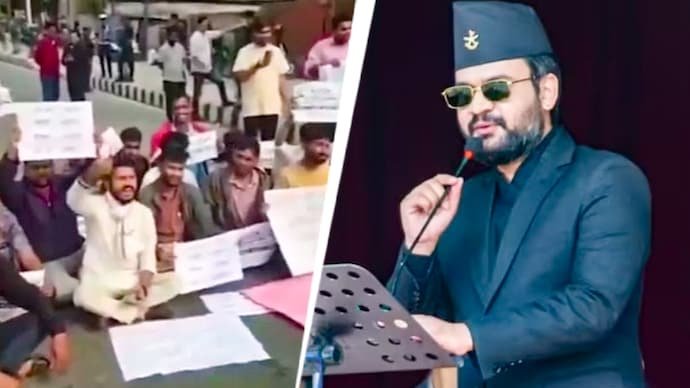
Just weeks after assuming office with a strong mandate, Nepal Prime Minister Balen Shah is facing an unexpected and rapidly escalating Political Crisis. What began as scattered discontent has now evolved into nationwide protests, with Students, civil society groups, and political opponents taking to the streets.
The unrest is being driven by a combination of controversial policy decisions and Governance concerns: a clampdown on student unions, a new customs duty affecting cross-border trade with India, and allegations of financial misconduct against Home Minister Sudan Gurung. Together, these issues have created a perfect storm for a government that was expected to bring stability and reform.
Who is Balen Shah and Why Expectations Were So High
Balen Shah rose to prominence as the mayor of Kathmandu, gaining popularity for his anti-establishment stance and promises of clean governance. His transition from local Leadership to national power marked a significant shift in Nepal’s political landscape.
With a two-thirds majority backing his government, expectations were clear: decisive reforms, transparent governance, and a break from traditional political inefficiencies. However, early decisions have instead triggered backlash, raising questions about governance style and policy priorities.
Flashpoint 1: Student Union Ban Sparks Youth Uprising
The most visible and emotionally charged protests have come from students. The government’s move to sideline or effectively ban politically affiliated student unions has been perceived as an attack on democratic participation.
In Nepal, student unions have historically played a major role in political mobilisation and activism. Limiting their influence is not just an administrative decision it touches the core of political expression for young citizens.
Thousands of students across schools and colleges have joined protests, many appearing in uniform a powerful symbol that the unrest is no longer confined to political elites but has spread to everyday youth.
Critics argue that instead of engaging with student leaders, the government has chosen confrontation, a strategy that risks alienating an entire generation.
Flashpoint 2: India Trade Policy Hits Daily Life
Another major trigger is the newly imposed customs duty on goods worth over Rs 100 brought from India. While the policy may aim to regulate imports and boost domestic revenue, its real-world impact has been immediate and widespread.
For communities living near the India-Nepal border, cross-border shopping is not a luxury it is a necessity. From groceries to household essentials, daily life depends heavily on easy access to Indian markets.
Protesters argue that the policy overlooks these ground realities. Instead of targeting large-scale imports, it disproportionately affects ordinary citizens, increasing the cost of living and fuelling resentment.
| Policy Decision | Government Intent | Public Reaction |
|---|---|---|
| Student union restrictions | Reduce political influence in campuses | Mass student protests nationwide |
| Customs duty on Indian goods | Increase revenue, regulate imports | Anger in border regions, rising costs |
| Handling of corruption allegations | Maintain internal stability | Demand for accountability and resignation |
Flashpoint 3: Corruption Allegations Against Home Minister
Adding fuel to the fire are serious allegations against Home Minister Sudan Gurung. Accusations of disproportionate assets and questionable financial dealings have triggered demands for his resignation.
Opposition parties and activists claim that documents point to suspicious investments and links to controversial entities. While investigations are ongoing, the political damage is already visible.
In a government that promised transparency and reform, even the perception of corruption can be deeply damaging. Protesters argue that failing to act decisively undermines the credibility of the entire administration.
Why These Protests Are Different
Nepal has witnessed political protests before, but the current wave stands out for three key reasons:
- Broad participation: Students, middle-class citizens, and political groups are all involved.
- Multiple issues: The unrest is not about a single policy but a combination of grievances.
- Rapid escalation: Protests have spread quickly from local demonstrations to national unrest.
This convergence of issues makes the situation more volatile and harder to resolve.
Deeper Analysis: Governance vs Popular Mandate
The unfolding crisis highlights a classic political dilemma: having a strong mandate does not guarantee smooth governance. In fact, it can sometimes lead to more aggressive decision-making, which, if misjudged, triggers backlash.
Balen Shah’s government appears to be prioritising structural changes whether in Education or trade without fully accounting for social sensitivities. This gap between policy intent and public perception is now at the heart of the protests.
There is also a communication breakdown. Policies that may have been accepted with proper consultation are now being rejected because they are seen as imposed rather than discussed.
Regional Context: Why India Factor Matters
The tension over customs duties also reflects Nepal’s complex relationship with India. Economic interdependence is high, especially in border regions, making any disruption politically sensitive.
Historically, even minor trade-related decisions have triggered strong reactions in Nepal. The current situation fits into that pattern, where economic policy quickly becomes a political issue.
What Happens Next? Possible Scenarios
1. Policy Rollback
The government may soften or revise controversial decisions, particularly the customs duty and student union restrictions, to ease tensions.
2. Political Escalation
If protests continue to grow, opposition parties could capitalise on the unrest, turning it into a larger political movement.
3. Internal Government Shake-up
Pressure could force action against the Home Minister, including resignation or investigation, to restore credibility.
Insight: A Test of Leadership, Not Just Policy
The current crisis is not just about specific decisions it is a test of leadership style. Balen Shah’s transition from a local reformist leader to a national decision-maker is being closely scrutinised.
At the municipal level, bold decisions can be implemented quickly. At the national level, however, they require consensus, communication, and careful balancing of interests.
This distinction is proving critical and challenging.
Conclusion: A Defining Moment for Nepal’s New Government
Nepal stands at a crucial juncture. The protests against Balen Shah’s government highlight the complexities of governance in a politically active and socially diverse country.
While the administration still holds a strong parliamentary majority, public sentiment is shifting. How the government responds in the coming weeks whether through dialogue, policy adjustments, or firm action will determine its long-term stability.
For Balen Shah, this is more than an early setback. It is a defining moment that will shape his leadership legacy and Nepal’s political trajectory in the years ahead.
For breaking news and live news updates, like us on Facebook or follow us on Twitter and Instagram. Read more on Latest World on thefoxdaily.com.






COMMENTS 0