- Understanding OPEC: Why It Matters So Much
- Why Did the UAE Walk Away?
- Timing Couldn’t Be More Critical
- What This Means for India: A Strategic Opportunity
- Short-Term Reality vs Long-Term Shift
- Could Other Countries Follow?
- Comparison: Before and After UAE’s Exit
- The Bigger Picture: Is the Oil Cartel Era Ending?
- What Should India Do Next?
- Conclusion: A Turning Point, Not an Instant Solution
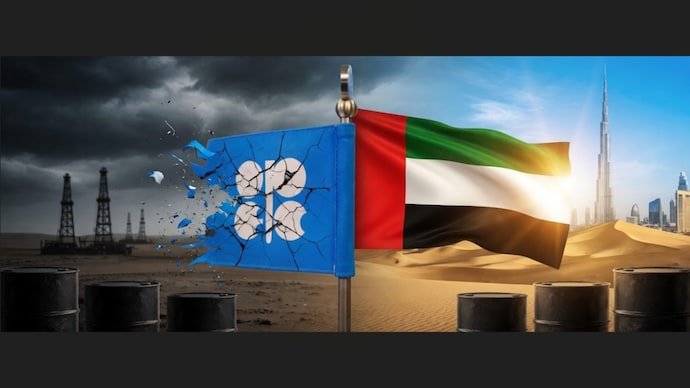
On 1 May 2026, the United Arab Emirates made a move that stunned global Energy Markets: it exited OPEC without prior warning or prolonged negotiation. For decades, the Organization of the Petroleum Exporting Countries (OPEC) has acted as one of the most powerful forces controlling Oil Supply and by extension, global prices. So when a major producer like the UAE walks away, the implications ripple far beyond the Middle East.
For India, which imports nearly 90% of its crude oil, the stakes are especially high. Could this be the moment when the long-standing pricing pressure from oil cartels begins to ease? Or is it simply a temporary disruption in an otherwise resilient system?
Understanding OPEC: Why It Matters So Much
To understand the significance of the UAE’s exit, it’s important to grasp how OPEC operates.
At its core, OPEC is a coordination mechanism. Member countries agree to limit oil production to manage global supply. By keeping supply tighter than demand, prices remain elevated benefiting producers but often straining importing nations like India.
This system relies heavily on discipline. If even a few major members start producing more than their quota or leave the group entirely the balance begins to break down.
That’s precisely why the UAE’s decision is so consequential.
Why Did the UAE Walk Away?
The answer lies in a growing mismatch between capacity and constraint.
The UAE, through its national oil company, has spent years investing heavily in expanding production capabilities. Its capacity has surged to nearly 4.85 million barrels per day, with ambitions to reach 5 million by 2027.
Yet under OPEC’s quota system, it was allowed to produce only around 3.4 million barrels per day.
That gap represents billions in lost revenue.
From the UAE’s perspective, continuing under such restrictions made little economic sense. The decision to exit signals a shift toward prioritizing national economic interests over collective price control.
In simpler terms: why hold back production when you have the capacity and global demand to sell more?
Timing Couldn’t Be More Critical
The UAE didn’t just leave it left at a moment of maximum impact.
Since early 2026, global oil markets have already been under pressure due to disruptions around the Strait of Hormuz, one of the world’s most vital energy chokepoints. With a significant portion of global oil passing through this narrow corridor, even minor instability can trigger major price spikes.
At the time of the UAE’s exit, Brent crude prices were already above $110 per barrel.
In such a scenario, OPEC typically aims for unity to stabilize markets. Instead, it faced fragmentation.
What This Means for India: A Strategic Opportunity
India stands at an interesting crossroads in this unfolding situation.
The UAE has long been one of India’s most reliable energy partners, consistently ranking among its top crude suppliers. Its geographic proximity offers several advantages:
- Lower transportation costs
- Faster delivery times
- Reduced supply chain risks
With the UAE no longer bound by OPEC quotas, it now has the freedom to increase production significantly. That could translate into more oil available on the global market and potentially better pricing terms for buyers like India.
This is particularly important as India navigates a complex energy landscape, balancing affordability, supply Security, and geopolitical considerations.
Short-Term Reality vs Long-Term Shift
It’s tempting to assume that more supply automatically means lower prices. But the reality is more nuanced.
Short Term: Prices May Stay High
Current oil prices are driven largely by geopolitical tensions, not just supply constraints. Conflicts, shipping disruptions, and market uncertainty continue to keep prices elevated.
Long Term: Structural Change Is Emerging
Over the next 12–18 months, increased production from the UAE and potentially other countries could gradually ease supply constraints. This would put downward pressure on prices.
In other words, relief may not be immediate, but the direction of change is significant.
Could Other Countries Follow?
This is perhaps the most important question.
The UAE’s exit sets a precedent. It sends a clear signal to other OPEC members with growing production capacity: staying within strict quotas may no longer be the most profitable strategy.
If even a few more countries reconsider their positions, the cartel’s influence could weaken substantially.
This doesn’t mean OPEC will disappear overnight. But it does suggest a gradual shift from a tightly controlled supply system to a more competitive, market-driven Environment.
Comparison: Before and After UAE’s Exit
| Factor | Before UAE Exit | After UAE Exit |
|---|---|---|
| Production Control | Strict OPEC quotas | Greater national flexibility |
| Global Supply | Artificially constrained | Potentially increasing |
| Price Pressure | Upward bias | Possible moderation over time |
| India’s Position | Limited bargaining power | Improved negotiating leverage |
The Bigger Picture: Is the Oil Cartel Era Ending?
The idea of OPEC losing its dominance has been discussed for years. Several factors have already been eroding its influence:
- Rising production from non-OPEC countries
- Technological advancements in energy extraction
- Growing emphasis on renewable energy
- Shifting geopolitical alliances
The UAE’s exit doesn’t create these trends it accelerates them.
It also highlights a deeper shift: energy producers are increasingly prioritizing flexibility and national interest over collective control.
What Should India Do Next?
This moment presents India with a strategic opportunity but only if it acts decisively.
Key steps could include:
- Strengthening long-term supply agreements with the UAE
- Diversifying import sources to reduce dependency risks
- Expanding strategic petroleum reserves
- Accelerating investments in alternative energy
By doing so, India can not only benefit from current shifts but also build resilience against future disruptions.
Conclusion: A Turning Point, Not an Instant Solution
The UAE’s exit from OPEC is not an immediate fix for high fuel prices but it is a meaningful turning point.
For the first time in years, the structure that has kept Global Oil Supply deliberately tight is showing visible cracks. For India, this could translate into greater negotiating power, improved supply security, and eventually, more stable pricing.
But the transition will take time. Markets need to adjust, production needs to scale, and geopolitical tensions need to settle.
Still, one thing is clear: the rules of the global oil game are changing. And for India, that change might finally tilt the balance just a little in its favor.
For breaking news and live news updates, like us on Facebook or follow us on Twitter and Instagram. Read more on Latest World on thefoxdaily.com.






COMMENTS 0