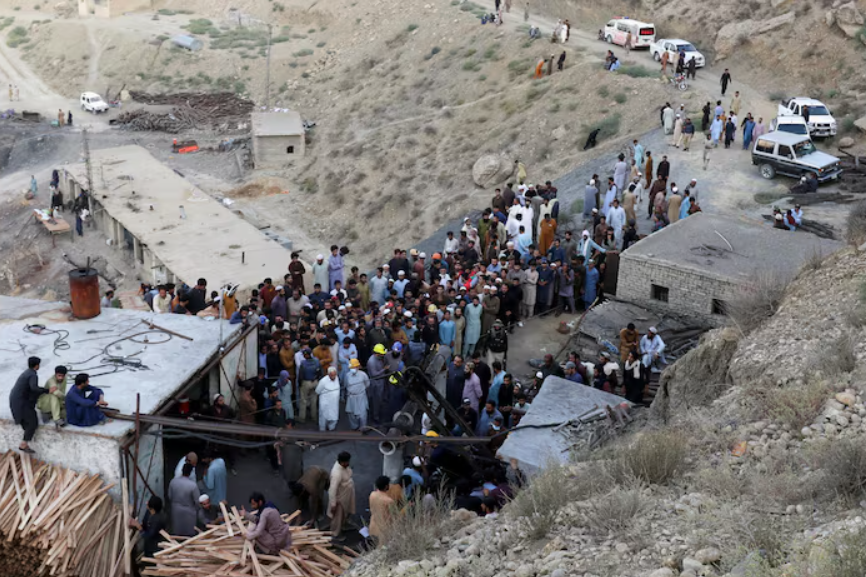
A devastating Quetta coal mine blast has left at least 15 miners dead and more than a dozen others trapped in Pakistan‘s Balochistan province, making it one of the deadliest mining accidents in the region this year. The explosion, triggered by a suspected build-up of methane gas, occurred during a shift change at the Sorange coalfield on Thursday, causing extensive structural damage inside two adjoining mines.
Rescue teams have been working around the clock under extremely hazardous conditions to recover trapped workers and search for survivors. Officials say the challenging underground environment, combined with fire, collapsing tunnels and toxic gases, has significantly complicated Rescue Operations.
The incident has once again highlighted the persistent safety challenges facing Pakistan’s coal mining sector, where inadequate ventilation, poor enforcement of regulations and outdated mining practices continue to put thousands of workers at risk.
Quetta Coal Mine Blast: What Happened?
According to mining officials, the explosion occurred during a routine shift change inside the Sorange coalfield, located near Quetta in Balochistan.
Investigators believe a dangerous concentration of methane gas ignited deep inside the mine, triggering a powerful underground explosion followed by a fire. The blast damaged the primary mine and also affected a neighbouring mine, trapping workers in both locations.
The miners were reportedly working nearly 4,000 feet below the surface when the explosion occurred.
The force of the blast caused tunnel collapses, blocked escape routes and damaged ventilation systems, making evacuation extremely difficult.
Latest Casualty and Rescue Update
Provincial mining authorities confirmed that rescue teams have recovered 15 bodies while successfully rescuing 16 miners.
Officials believe approximately 20 workers may still remain trapped underground as search operations continue.
| Rescue Status | Latest Update |
|---|---|
| Confirmed fatalities | 15 miners |
| Workers rescued | 16 miners |
| Estimated still trapped | Around 20 workers |
| Location | Sorange Coalfield, Quetta, Balochistan |
| Cause | Suspected methane gas explosion |
Authorities caution that the exact number of trapped miners may change as rescue teams continue verifying shift records and worker registrations.
Why Methane Gas Explosions Are So Dangerous
Methane is a naturally occurring gas released during coal mining. While harmless in small concentrations, it becomes highly explosive when allowed to accumulate in enclosed underground spaces.
Without proper ventilation and continuous gas monitoring, a single spark from electrical equipment, machinery or mining tools can ignite methane and create a massive explosion.
Such explosions often produce:
- Powerful shockwaves that collapse tunnels.
- Underground fires.
- Oxygen depletion.
- Toxic gases such as carbon monoxide.
- Blocked escape routes for miners.
Because underground coal mines operate in confined environments, methane explosions frequently result in high casualty numbers even when the initial blast is localized.
Why Rescue Operations Are Extremely Difficult
Mining experts note that rescue missions following underground explosions are among the most technically challenging emergency operations.
Rescuers must carefully balance speed with safety because entering unstable tunnels too quickly could trigger additional collapses or secondary explosions.
The primary challenges include:
- Collapsed mine shafts.
- Continuing methane accumulation.
- Underground fires.
- Poor visibility due to smoke and dust.
- Damaged ventilation systems.
- Limited communication with trapped miners.
Officials have described current rescue conditions as extremely hazardous, requiring specialized equipment and continuous atmospheric monitoring.
Government Announces Compensation and Investigation
The Balochistan provincial government has announced financial assistance for families affected by the disaster.
Authorities stated that:
- Families of deceased miners will receive PKR 500,000 each.
- Injured workers will receive PKR 300,000 each.
Officials have also ordered a formal Investigation into the cause of the explosion.
The inquiry is expected to examine compliance with mine safety regulations, ventilation standards, emergency preparedness and operational practices at the Sorange coalfield.
Safety Concerns in Pakistan’s Coal Mining Industry
The Quetta mine explosion has renewed attention on chronic safety deficiencies across Pakistan’s coal sector, particularly in Balochistan.
Labour organizations have repeatedly raised concerns about:
- Inadequate methane detection systems.
- Poor ventilation inside mines.
- Insufficient emergency exits.
- Limited worker safety training.
- Lack of protective equipment.
- Weak enforcement of mining regulations.
Worker representatives have also alleged that some privately operated mines fail to maintain proper employment records, making rescue efforts more difficult after accidents.
Why Balochistan Records Frequent Mining Accidents
Balochistan is Pakistan’s largest province by area and possesses significant coal reserves that support thousands of livelihoods.
However, many mines in the region continue to rely on older extraction methods and operate under challenging geological conditions.
Several factors contribute to recurring accidents:
- Deep underground mining operations.
- Naturally high methane concentrations.
- Limited Investment in modern mining Technology.
- Remote locations that delay emergency response.
- Economic pressure to maximize production.
Mining communities argue that stronger oversight and greater investment in worker safety are essential to reducing fatalities.
Economic Importance of Coal Mining in Balochistan
Despite the dangers, coal mining remains a critical source of employment across Balochistan.
Thousands of workers from different provinces of Pakistan, along with some migrant labourers, depend on the industry to support their families.
For many communities, mining represents one of the few available employment opportunities despite the occupational risks.
This economic dependence often places pressure on workers to continue operating in hazardous conditions.
Timeline of the Quetta Coal Mine Disaster
| Event | Details |
|---|---|
| Shift change | Miners were working nearly 4,000 feet underground. |
| Methane explosion | Blast triggered underground fire and tunnel collapses. |
| Neighbouring mine affected | Explosion damaged an adjacent mining operation. |
| Rescue begins | Emergency teams entered unstable tunnels. |
| Current status | 15 fatalities confirmed, multiple miners rescued, search continues. |
What Mining Experts Say Needs to Change
Mining safety specialists generally agree that preventing similar disasters requires both stronger regulation and greater investment in modern safety systems.
Key improvements often recommended include:
- Continuous methane gas monitoring.
- Modern ventilation infrastructure.
- Automated emergency warning systems.
- Regular independent safety inspections.
- Mandatory emergency evacuation drills.
- Digital worker registration and tracking.
- Improved communication systems underground.
international mining standards increasingly emphasize prevention through real-time monitoring rather than relying solely on rescue capabilities after an accident occurs.
Why the Quetta Blast Matters Beyond Pakistan
Coal mining accidents remain a global occupational safety challenge, particularly in developing economies where mining continues to support regional employment.
The Quetta tragedy highlights the broader need for balancing energy production with worker safety, especially in industries operating in high-risk environments.
Improving mine safety not only protects workers but also reduces economic disruption, strengthens public confidence and promotes sustainable industrial development.
Future Outlook
As rescue operations continue in the Sorange coalfield, attention will gradually shift toward accountability and long-term reforms. The findings of the official investigation are expected to influence future mining policies in Balochistan, particularly regarding methane monitoring, ventilation requirements and enforcement of workplace safety standards.
Labour unions are likely to intensify demands for stricter inspections and stronger action against operators found violating safety regulations. Whether this tragedy leads to meaningful reforms will depend on how effectively authorities implement recommendations after the investigation concludes.
Conclusion
The Quetta coal mine blast has once again exposed the dangerous realities faced by thousands of miners working in Pakistan’s coalfields. While rescue teams continue searching for those still trapped underground, the disaster serves as a stark reminder that workplace safety remains one of the mining industry’s greatest challenges.
Beyond the immediate rescue effort, the tragedy has renewed calls for stricter enforcement of mining regulations, improved safety technology and greater accountability across the sector. For the families affected, however, the priority remains the safe recovery of loved ones and ensuring that future workers are protected from similar preventable disasters.
For breaking news and live news updates, like us on Facebook or follow us on Twitter and Instagram. Read more on Latest World on thefoxdaily.com.






COMMENTS 0