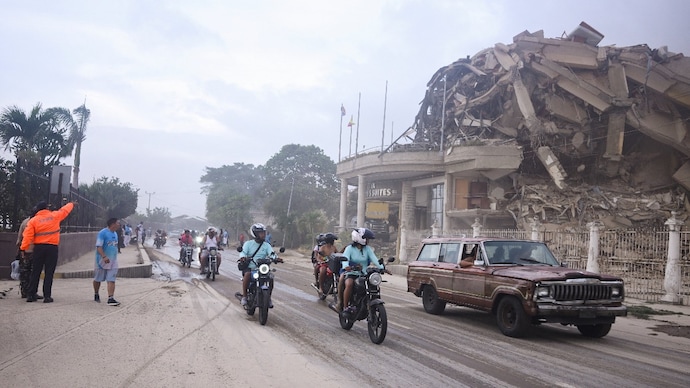
For a few terrifying seconds, life in Venezuela changed forever.
Residents preparing dinner, commuters heading home and families relaxing after work suddenly found themselves running for survival as two massive earthquakes struck within less than a minute of each other. Buildings swayed violently, roads cracked apart and entire neighbourhoods were plunged into chaos.
What followed was a scene many survivors described as something out of a disaster movie except this was real.
The twin earthquakes, measuring 7.2 and 7.5 in magnitude, struck Venezuela on Thursday evening, becoming the strongest seismic event to hit the country in more than 100 years. Entire sections of Caracas and surrounding regions suffered extensive damage, while powerful aftershocks continued to rattle already traumatized communities throughout the night.
Authorities have confirmed dozens of fatalities and hundreds of injuries, but experts warn that the final toll could be significantly higher as rescue workers continue searching collapsed structures. Thousands of residents remain displaced, and emergency teams are racing against time to locate survivors trapped beneath mountains of concrete and twisted steel.
A Nation Shaken Within Seconds
Earthquakes often strike without warning, but the scale and timing of these twin tremors made the disaster particularly devastating.
The first powerful quake struck shortly after 6 p.m. local time, catching many residents inside office buildings, apartment complexes, shopping areas and public transport hubs during one of the busiest periods of the day.
Before people could fully comprehend what had happened, a second, even stronger earthquake followed just 39 seconds later.
The back-to-back shocks created a dangerous situation in which structures already weakened by the first tremor suffered catastrophic failures during the second.
In several parts of Caracas, eyewitnesses reported hearing loud cracking sounds before buildings partially or completely collapsed. Dust clouds quickly engulfed entire streets, reducing visibility and making evacuation efforts even more difficult.
For many residents, the greatest challenge was uncertainty.
People WHO had been speaking to family members moments earlier suddenly lost contact as mobile networks became overloaded and electricity failures spread across affected districts.
Why These Earthquakes Were So Destructive
While Venezuela has experienced earthquakes before, scientists note that several factors contributed to the severity of this disaster.
First, the magnitudes involved were exceptionally powerful. Earthquakes above magnitude 7 release enormous amounts of energy capable of causing significant structural damage across large geographic areas.
Second, the unusual occurrence of two major earthquakes within seconds amplified the destructive impact.
Buildings designed to withstand a single seismic event can become vulnerable when subjected to multiple powerful shocks in rapid succession.
Third, the extensive aftershock sequence created additional risks.
More than twenty significant aftershocks have already been recorded, ranging from moderate to strong intensity. These continuing tremors complicate rescue efforts and increase the risk of further collapses in damaged structures.
Seismologists often compare major earthquakes to a chain reaction. The main event may last less than a minute, but its effects can continue for days, weeks or even months through aftershocks and infrastructure failures.
Caracas Becomes the Epicentre of Human Tragedy
Although the earthquakes were felt across much of Venezuela, the capital city of Caracas has emerged as one of the hardest-hit areas.
Across multiple districts, emergency workers spent the night digging through rubble while desperate families gathered outside collapsed buildings searching for information about missing loved ones.
The atmosphere was defined by a mixture of fear, hope and uncertainty.
In some locations, residents formed human chains to remove debris before heavy rescue equipment arrived. In others, volunteers distributed water, Food and medical supplies to displaced families forced to spend the night outdoors.
Stories of survival emerged alongside heartbreaking accounts of loss.
Rescue teams reported several successful extractions from collapsed buildings, providing brief moments of optimism amid an otherwise grim situation.
Such rescues often become symbols of resilience during major disasters, reminding communities that hope can persist even under the most difficult circumstances.
The Race Against Time Beneath the Rubble
Disaster-response experts often describe the first 72 hours after a major earthquake as the most critical period for saving lives.
Individuals trapped beneath collapsed structures face increasing risks from dehydration, injuries, exposure and limited oxygen.
As a result, every hour matters.
Across Caracas and neighboring regions, search-and-rescue teams have deployed specialised equipment, trained dogs, thermal imaging Technology and heavy machinery to locate survivors.
The challenge is immense.
Damaged roads, disrupted communications and ongoing aftershocks make rescue operations more dangerous and time-consuming.
Yet emergency crews continue working around the clock, often in unstable conditions where additional collapses remain possible.
For families waiting nearby, each sound from beneath the debris offers a possibility that loved ones may still be alive.
Critical Infrastructure Suffers Major Damage
The disaster has exposed the vulnerability of key infrastructure throughout the affected region.
Roads, bridges, utilities and transportation networks have all suffered varying degrees of damage.
One of the most significant impacts has been reported in La Guaira, home to Venezuela’s principal international airport and a critical gateway for commerce and travel.
Structural concerns forced authorities to suspend operations, creating additional logistical challenges for emergency response efforts.
The closure of transportation hubs can significantly complicate disaster recovery because it slows the arrival of humanitarian assistance, rescue personnel and medical supplies.
Power outages and communication disruptions have further hindered coordination efforts in several communities.
Restoring these systems will likely become one of the government’s highest priorities in the coming weeks.
The Economic Cost Could Last for Years
Beyond the immediate humanitarian impact, the earthquakes are expected to deliver a major economic shock.
Natural disasters often generate costs that extend far beyond damaged buildings.
Businesses may remain closed for weeks.
Tourism activity can decline.
Supply chains become disrupted.
Insurance claims surge.
Governments must divert resources toward reconstruction and emergency relief.
For Venezuela, which has already faced significant economic challenges over the past decade, rebuilding damaged infrastructure could place additional strain on public finances.
Economists note that recovery from major earthquakes frequently requires years rather than months.
The rebuilding process involves not only replacing damaged structures but also improving resilience against future disasters.
Lessons From Past Earthquake Catastrophes
History offers important lessons about how societies recover from large-scale seismic disasters.
Countries such as japan, Chile and New Zealand have demonstrated that investments in earthquake-resistant construction standards can dramatically reduce casualties and long-term damage.
Major earthquakes often serve as turning points, prompting governments to reassess building regulations, emergency preparedness systems and urban planning strategies.
For Venezuela, the disaster may trigger renewed discussions about infrastructure resilience and disaster-risk management.
Experts frequently emphasize that earthquakes themselves do not kill people unsafe structures do.
As reconstruction begins, attention will likely focus on whether existing buildings were adequately prepared for major seismic events.
The Human Stories Behind the Headlines
Statistics help explain the scale of a disaster, but they rarely capture its human reality.
Behind every damaged building is a family whose routine was suddenly interrupted.
Behind every rescue operation is someone waiting anxiously for news.
Behind every casualty figure is a life that touched relatives, friends and communities.
Across Venezuela, countless personal stories are unfolding simultaneously.
Parents searching for children.
Neighbors helping strangers.
Volunteers risking their safety to assist rescue teams.
Medical workers treating patients despite limited resources.
These individual acts of courage and solidarity often become defining features of disaster recovery.
They remind us that resilience is not merely about rebuilding infrastructure it is also about rebuilding lives.
What Happens Next?
The coming days will determine the full scale of the catastrophe.
Emergency responders will continue searching for survivors while authorities assess structural damage across affected regions.
Humanitarian agencies are expected to expand relief efforts, focusing on shelter, medical care, food distribution and psychological support for displaced communities.
Attention will then shift toward recovery and reconstruction.
That process could take years depending on the extent of the damage and the resources available.
The disaster also raises broader questions about preparedness in earthquake-prone regions and the need for stronger infrastructure capable of withstanding extreme natural events.
Conclusion
The twin earthquakes that struck Venezuela represent one of the most devastating natural disasters in the country’s modern history. Beyond the collapsed buildings and damaged infrastructure lies a deeper story of human loss, resilience and survival.
As rescue operations continue and the nation begins assessing the true scale of destruction, the immediate priority remains saving lives and supporting affected communities. Yet the disaster’s legacy will likely extend far beyond the coming weeks. It will shape conversations about infrastructure, emergency preparedness and national resilience for years to come.
For now, Venezuela faces a long and difficult road ahead. Amid the rubble and uncertainty, however, stories of survival and solidarity continue to emerge offering hope in a moment defined by tragedy.
For breaking news and live news updates, like us on Facebook or follow us on Twitter and Instagram. Read more on Latest World on thefoxdaily.com.





COMMENTS 0