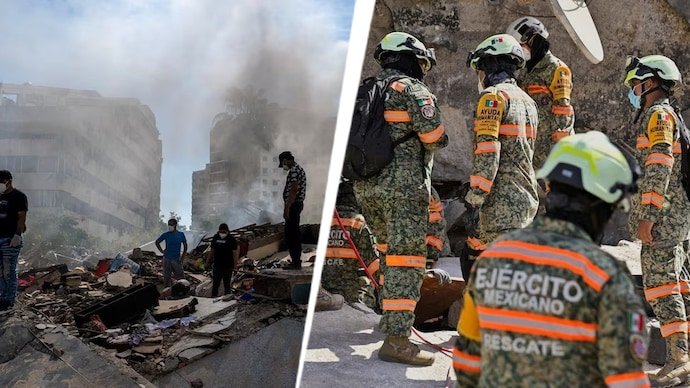
Venezuela is facing one of the deadliest natural disasters in its modern History after two powerful earthquakes devastated large parts of the country, leaving thousands of families displaced and rescue workers engaged in an increasingly difficult search for survivors. As emergency teams continue operations across the hardest-hit regions, every successful rescue serves as a reminder that hope can persist even as the critical survival window narrows.
The twin earthquakes struck on June 24, causing catastrophic damage to homes, apartment complexes, hospitals, schools and public infrastructure. La Guaira, located north of Caracas, emerged as the epicentre of destruction, where entire neighbourhoods were reduced to rubble. With hundreds of aftershocks complicating rescue operations, authorities have vowed not to suspend search efforts while there remains any possibility of finding survivors.
Beyond the immediate humanitarian crisis, the disaster presents enormous challenges for Venezuela’s recovery, including rebuilding damaged infrastructure, restoring essential services, providing housing for displaced residents and strengthening earthquake preparedness for the future.
What Happened in Venezuela?
Two powerful earthquakes struck Venezuela within a short period, triggering widespread structural collapses across multiple communities. The strongest impact was felt in La Guaira state, where residential buildings, commercial properties and public facilities suffered extensive damage.
Emergency responders from Venezuela were quickly joined by international rescue teams specializing in urban search and rescue, bringing advanced equipment, trained personnel and search dogs to assist in locating survivors buried beneath collapsed structures.
Despite the scale of destruction, rescue operations continue around the clock as authorities insist that every possible effort will be made to save lives.
Latest Situation: Death Toll Continues to Rise
Officials reported that the number of confirmed fatalities has climbed close to 1,500, while thousands more have been injured and many remain displaced from their homes.
According to government figures:
- Nearly 1,500 people have lost their lives.
- More than 3,000 people have been injured.
- Over 12,000 residents have been displaced.
- Hundreds of buildings have collapsed.
- Rescue operations remain active across affected regions.
Authorities caution that casualty figures may continue to change as search teams gain access to additional damaged structures.
Why the First 72 Hours Matter
Disaster response experts often describe the first 72 hours following a major earthquake as the “golden rescue window.” During this period, trapped survivors have the highest likelihood of being located and rescued before dehydration, injuries and environmental conditions significantly reduce survival chances.
As this critical timeframe narrows, rescue teams increasingly rely on sophisticated Technology and highly trained personnel to identify signs of life beneath collapsed buildings.
International Rescue Teams Join the Mission
More than two thousand international rescue workers have joined Venezuelan emergency personnel, bringing specialized expertise in urban disaster response.
The multinational effort includes:
- Urban search and rescue specialists.
- Structural engineers.
- Medical emergency teams.
- Search dog units.
- Heavy equipment operators.
- Technical rescue experts.
Such international cooperation has become increasingly important during large-scale disasters, where rapid deployment of specialized resources can significantly improve rescue outcomes.
Search Dogs and Technology Saving Lives
Modern earthquake rescue operations depend on a combination of trained search dogs and advanced detection equipment.
Specialized sensors, thermal imaging devices, acoustic listening systems and ground scanners help rescuers identify void spaces where survivors may still be trapped.
Search dogs remain among the fastest and most effective tools for locating human scent beneath layers of concrete, steel and debris.
Timeline of the Venezuela Earthquake Disaster
| Date | Major Development |
|---|---|
| June 24 | Twin powerful earthquakes strike Venezuela. |
| First 24 Hours | Massive rescue operations begin across affected regions. |
| Following Days | International rescue teams arrive with specialized equipment. |
| 72-Hour Mark | Critical rescue window narrows, but operations continue. |
| Current Situation | Death toll approaches 1,500 while survivors continue to be rescued. |
Children Among Those Pulled Alive from the Rubble
Some of the most emotional moments during the rescue effort have involved children being rescued after spending days trapped beneath collapsed buildings.
Several successful operations involved carefully removing debris while medical teams monitored survivors for dehydration, fractures and crush injuries. These rescues have provided emotional encouragement for exhausted emergency crews working continuously since the disaster began.
Every survivor recovered reinforces the determination of rescue teams to continue searching despite increasingly difficult conditions.
Aftershocks Continue to Threaten Rescue Operations
Hundreds of aftershocks have complicated emergency efforts by weakening already unstable structures.
Each aftershock increases the danger for both trapped survivors and rescue personnel, forcing teams to temporarily halt operations whenever buildings show signs of imminent collapse.
Structural engineers now accompany many rescue units to assess risks before crews enter unstable buildings.
Electricity, Schools and Essential Services
Restoring basic public services has become another major priority alongside rescue efforts.
Authorities have reported gradual restoration of electricity across affected areas, although many communities continue to experience interruptions due to damaged infrastructure.
Schools in heavily affected regions remain closed while engineers inspect buildings to determine whether they remain structurally safe for students and staff.
Thousands Displaced as Temporary Shelters Expand
With thousands of homes destroyed or declared unsafe, emergency shelters are being established to provide temporary accommodation for displaced families.
Relief centres are supplying:
- Emergency Food assistance.
- Safe drinking water.
- Medical care.
- Temporary housing.
- Psychological support.
- Essential sanitation facilities.
Long-term housing reconstruction is expected to become one of the country’s largest recovery challenges.
Why Earthquakes Cause Such Extensive Urban Damage
Earthquakes generate powerful ground movements capable of exceeding the design limits of buildings, especially older structures not built to modern seismic standards.
Factors influencing damage include:
- Earthquake magnitude.
- Depth of the quake.
- Distance from the epicentre.
- Local soil conditions.
- Building construction quality.
- Population density.
Urban areas with aging infrastructure often experience significantly greater losses during major seismic events.
Comparison: Rescue Phase vs Recovery Phase
| Disaster Phase | Primary Objective | Main Activities |
|---|---|---|
| Emergency Rescue | Save lives | Search operations, medical response, evacuations |
| Relief | Support survivors | Shelters, food, healthcare, utilities |
| Recovery | Restore communities | Infrastructure repairs, rebuilding homes, economic recovery |
| Preparedness | Reduce future risk | Improved building standards and disaster planning |
Economic Impact Could Extend for Years
Major earthquakes often create economic consequences that continue long after rescue operations end.
Damage to transportation networks, power infrastructure, schools, hospitals and businesses can disrupt economic activity for months or even years.
The reported shutdown of a major refinery following power disruptions illustrates how natural disasters can affect critical industrial infrastructure alongside residential communities.
The Human Side of the Disaster
Beyond statistics, the earthquake has transformed thousands of lives. Families continue searching for missing relatives while many survivors have lost homes, workplaces and loved ones.
Volunteers from across Venezuela have joined rescue teams by distributing food, water, blankets and emergency supplies, demonstrating the crucial role communities play during large-scale disasters.
Mental health experts also emphasize that psychological recovery often takes far longer than physical reconstruction, particularly for children and families WHO experienced traumatic losses.
Lessons for Disaster Preparedness
The Venezuela earthquake highlights the importance of investing in disaster resilience before emergencies occur.
Key measures include:
- Earthquake-resistant building codes.
- Regular structural inspections.
- Public emergency education.
- Early warning systems.
- Rapid deployment rescue capabilities.
- International disaster cooperation.
Countries located in seismically active regions increasingly recognize that preparedness can significantly reduce casualties when major earthquakes occur.
Future Outlook
Rescue teams are expected to continue operations until authorities determine that no further survivors can reasonably be located. Following the emergency phase, Venezuela will face the enormous task of rebuilding communities, restoring infrastructure and supporting displaced families.
The disaster is also likely to prompt renewed discussions about urban planning, seismic safety standards and investment in emergency response capabilities. International assistance will remain essential during both the immediate humanitarian response and the long-term reconstruction effort.
Conclusion
As Venezuela mourns nearly 1,500 lives lost, rescue workers continue demonstrating extraordinary determination in the search for survivors. Every successful rescue amid the rubble provides hope to families waiting for news of missing loved ones and serves as a powerful reminder of human resilience during times of profound tragedy.
While the immediate priority remains saving lives, the country’s recovery will require sustained humanitarian support, infrastructure rebuilding and stronger disaster preparedness. The lessons learned from this catastrophe may ultimately shape how Venezuela and other earthquake-prone nations prepare for future natural disasters, helping reduce the human cost of similar events in years to come.
For breaking news and live news updates, like us on Facebook or follow us on Twitter and Instagram. Read more on Latest World on thefoxdaily.com.




COMMENTS 0