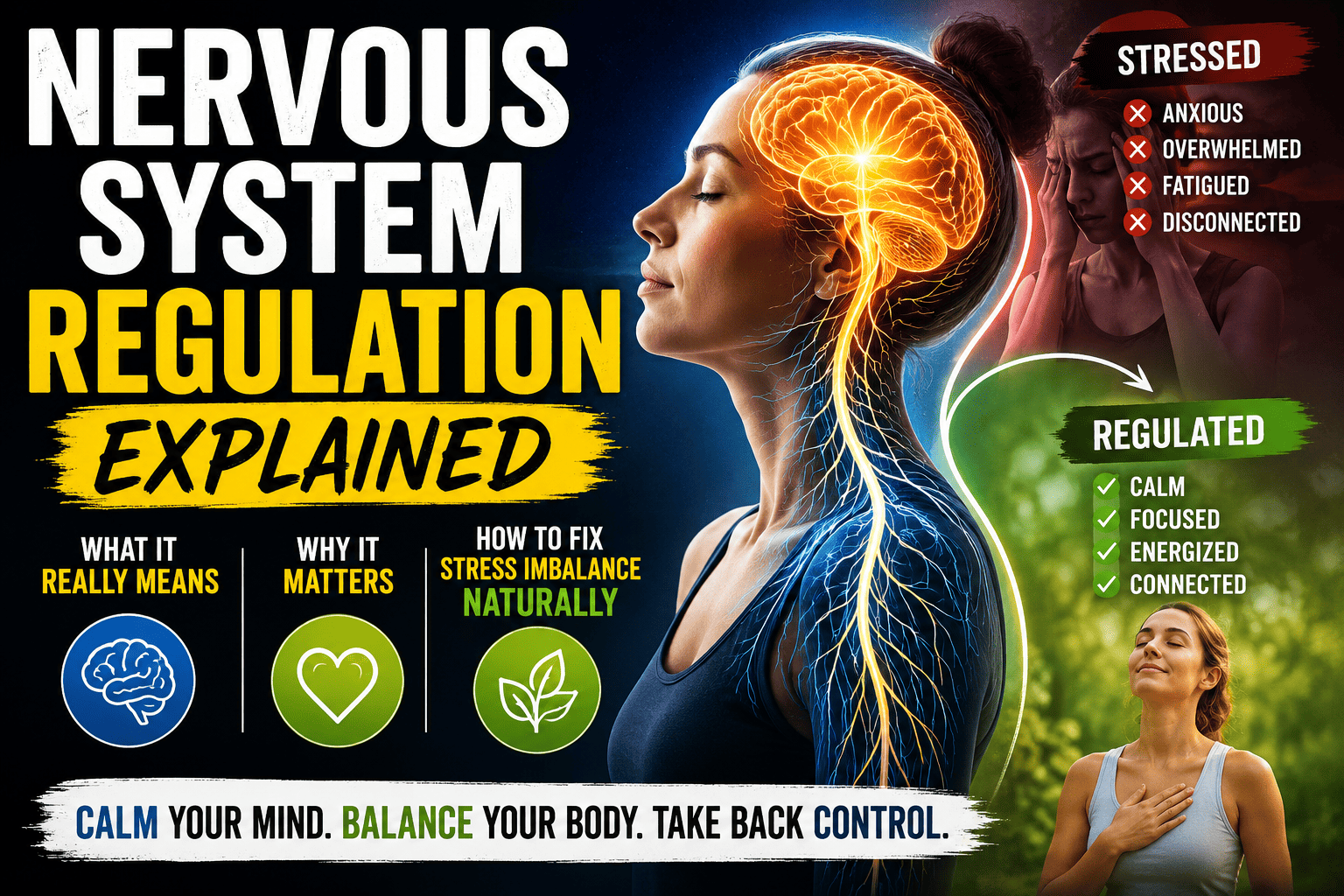
- Primary Keyword: Nervous System Regulation
- Your Nervous System Is Always Working in the Background
- Stress Isn’t Always Bad — Constant Stress Is
- What Is Nervous System Dysregulation?
- Why Modern Life Keeps the Nervous System Overloaded
- The Real Problem Is Lack of Recovery
- Nervous System Regulation Is a Skill — Not a Quick Fix
- How to Regulate Your Nervous System Naturally
- Being Regulated Doesn’t Mean Being Calm All the Time
- Why Nervous System Health Matters More Than Ever
- The Future of Mental Health Is Becoming More Body-Focused
- Conclusion: Regulation Is About Balance, Not Perfection
You’ve probably seen phrases like “regulate your nervous system” or “your body is dysregulated” everywhere lately — especially on Social Media. It sounds serious, but most people are still left wondering what it actually means in daily life.
At its core, nervous system regulation is your body’s ability to handle stress, recover from pressure, and return to balance. When that system works well, you can respond to challenges without feeling constantly overwhelmed. When it doesn’t, even small problems can feel exhausting.
This isn’t just a wellness trend or internet buzzword. It’s biology. And understanding how your nervous system works may explain why you sometimes feel anxious, mentally drained, emotionally reactive, or “stuck” in stress even when nothing dangerous is happening.
Primary Keyword: Nervous System Regulation
Search Intent
People searching for nervous system regulation usually want a simple, practical explanation of how stress affects the body, what dysregulation feels like, and how to improve it naturally.
LSI Keywords
- nervous system dysregulation
- fight or flight response
- chronic stress effects
- how to calm nervous system
- parasympathetic nervous system
- stress recovery
- Mental health and stress
- symptoms of stress overload
Your Nervous System Is Always Working in the Background
Your nervous system acts like the body’s command center. It constantly monitors your surroundings, processes information, and decides how your body should react — often without you even noticing.
Much of this happens through the autonomic nervous system, which controls automatic functions like heart rate, breathing, digestion, and stress responses.
This system operates in two primary modes:
- Fight or Flight (Sympathetic Nervous System): Activates during stress, danger, pressure, or intense focus
- Rest and Digest (Parasympathetic Nervous System): Helps the body relax, recover, repair, and conserve energy
In a balanced system, your body moves naturally between these states. You become alert when needed — then calm down once the situation passes.
The problem is that modern life rarely gives the body enough time to fully recover.
Stress Isn’t Always Bad — Constant Stress Is
Stress itself is not the enemy.
Short-term stress can improve focus, motivation, and performance. Your body was designed to handle temporary pressure.
But stress becomes harmful when it never fully switches off.
When your nervous system stays in fight-or-flight mode for too long, your body starts operating as if danger is always present. Over time, this drains mental and physical energy.
Stress becomes damaging not because it exists — but because the body never gets a chance to recover from it.
What Is Nervous System Dysregulation?
Nervous system dysregulation happens when your body struggles to return to a calm, balanced state after stress.
It doesn’t mean your body is failing. It usually means it has been overloaded for too long without enough recovery.
Think of it like driving a car with the accelerator constantly pressed down. Eventually, the engine overheats.
That same pattern can happen inside the body.
Common Signs of Nervous System Dysregulation
- Feeling tired but unable to relax
- Trouble sleeping despite exhaustion
- Racing thoughts or constant overthinking
- Irritability or emotional sensitivity
- Muscle tension, especially in the neck and shoulders
- Brain fog or difficulty focusing
- Feeling “on edge” without a clear reason
Many people normalize these symptoms because they’ve become so common. But they’re often signs that the body hasn’t fully recovered from ongoing stress.
Why Modern Life Keeps the Nervous System Overloaded
Your brain reacts to emotional pressure much more like physical danger than most people realize.
Deadlines, financial stress, social pressure, nonstop notifications, lack of sleep, and constant stimulation can all activate the same biological stress response once used to survive physical threats.
Thousands of years ago, stress was usually short-term and physical.
Today, stress is often mental, emotional, and nonstop.
| Earlier Human Stress | Modern-Day Stress |
|---|---|
| Short-term danger | Continuous pressure |
| Physical threats | Mental and emotional overload |
| Recovery after danger passed | Very little recovery time |
This mismatch is one reason so many people feel constantly anxious, mentally exhausted, or overstimulated.
The Real Problem Is Lack of Recovery
Most people believe stress is the issue.
In reality, the bigger problem is often the absence of recovery.
Your body is capable of handling stress — but only if it gets enough time to reset afterward.
Without recovery, stress keeps accumulating until the nervous system struggles to function efficiently.
What Chronic Stress Can Do to the Body
- Increase heart rate and blood pressure
- Disrupt sleep quality
- Affect hormone balance
- Cause digestive problems
- Reduce concentration and mental clarity
- Increase the risk of long-term health issues
This is why people often feel exhausted even after resting or mentally overwhelmed without knowing exactly why.
Nervous System Regulation Is a Skill — Not a Quick Fix
One of the biggest misunderstandings online is the idea that nervous system regulation is something you can “fix” overnight.
It’s not.
And that’s important to understand.
Nervous system regulation is about building resilience and improving your body’s ability to recover from stress — not eliminating stress entirely.
It’s closer to building stamina than finding a shortcut.
How to Regulate Your Nervous System Naturally
The good news is that your body already knows how to regulate itself. The goal is simply to support that process consistently.
1. Slow and Controlled Breathing
Deep breathing sends safety signals to the brain and helps reduce stress activation throughout the body.
2. Regular Physical Movement
Walking, stretching, or exercise can help release built-up tension and improve stress recovery.
3. Prioritize Sleep
Sleep is one of the most important recovery systems the body has. Poor sleep makes regulation significantly harder.
4. Reduce Constant Stimulation
Endless scrolling, notifications, and screen exposure can keep the brain in a heightened alert state for long periods.
5. Practice Stillness or Mindfulness
Even a few quiet minutes during the day can interrupt stress cycles and help the nervous system settle.
6. Create Small Recovery Moments Daily
Short breaks, quiet routines, time outdoors, or moments without stimulation can help your body reset more effectively.
Consistency matters more than intensity. Small habits practiced daily often work better than occasional extreme routines.
Being Regulated Doesn’t Mean Being Calm All the Time
One important thing many people misunderstand is this:
Nervous system regulation is not about feeling calm every second of the day.
It’s about flexibility.
A healthy nervous system can handle stress when necessary — and then return to balance afterward.
That’s very different from trying to avoid stress completely.
Why Nervous System Health Matters More Than Ever
In today’s fast-moving world, nervous system dysregulation is becoming increasingly common.
It often shows up as:
- Burnout in students and professionals
- Anxiety and emotional overwhelm
- Poor sleep and constant fatigue
- Difficulty concentrating
- Low motivation or mental exhaustion
Understanding how stress affects the body gives people a practical way to improve both mental and physical well-being.
The Future of Mental Health Is Becoming More Body-Focused
Mental health conversations are gradually shifting beyond thoughts and emotions alone.
There is growing focus on how the body stores, processes, and responds to stress physically.
Future approaches to well-being will likely emphasize:
- Stress recovery techniques
- Body awareness
- Better sleep and recovery habits
- Integrated physical and mental health care
This shift reflects a broader understanding that mental and physical health are deeply connected.
Conclusion: Regulation Is About Balance, Not Perfection
Nervous system regulation is not about eliminating stress or forcing yourself to feel calm all the time.
It’s about helping your body move through stress more effectively and recover afterward.
When your nervous system gets enough support, recovery, and rest, your energy, focus, mood, and overall health often improve together.
Final thought: You don’t need to completely control your life to feel better. Sometimes, your body simply needs more opportunities to slow down, recover, and feel safe again.
For breaking news and live news updates, like us on Facebook or follow us on Twitter and Instagram. Read more on Latest Health on thefoxdaily.com.






COMMENTS 0