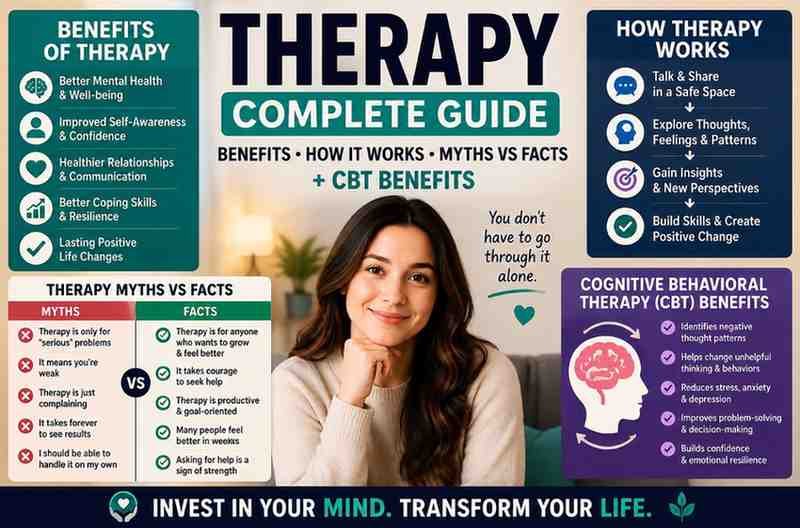
What if everything you think you know about Therapy is only half true? Therapy is often misunderstood seen as something only for crises, or as endless talking without results. In reality, it’s a structured, evidence based process designed to improve how you think, feel, and function. This article explores who therapy is for, what it really involves, when it helps most, where it fits into modern life, why it matters for long term well being, and how it actually works in practice.
Understanding Therapy: Context, Purpose, and Evolution
Therapy, also known as psychotherapy, has evolved significantly over the past century. What began as long, introspective conversations has now expanded into a wide range of approaches from cognitive and behavioral techniques to solution-focused and trauma-informed care. Today, therapy is not just about “talking” it’s about measurable progress, skill-building, and emotional resilience.
Modern therapy is used not only for Mental Health conditions like anxiety or depression, but also for stress management, relationship improvement, career clarity, and personal growth. In many ways, it has shifted from being reactive (used only in crisis) to proactive (used for self-improvement and prevention).
Myths vs Facts About Therapy
| Myth | Reality |
|---|---|
| Therapy is only for “serious” mental illness | Therapy is for anyone looking to improve emotional well being, manage stress, or gain clarity |
| Talking to friends is the same as therapy | Therapists are trained professionals who use structured methods to create lasting change |
| Therapy takes years to work | Many people see improvements in just a few sessions, depending on goals and approach |
| Therapists will judge or analyze everything | Therapy is a non judgmental, confidential space focused on your growth |
| You must know exactly what’s wrong before starting | Therapy helps you figure things out you don’t need all the answers upfront |
Key Developments: How Therapy Works Today
1. Structured, Goal-Oriented Approach
Modern therapy often begins with identifying clear goals whether it’s reducing anxiety, improving sleep, or building confidence. Sessions are designed to move toward these goals step by step.
2. Evidence-Based Techniques
Approaches like cognitive behavioral therapy (CBT) focus on identifying thought patterns and changing behaviors. Other methods, such as mindfulness based therapy, help regulate emotions and reduce stress.
3. Personalized Experience
There’s no one size fits all. Therapy adapts to your personality, challenges, and pace. What works for one person may look completely different for another.
4. Integration with Daily Life
Therapy doesn’t stay in the session it extends into your daily habits, decisions, and relationships. Small changes outside sessions often create the biggest results.
Why Therapy Matters More Than Ever
In a world of constant stimulation, digital overload, and increasing stress, mental clarity has become a competitive advantage. Therapy helps you build that clarity.
Here’s what makes it powerful:
- It improves decision-making by reducing emotional noise
- It strengthens relationships through better communication
- It enhances focus, productivity, and resilience
- It supports long term mental and physical health
Research consistently shows that mental health directly affects physical health impacting sleep, immunity, heart health, and even lifespan. Therapy, therefore, is not just emotional support it’s a health investment.
A Unique Insight: Therapy vs Self Help Culture
One of the biggest shifts in recent years is the rise of self help content books, podcasts, and social media advice. While these can be useful, they often lack personalization and accountability.
Here’s the difference:
| Self Help | Therapy |
|---|---|
| General advice for a broad audience | Personalized strategies tailored to you |
| Passive consumption | Active participation and feedback |
| No accountability | Guided progress with professional support |
| Quick inspiration | Long term transformation |
This doesn’t mean self-help is useless but therapy adds depth, structure, and real change.
Real World Impact: What Changes When You Start Therapy
People often expect dramatic breakthroughs, but the real impact of therapy is more subtle and more powerful.
- You respond instead of reacting
- You understand your patterns instead of repeating them
- You feel less overwhelmed by everyday stress
- You build confidence in handling difficult situations
Over time, these small shifts compound into major life improvements better relationships, clearer goals, and a stronger sense of self.
Common Barriers (and Why They’re Misleading)
“I don’t have time”
Most sessions last about an hour per week. The time you invest often saves hours of stress and overthinking.
“It’s too expensive”
While cost can be a factor, many options exist today online therapy, sliding-scale pricing, and shorter term programs.
“It won’t work for me”
Therapy is not about instant results it’s about consistent progress. Finding the right therapist can make a significant difference.
Future Outlook: Where Therapy Is Heading
The future of therapy is becoming more accessible, flexible, and integrated into everyday life. Digital platforms, shorter therapy models, and hybrid approaches are making it easier than ever to seek help.
We are also seeing a shift in mindset therapy is no longer a last resort, but a proactive tool for growth. Just as people invest in fitness or education, mental health is becoming a priority.
Conclusion: Rethinking Therapy in a Modern World
Therapy is not what many people assume it to be. It’s not just for crises, not just about talking, and not a sign of weakness. It’s a practical, structured, and powerful way to improve how you think, feel, and live.
The biggest myth? That you need to wait until something is “wrong” to start.
The truth is, therapy works best when you see it not as a fix—but as an investment in a better, clearer, more resilient version of yourself.
For breaking news and live news updates, like us on Facebook or follow us on Twitter and Instagram. Read more on Latest Health on thefoxdaily.com.






COMMENTS 0