Primary Keyword: AI powered healthcare wearables
LSI Keywords: smartwatches health tracking AI, wearable health devices India, AI disease detection early, fitness tracker health insights, digital health monitoring 2026, AI diagnostics India, preventive healthcare technology, health apps AI analysis
Introduction: From Passive Tracking to Intelligent Health Monitoring
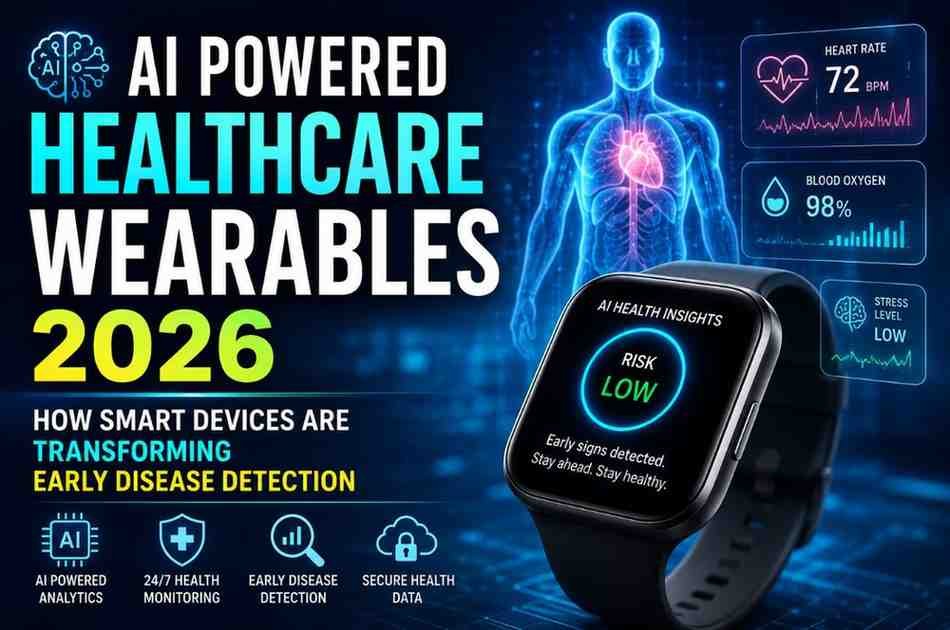
What began as simple step counters has evolved into a powerful health revolution. In 2026, AI-powered healthcare wearables are no longer just fitness accessories they are becoming early warning systems for some of the most serious diseases affecting humanity.
Smartwatches and health apps now continuously monitor vital signs such as heart rate, blood oxygen levels (SpO2), sleep cycles, and even stress patterns. But the real breakthrough lies not in collecting data it lies in interpreting it intelligently. Artificial intelligence (AI) is transforming raw numbers into actionable health insights, allowing individuals and doctors to detect risks before symptoms even appear.
Why AI Wearables Are the Biggest Health Trend of 2026
The surge in AI-driven health technology is not accidental. It reflects a deeper shift in global healthcare from reactive treatment to proactive prevention.
- Rising chronic diseases: Conditions like diabetes, heart disease, and hypertension are increasing globally, especially in urban India.
- Healthcare accessibility gaps: AI tools help bridge the gap where doctors and infrastructure are limited.
- Consumer awareness: People are more invested in tracking their own health metrics than ever before.
- Technology maturity: Advances in machine learning, sensors, and cloud computing have made real-time health analysis possible.
In simple terms, wearables are shifting healthcare from hospitals to homes and from emergencies to early intervention.
What Modern Wearables Can Track (And Why It Matters)
Today’s devices go far beyond counting steps. Here’s what they monitor and how it impacts health outcomes:
1. Heart Rate & Heart Rhythm
Continuous heart monitoring can detect irregularities such as arrhythmias. Some devices can even flag potential atrial fibrillation (AFib), a major risk factor for stroke.
2. Blood Oxygen Levels (SpO2)
SpO2 tracking became mainstream during the COVID 19 pandemic, but its importance extends beyond infections. Low oxygen levels can indicate respiratory or cardiovascular issues.
3. Sleep Patterns
Wearables analyze sleep cycles (REM, deep sleep, light sleep), helping users understand sleep quality not just duration. Poor sleep is linked to obesity, depression, and weakened immunity.
4. Stress & Recovery Metrics
Using heart rate variability (HRV), devices estimate stress levels and recovery status. This helps users manage burnout and improve mental health.
5. Activity & Metabolic Health
From step counts to calorie burn and even VO2 max (oxygen efficiency), wearables provide a comprehensive view of physical fitness and metabolic health.
The Real Game-Changer: AI Interpretation
Collecting health data is only the first step. AI adds value by identifying patterns that humans might miss.
For example:
- A gradual increase in resting heart rate over weeks could signal infection or overtraining.
- Irregular sleep combined with high stress metrics may indicate burnout or anxiety disorders.
- Fluctuating glucose levels (in advanced wearables) can help detect early signs of diabetes.
AI systems compare individual data with millions of data points, generating personalized insights such as:
- “Your stress levels are higher than usual this week.”
- “Your sleep recovery is declining consider adjusting bedtime.”
- “Your heart rate trends suggest a need for medical consultation.”
This shift from data to decision making is what makes AI wearables transformative.
How AI Wearables Are Impacting Healthcare in India
India is emerging as one of the most exciting markets for AI-powered healthcare, driven by both necessity and innovation.
1. Early Detection of Tuberculosis (TB)
AI tools integrated with screening systems are helping identify TB symptoms earlier, especially in rural areas where access to diagnostics is limited.
2. Diabetes Monitoring and Prediction
With India being the diabetes capital of the world, wearable linked AI apps are helping track glucose trends and predict risk patterns.
3. Rural Health Screening
Portable devices combined with AI allow frontline health workers to conduct mass screenings, reducing dependency on large hospitals.
4. Telemedicine Integration
Wearables are increasingly being linked with teleconsultation platforms, enabling doctors to access real-time patient data remotely.
Scientific Backing: What Research Says
Multiple studies support the effectiveness of wearable technology in improving health outcomes:
- Research published in cardiology journals shows that wearable ECG monitoring can significantly improve early detection of arrhythmias.
- Sleep studies indicate that wearable-based sleep tracking can help identify disorders like insomnia and sleep apnea.
- Public health studies in India suggest AI-assisted screening can increase early disease detection rates in underserved populations.
While not a replacement for clinical diagnosis, these tools act as a powerful first line of defense.
Limitations and Risks You Should Know
Despite their advantages, AI wearables are not perfect. Users must understand their limitations:
- Accuracy concerns: Not all devices provide medical-grade data.
- Over reliance: Self-diagnosis based on apps can lead to anxiety or misinformation.
- Privacy issues: Health data security remains a major concern.
- Data interpretation gaps: AI insights are helpful but should not replace professional medical advice.
Experts recommend using wearables as support tools not substitutes for doctors.
The Future: What’s Coming Next?
The next wave of AI-powered health innovation is already underway:
- Continuous glucose monitoring (CGM) without invasive sensors
- Blood pressure tracking via smartwatches
- Mental health prediction models using behavioral data
- Integration with genomics for hyper-personalized healthcare
Eventually, your wearable could act as a “digital twin” of your health predicting diseases years before they develop.
Practical Tips: How to Use Wearables Effectively
If you’re using or planning to use a health wearable, here’s how to maximize its benefits:
- Track trends over time, not just daily numbers
- Focus on sleep and recovery metrics, not only activity
- Use insights to build habits, not create anxiety
- Consult a doctor if you notice consistent abnormal patterns
- Choose devices with validated accuracy and data protection
Conclusion: A New Era of Preventive Healthcare
AI-powered healthcare wearables represent a fundamental shift in how we approach health. Instead of waiting for symptoms to appear, individuals now have the tools to monitor, understand, and act on their health in real time.
In a country like India where healthcare access remains uneven this technology has the potential to democratize early diagnosis and improve outcomes at scale.
The future of healthcare is not just in hospitals. It’s on your wrist.
For breaking news and live news updates, like us on Facebook or follow us on Twitter and Instagram. Read more on Latest Health on thefoxdaily.com.



COMMENTS 0