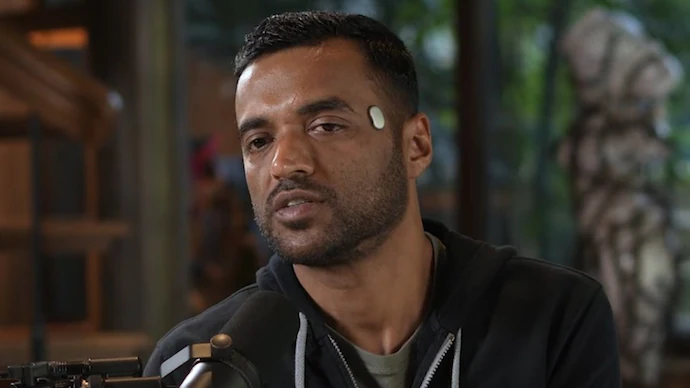
Temple, a brain-tracking wearable backed by Deepinder Goyal, is scheduled to open for pre-orders on November 1. Priced at ₹85,000 for its first batch, the device focuses on tracking physiological signals associated with brain function, including cerebral blood flow, brain oxygenation and cognitive load.
As the company builds anticipation ahead of the launch, Goyal has been answering questions about Temple on X, formerly Twitter. In recent exchanges, he confirmed that users can share their collected data with doctors and clarified an important limitation in the company’s device replacement policy.
The clarification comes as potential buyers seek more information about the wearable’s features, data-sharing capabilities, subscription benefits and long-term ownership costs. Temple will include a lifetime subscription, access to its app features and a one-on-one onboarding session.
Deepinder Goyal Confirms Temple Data Can Be Shared With Doctors
One of the questions raised by prospective users concerned whether the information collected by Temple could be shared with medical professionals in the future.
Priyanshu Goswami, who uses the username @darksentry312 on X, asked Goyal whether users would be able to share the collected data with their doctors. Goyal responded with a simple “Yes,” confirming that the functionality would be available.
The confirmation may be relevant to users who want to discuss their physiological measurements with healthcare professionals. Sharing wearable data could provide additional information about patterns observed during sleep, exercise, stress and recovery, depending on the measurements available and how they are interpreted.
However, the ability to share data with a doctor does not mean Temple is a medical diagnostic device. The wearable is intended for wellness and research rather than diagnosing medical conditions. Its measurements should therefore be considered alongside appropriate professional advice rather than treated as a substitute for clinical evaluation.
Goyal’s response confirms that sharing data is possible, but the available information does not explain the complete process. Details such as supported export formats, direct integration with medical record systems and the controls users will have over shared information have not been specified in the supplied announcement.
Temple Replacement Policy: Lost Devices Only, Not Upgrades
Goyal also clarified what Temple’s website means by “device replacements at a nominal fee.” A user had asked whether the policy would allow existing customers to upgrade to a newer model by paying a small additional amount.
Goyal explained that the offer applies to replacing lost devices and does not include newer models. His response makes clear that the replacement provision should not be interpreted as an upgrade programme.
The distinction is important for buyers considering a premium wearable that may eventually have future hardware versions. A lost-device replacement policy and an upgrade scheme serve different purposes, and the company’s clarification indicates that Temple’s stated offer covers the former.
Potential buyers should not assume that purchasing the first-generation device will entitle them to discounted access to a future model. The supplied information also does not specify the exact replacement fee, eligibility conditions or other terms that may apply.
What Is Temple and How Does Its Brain-Tracking Technology Work?
Temple is designed to monitor physiological signals associated with brain function. Unlike conventional wearables that mainly focus on activity metrics such as steps or general exercise tracking, Temple’s stated focus is on changes in cerebral blood flow and signals linked to brain oxygenation and cognitive load.
The company aims to help users understand how their bodies respond to different conditions, including stress, exercise and recovery. By observing measurements over time, users may be able to identify patterns associated with their routines and daily activities.
The device’s emphasis on brain-related physiological signals is central to its positioning in the wearable market. It seeks to provide information beyond basic fitness tracking, although the usefulness of its measurements depends on how the data is collected, interpreted and applied.
Temple is intended for wellness and research, not medical diagnosis. Users should therefore avoid treating individual readings as definitive evidence of a medical condition or assuming that changes in a measurement establish the cause of a particular symptom.
What Is Temple’s Entropy Score?
One of Temple’s highlighted features is its Entropy score, which ranges from 1 to 250. The score is designed to indicate physiological strain, with factors such as sleep, exercise, stress and caffeine influencing the result.
The score gives users another metric for observing changes in their physiological data. For example, someone could compare readings across different days and consider whether changes coincide with variations in sleep, physical activity or perceived stress.
However, the Entropy score should be understood within its stated purpose. The available information does not establish that a particular score corresponds to a specific disease, nor does it describe the score as a clinically validated diagnostic measure.
As with other wellness metrics, users should consider the broader context of their measurements rather than relying on a single number to assess their health. The company describes Temple as a wellness and research product, making that distinction important when interpreting its output.
Temple Designed for Running, Swimming and Everyday Wear
Temple is designed to remain attached to the skin during daily activities and workouts. It uses disposable adhesive tapes called Grips to keep the device in place.
Goyal has said that users can wear Temple while running, swimming and showering. The company also claims that the wearable’s compact design allows it to sit comfortably underneath glasses.
These design features are intended to make the device practical for people who want to collect physiological data across different activities rather than only during dedicated monitoring sessions.
The use of adhesive tapes is also an important part of the product’s design. Because the device attaches directly to the skin, users will need to consider the availability and ongoing use of its disposable Grips when assessing the practical costs of ownership.
The stated ability to wear Temple during water-based activities comes from the company’s product claims. The supplied information does not provide independent testing results or detailed conditions governing its use during swimming and showering.
Temple Price, Colours and Lifetime Subscription
Temple’s first batch is priced at ₹85,000, and pre-orders are scheduled to begin on November 1. The wearable will be available in six colours: True Gold, Rose Gold, Black Mirror, Real Jade, Deep Blue and Purple Funk.
Real Jade, Deep Blue and Purple Funk are limited-edition colour options. The remaining choices provide additional finishes for buyers who prefer a different appearance.
The purchase includes a lifetime subscription covering access to all app features, along with personal onboarding through a one-on-one introduction to Temple. This onboarding is intended to introduce users to the device and its associated app.
A lifetime subscription may appeal to buyers who prefer not to pay a recurring fee for the software. However, the supplied information does not detail every condition attached to the offer or establish whether all future services and features will necessarily be included.
Given the device’s ₹85,000 starting price, prospective buyers may want to consider its intended use, the measurements it provides, the role of its companion app and the replacement policy before placing an order.
What Temple’s Latest Clarifications Mean for Buyers
Goyal’s responses address two practical questions surrounding Temple: whether users can share collected data with doctors and whether the device replacement offer covers upgrades to newer models.
The answer on data sharing confirms that users can share their information with doctors, although the exact technical process has not been fully explained in the supplied details. The replacement clarification establishes that the nominal-fee provision applies to lost devices rather than upgrades.
Temple’s broader proposition centres on monitoring cerebral blood flow, signals associated with brain oxygenation and cognitive load, alongside its Entropy score. Its design is intended to support everyday wear, while the included lifetime subscription provides access to the app’s features and personal onboarding.
At the same time, the company’s stated wellness and research purpose remains an important consideration. The ability to collect and share physiological data should not be confused with medical diagnosis, and the available details leave some questions about data-sharing methods and replacement terms unanswered.
With pre-orders scheduled to begin on November 1, Temple’s first batch carries a price of ₹85,000 and comes with a lifetime subscription. Goyal’s clarifications give prospective buyers a clearer understanding of the device’s data-sharing capability and replacement policy ahead of its launch.
For breaking news and live news updates, like us on Facebook or follow us on Twitter and Instagram. Read more on Latest Technology on thefoxdaily.com.





COMMENTS 0