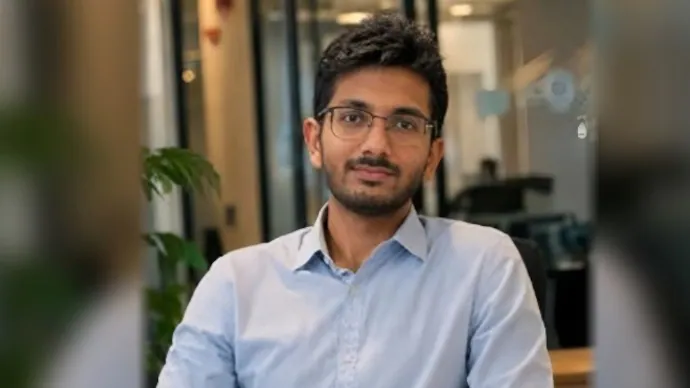
Leaving a well-paying job at one of the world’s biggest technology companies can be a difficult decision, particularly when it means giving up financial security and established career prospects. But for BITS Pilani graduate Atishay Jain, the opportunity to build his own Artificial Intelligence venture was worth taking that risk.
Jain, a software engineer from Baraut in Uttar Pradesh, resigned from Microsoft in October 2026 to focus full-time on his startup, ScaleWorks AI. However, just weeks after his departure, Microsoft announced a voluntary exit offer that could potentially have earned him an additional Rs 15 lakh had he remained with the company a little longer.
Although missing the payout was an unexpected financial setback, Jain says it has not changed his decision. He had already planned to leave his corporate role and pursue entrepreneurship, and he believes the time gained by stepping away from Microsoft is more valuable than dwelling on the money he could have received.
His experience has attracted attention on LinkedIn, where he shared the financial trade-off alongside the early developments at his startup. The story highlights a familiar dilemma for technology professionals: whether to continue with a stable, high-paying corporate career or take the uncertainty of building an independent business.
A Month Too Early to Leave Microsoft?
In a LinkedIn post, Jain revealed that he missed out on approximately Rs 15 lakh because he resigned from Microsoft just weeks before the company announced its voluntary exit offer.
The timing meant that he was no longer eligible for the potential payout. Had he stayed with the company longer and met the applicable conditions, the offer could have provided him with an additional financial benefit at the time of departure.
Jain acknowledged that the timing could have worked in his favour financially. However, he made it clear that the possibility of receiving an exit package was not the deciding factor behind his resignation.
By the time Microsoft announced the offer, he had already made up his mind to leave and concentrate on building ScaleWorks AI. Rather than reconsidering his decision, he chose to accept the missed opportunity and move forward with his entrepreneurial plans.
For someone leaving a major technology company, Rs 15 lakh is a considerable amount. However, Jain’s post suggests that he viewed the decision in terms of the time and freedom he gained rather than the immediate financial loss.
The episode also illustrates how corporate exit programmes can create unexpected situations for employees who have already decided to move on. A decision made weeks earlier can sometimes mean missing out on benefits announced later, even when the employee has no intention of changing their original plans.
What Has Atishay Jain Achieved in His First Month as an Entrepreneur?
While leaving Microsoft meant giving up a potential payout, Jain says his first month as a full-time founder brought encouraging developments for ScaleWorks AI.
According to his LinkedIn update, the startup became an official member of the OpenAI Partner Network. He also secured acceptance into Toptal, a global network of freelance professionals that describes its talent pool as representing the top 3% of applicants.
These developments are among the early milestones Jain has highlighted since moving away from his corporate role. They provide an initial indication of the professional networks and opportunities he is seeking to build around his new venture.
Building ScaleWorks AI
Based in Bengaluru, ScaleWorks AI positions itself as an AI transformation partner for businesses. The company aims to help organisations improve their operations and expand their capabilities through artificial intelligence.
Jain’s broader ambition is to build what he describes as an AI operating layer for the next generation of businesses. The idea reflects a growing interest among companies in integrating AI into everyday workflows, business processes and operational systems rather than treating it only as a standalone technology.
For businesses, AI adoption can involve several areas, including automating repetitive tasks, improving internal processes, analysing information and developing new digital services. An AI transformation partner can help organisations identify suitable applications and integrate relevant tools into their operations.
However, building a company around this opportunity requires more than technical expertise. Jain will also need to develop customer relationships, demonstrate measurable business value and establish a sustainable commercial model as ScaleWorks AI grows.
Why He Values the Time Gained
One of the central themes of Jain’s post is the value of time. Leaving Microsoft allowed him to devote his full attention to ScaleWorks AI instead of balancing startup responsibilities with a demanding software engineering role.
Reflecting on the decision, he wrote: “So, did I lose Rs 15 lakh by leaving a month early, or gain a month of building something that could change many lives? I guess only time will tell.”
He ended the post with another message that reflected his confidence in the long-term journey: “Ask me in 2 years.”
His remarks indicate that he sees entrepreneurship as a longer-term commitment rather than an immediate financial calculation. Instead of measuring the decision only by the payout he missed, he wants to judge it by what he manages to build over the coming years.
From BITS Pilani to Microsoft: Who Is Atishay Jain?
Atishay Jain’s professional journey began with an academic background combining computer science and physics. He graduated from the Birla Institute of Technology and Science (BITS), Pilani, with a dual major in Computer Science and Physics between 2018 and 2023.
During his time at the institute, Jain also worked as a teaching assistant for the course Nonlinear Dynamics and Chaos. The role gave him an opportunity to engage with academic work alongside his studies.
Internships and Research Experience
Before joining Microsoft as a full-time employee, Jain gained professional experience through internships at Microsoft and Nutanix.
He also worked as a Mitacs Globalink Research Intern at Dalhousie University in Canada. During this research experience, he explored deep learning models for health-related data analysis and mortality prediction.
His research work involved applying machine learning techniques to datasets connected with healthcare. This experience added a research dimension to his technical background before he moved into large-scale cloud engineering.
His Career at Microsoft
Jain joined Microsoft in July 2023 as a software engineer in the company’s Azure Data division. His work involved developing services designed to process large-scale cloud usage data in real time, particularly for billing systems.
Working on cloud data infrastructure meant dealing with systems that needed to handle substantial volumes of information while maintaining reliability and performance. Such services form part of the wider technology infrastructure that supports cloud computing operations.
He later progressed to the position of Software Engineer 2, where he worked on a scalable orchestration layer for a self-healing data platform.
A self-healing platform is designed to identify certain operational problems and initiate corrective actions with limited manual intervention. Orchestration layers help coordinate the processes and services required to manage such systems.
After spending more than three years at Microsoft, Jain decided to leave his software engineering career and establish ScaleWorks AI as his primary professional focus.
The Choice Between Financial Security and Entrepreneurship
Jain’s decision reflects a wider challenge faced by professionals working in the technology industry. A position at a major company can offer a regular salary, professional development, access to large-scale projects and financial stability. Starting a business, by contrast, involves uncertainty, personal responsibility and the possibility of financial setbacks.
The missed Rs 15 lakh exit offer has made that trade-off particularly visible in Jain’s case. While the additional money could have provided a financial cushion, he chose not to delay his plans for an opportunity that emerged after his resignation.
His LinkedIn post also prompted reactions from other users who shared their experiences of leaving companies shortly before voluntary retirement or exit programmes were announced. Some said they had faced similar situations but did not regret moving on, while others encouraged Jain to continue pursuing his startup ambitions.
Such experiences underline how difficult it can be to evaluate career decisions based on benefits that become available only after someone has already left. Employees may miss out on a financial opportunity because of timing, but that does not necessarily mean their decision was wrong for their personal or professional goals.
For Jain, the immediate challenge is now to turn ScaleWorks AI’s early progress into a sustainable business. Membership in the OpenAI Partner Network and acceptance into Toptal are encouraging milestones, but the startup’s long-term success will depend on its ability to attract clients, deliver useful AI solutions and build a strong position in the market.
What Comes Next for ScaleWorks AI?
Jain has set himself a two-year horizon to assess what his entrepreneurial decision produces. His message, “Ask me in 2 years,” suggests that he is prepared to let the business journey unfold rather than judge it by the financial opportunity he missed immediately after leaving Microsoft.
The artificial intelligence industry is creating opportunities for startups that can help businesses adopt and implement new technologies. At the same time, competition is increasing as established technology companies, consulting firms and emerging ventures offer AI-powered products and services.
ScaleWorks AI will therefore need to establish a clear value proposition and demonstrate how its solutions can address practical business challenges. Its progress will depend not only on the technology it uses but also on customer trust, execution and the ability to deliver measurable results.
For now, Jain appears focused on building rather than looking back. He gave up the possibility of receiving an additional Rs 15 lakh by leaving Microsoft shortly before its voluntary exit offer, but he gained the opportunity to work full-time on a venture he had already decided to pursue.
Whether that decision eventually delivers greater financial and professional rewards remains uncertain. For Jain, however, the next two years will be about finding out what he can build with the time he chose to reclaim.
For breaking news and live news updates, like us on Facebook or follow us on Twitter and Instagram. Read more on Latest Careers on thefoxdaily.com.






COMMENTS 0