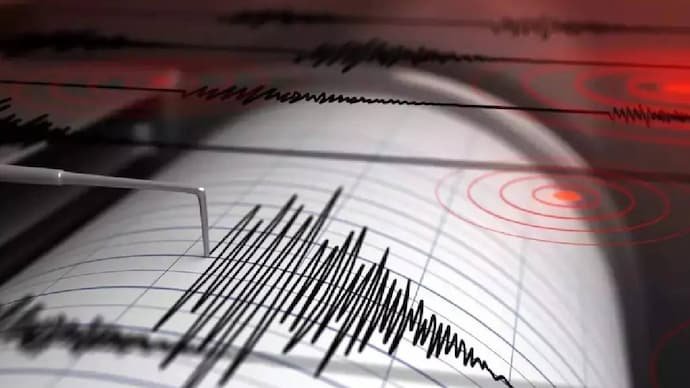
A strong 7.3 magnitude earthquake off the Pacific coast near the Mexico–Guatemala border rattled millions of people across southern Mexico and neighboring Central American countries, prompting evacuations, emergency inspections and tsunami monitoring. Although the earthquake was powerful enough to be felt hundreds of kilometers away including in Mexico City early official assessments indicated there were no immediate reports of widespread destruction or fatalities.
The earthquake occurred near the coast of Chiapas, one of Mexico’s most seismically active states, highlighting once again the region’s vulnerability to powerful tectonic events. Emergency agencies in Mexico, Guatemala and neighboring countries quickly activated monitoring systems, while engineers began inspecting roads, hospitals, bridges and public infrastructure for possible structural damage.
While the absence of significant damage offered relief, experts caution that strong offshore earthquakes can still produce aftershocks and localized hazards, making continued monitoring essential during the hours following a major seismic event.
Where Did the Earthquake Occur?
According to the United States Geological Survey (USGS), the earthquake measured 7.3 on the moment magnitude scale. The epicenter was located approximately 48 kilometers southwest of Aquiles Serdán, near the Pacific coastline of Chiapas, close to the international border with Guatemala.
The quake originated at a relatively shallow depth of about 15 kilometers, a factor that often allows seismic waves to be felt across a much wider geographic area.
Officials also noted that a smaller offshore tremor occurred shortly before the main earthquake, a phenomenon sometimes observed prior to larger seismic events.
Why Was the Earthquake Felt Across Several Countries?
Large earthquakes generate powerful seismic waves that can Travel considerable distances through the Earth’s crust.
Because this earthquake occurred offshore and released significant energy, shaking was reported across:
- Southern Mexico
- Guatemala
- El Salvador
- Parts of Central America
- Mexico City
Local geology also influences how strongly earthquakes are felt. Soft sediments in some urban areas can amplify ground motion, making distant earthquakes appear stronger than expected.
What Happened in Chiapas?
Residents across Chiapas experienced strong shaking, particularly in communities along the Pacific coast.
Authorities immediately began:
- Inspecting public buildings.
- Monitoring coastal communities.
- Checking transportation infrastructure.
- Assessing hospitals and emergency facilities.
- Reviewing communication networks.
Emergency response teams remained on alert in case delayed reports of damage emerged from remote areas.
Evacuations Conducted as a Precaution
Many residents followed earthquake safety procedures by evacuating buildings immediately after the shaking intensified.
Hospitals, offices, schools and residential buildings in affected cities activated emergency evacuation plans designed to reduce the risk of injuries from falling debris or structural failures.
Such precautionary evacuations are considered standard practice following strong earthquakes, even when visible damage is limited.
Tsunami Monitoring After the Offshore Earthquake
Because the earthquake occurred beneath the Pacific Ocean, authorities assessed the possibility of tsunami generation.
Local governments monitored:
- Sea-level changes.
- Coastal wave activity.
- Harbor conditions.
- Potential impacts on low-lying communities.
Offshore earthquakes do not always produce tsunamis. The likelihood depends on several factors, including the movement of the seafloor, earthquake depth, and fault characteristics.
Why Mexico Experiences Frequent Earthquakes
Mexico ranks among the world’s most earthquake-prone countries because it sits at the intersection of several active tectonic plates.
The country’s Seismic Activity is primarily influenced by interactions involving:
- Cocos Plate
- North American Plate
- Pacific Plate
- Rivera Plate
- Caribbean Plate
As these plates gradually move relative to one another, enormous stress accumulates beneath the Earth’s surface. When that stress is suddenly released, earthquakes occur.
Why Chiapas Is a High-Risk Seismic Zone
Chiapas lies along Mexico’s southern Pacific coast, where the Cocos Plate is continuously moving beneath the North American Plate through a process known as subduction.
This geological setting makes the region susceptible to:
- Large offshore earthquakes.
- Strong aftershocks.
- Occasional tsunami threats.
- Ground shaking over wide areas.
As a result, earthquake preparedness forms an important component of disaster management throughout southern Mexico.
Why Didn’t Mexico City’s Earthquake Alert Sound?
Although shaking was felt in parts of Mexico City, authorities explained that the national earthquake early warning system was not activated because the seismic energy detected during the initial seconds of the earthquake did not exceed the predefined activation thresholds.
Earthquake early warning systems are designed to provide alerts only when incoming seismic waves are expected to produce sufficiently strong ground motion in protected areas.
These systems analyze the first seismic waves almost instantly before deciding whether an alert is warranted.
Understanding Earthquake Magnitude
The moment magnitude scale measures the total energy released by an earthquake.
| Magnitude | Typical Impact |
|---|---|
| 5.0–5.9 | Moderate shaking with localized damage possible. |
| 6.0–6.9 | Strong earthquake capable of damaging vulnerable structures. |
| 7.0–7.9 | Major earthquake capable of causing widespread damage near the epicenter. |
| 8.0+ | Great earthquake with potential for extensive regional impacts. |
A magnitude 7.3 earthquake releases substantially more energy than a magnitude 6 earthquake because the scale is logarithmic rather than linear.
Aftershocks May Continue
Following a major earthquake, aftershocks are both common and expected.
These smaller earthquakes occur as the Earth’s crust gradually adjusts after the main rupture.
Although many aftershocks are minor, some can still be strong enough to:
- Cause additional structural damage.
- Trigger landslides.
- Complicate emergency response efforts.
- Increase public anxiety.
Emergency authorities generally advise residents to remain prepared for continued seismic activity during the days or weeks following a significant earthquake.
How Emergency Agencies Respond
Immediately after major earthquakes, disaster response agencies typically follow a structured emergency protocol.
- Assess infrastructure.
- Inspect hospitals and schools.
- Check bridges and highways.
- Monitor communication systems.
- Coordinate rescue resources.
- Provide public safety updates.
Rapid assessments help authorities identify communities requiring urgent assistance while preventing unnecessary panic.
Earthquake Safety Tips
Emergency management experts recommend several basic safety measures during earthquakes.
- Drop, cover and hold on during shaking.
- Stay away from windows and heavy furniture.
- Do not use elevators while evacuating.
- Move to open areas after the shaking stops.
- Follow official emergency instructions.
- Remain alert for aftershocks.
Preparedness significantly reduces the risk of injuries during major seismic events.
Why Strong Earthquakes Affect Global Risk Monitoring
Major earthquakes are closely monitored not only by local authorities but also by international geological agencies and disaster management organizations.
Real-time seismic data helps scientists improve earthquake models, refine tsunami warning systems, and strengthen future disaster preparedness strategies in earthquake-prone regions worldwide.
Future Outlook
Authorities in Mexico and neighboring countries will continue monitoring the affected region for aftershocks while completing detailed inspections of critical infrastructure. Although initial assessments indicate there was no widespread destruction, comprehensive structural evaluations often continue for several days after a major earthquake.
The event also serves as a reminder of the importance of earthquake preparedness across the Pacific Ring of Fire, where tectonic activity remains an unavoidable part of life. Continued Investment in resilient infrastructure, early warning Technology and public Awareness will remain essential for reducing future disaster risks.
Conclusion
The 7.3-magnitude earthquake near the Mexico–Guatemala border demonstrated how powerful offshore seismic events can be felt across multiple countries within seconds. Fortunately, early reports indicated no immediate major damage or casualties, reflecting the effectiveness of emergency response systems and public preparedness in the affected region.
While officials continue evaluating infrastructure and monitoring aftershocks, the earthquake underscores the ongoing seismic risks faced by communities along the Pacific coast. As scientific monitoring and disaster preparedness continue to improve, rapid emergency coordination remains the key to minimizing the human and economic impact of future earthquakes.
For breaking news and live news updates, like us on Facebook or follow us on Twitter and Instagram. Read more on Latest World on thefoxdaily.com.


COMMENTS 0