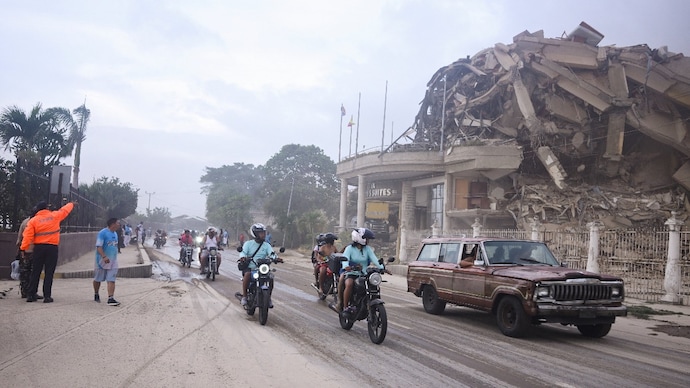
The international community has rallied behind Venezuela after twin powerful earthquakes devastated parts of the country, killing at least 164 people and injuring more than 1,000 others. As rescuers continue searching through collapsed buildings and damaged neighborhoods, governments from North America, Europe, Asia and Latin America have begun mobilizing emergency assistance, highlighting the scale of a disaster that could reshape Venezuela’s humanitarian and economic landscape for years.
The earthquakes, measuring 7.2 and 7.5 magnitude, struck within seconds of each other, creating a rare and highly destructive seismic event. Buildings collapsed, roads cracked, infrastructure suffered major damage and thousands of residents were forced from their homes. While emergency crews race against time to find survivors trapped beneath rubble, international aid is becoming increasingly critical to support rescue operations and eventual reconstruction efforts.
Beyond the immediate tragedy, the disaster has also become a major test of global humanitarian cooperation, with countries setting aside political differences to provide assistance to one of South America’s most severely affected nations.
What Happened in Venezuela?
Venezuela experienced one of the strongest earthquakes in its modern History when two major tremors struck within less than a minute of each other. Seismologists note that back-to-back earthquakes can be especially destructive because structures weakened by the first shock are often unable to withstand the second.
The quakes struck during evening hours when many residents were inside homes, apartment buildings, offices and public spaces. The timing significantly increased the potential for casualties and injuries.
Several aftershocks followed, adding to public fear and complicating rescue efforts. Emergency officials reported extensive structural damage in urban areas, particularly in densely populated regions where older buildings proved vulnerable to seismic activity.
Authorities continue to assess the full extent of the destruction, but preliminary reports indicate significant damage to transportation networks, public infrastructure and residential properties.
Why the Global Response Was Immediate
Disaster management experts often describe the first 72 hours after a major earthquake as the most critical period for saving lives. During this window, trapped survivors have the highest chance of being rescued.
This urgency explains why governments moved quickly to offer support.
Modern earthquake response requires highly specialized equipment, trained rescue personnel, medical resources and logistical coordination that can overwhelm even well-prepared countries. International assistance helps fill these gaps while accelerating rescue operations.
The scale of devastation visible through images and videos emerging from Venezuela further amplified the global response, prompting numerous governments to activate emergency aid mechanisms within hours.
United States Deploys Search and Rescue Teams
The United States was among the first countries to announce direct assistance.
American authorities confirmed the deployment of search-and-rescue specialists, humanitarian aid resources and emergency medical support aimed at helping Venezuelan authorities manage the crisis.
The decision is noteworthy given the often complicated relationship between Washington and Caracas. Historically, major natural disasters have occasionally created opportunities for humanitarian cooperation even between governments that maintain political disagreements.
The focus now remains on life-saving operations and providing relief to affected communities.
France Sends Specialized Disaster Response Units
France has pledged one of the most significant immediate international deployments.
French authorities announced the dispatch of specialized rescue personnel trained in urban search-and-rescue operations. These teams are equipped to work in highly dangerous environments involving collapsed structures, unstable debris and complex extraction scenarios.
Modern rescue missions increasingly rely on advanced technologies such as thermal imaging devices, acoustic sensors and specialized detection equipment capable of locating survivors trapped beneath rubble.
French emergency teams have extensive experience responding to disasters worldwide, making them a valuable addition to ongoing rescue efforts.
Brazil and China Signal Long-Term Support
While immediate rescue operations dominate headlines, several countries have already indicated their willingness to assist Venezuela throughout the recovery process.
Brazil has begun evaluating potential support measures, while china has expressed readiness to provide assistance based on Venezuela’s evolving needs.
This distinction matters because the aftermath of a major earthquake extends far beyond Emergency Response.
Recovery often requires years of investment in housing, Healthcare, infrastructure and economic rehabilitation. Countries capable of providing financial, technical and logistical assistance can play a crucial role in accelerating reconstruction efforts.
The Three Phases of Earthquake Recovery
Large-scale disasters typically unfold in three distinct stages:
- Emergency Rescue Phase: Saving lives and locating survivors trapped beneath debris.
- Humanitarian Relief Phase: Providing shelter, food, water, medical care and essential services.
- Reconstruction Phase: Rebuilding infrastructure, homes, schools, hospitals and local economies.
While rescue operations may last days or weeks, reconstruction often continues for years.
Countries that have experienced major earthquakes frequently face long-term challenges involving housing shortages, infrastructure repairs, economic disruption and social recovery.
For Venezuela, these challenges could prove particularly significant given existing economic constraints and infrastructure pressures.
The Human Cost Beyond Casualty Numbers
Although casualty statistics provide an immediate measure of a disaster’s severity, they often fail to capture its full human impact.
Thousands of families may have lost homes, livelihoods and access to essential services. Children could face disruptions to education, while healthcare systems may struggle under increased demand.
Psychological trauma is another often overlooked consequence. Survivors of major earthquakes frequently experience anxiety, stress and emotional challenges long after physical rebuilding begins.
Humanitarian organizations increasingly emphasize Mental health support as an essential component of disaster recovery.
Technology Is Changing Modern Disaster Response
One of the most significant developments in recent years has been the integration of advanced technology into disaster management.
Modern rescue teams increasingly use:
- Drones for aerial assessments.
- Satellite imagery for damage mapping.
- Artificial intelligence-assisted analytics.
- Thermal imaging systems.
- Real-time communication networks.
- Digital logistics platforms.
These technologies enable faster decision-making, more efficient resource allocation and improved coordination between local and international responders.
As international teams arrive in Venezuela, such tools are expected to play a critical role in ongoing rescue and recovery efforts.
Economic Consequences Could Be Severe
Major earthquakes rarely affect only physical infrastructure. They often trigger broader economic consequences that persist long after rescue operations conclude.
Damaged roads, airports and transportation networks can disrupt trade and supply chains. Businesses may face prolonged closures, while government resources are redirected toward emergency response and reconstruction.
Insurance costs, rebuilding expenses and lost economic activity can collectively amount to billions of dollars.
For Venezuela, rebuilding critical infrastructure while supporting affected communities could become one of the country’s most significant economic challenges in recent years.
A Rare Moment of International Unity
One of the most remarkable aspects of the crisis has been the breadth of international support.
Countries with diverse political systems and geopolitical interests have all expressed solidarity with Venezuela.
Natural disasters often create moments when humanitarian priorities transcend diplomatic disagreements. The shared goal becomes protecting lives, reducing suffering and supporting recovery.
This collective response demonstrates the growing importance of international disaster cooperation in an increasingly interconnected world.
What Happens Next?
The coming days will be crucial.
Rescue workers will continue searching damaged structures while authorities work to determine the full scale of casualties and destruction. Additional international aid is expected to arrive as governments and humanitarian organizations expand their response efforts.
Attention will then gradually shift toward rebuilding homes, restoring infrastructure and supporting economic recovery.
The speed and effectiveness of these efforts will significantly influence how quickly affected communities can return to normal life.
Conclusion
The devastating earthquakes that struck Venezuela have triggered one of the largest international humanitarian responses in recent years. With at least 164 lives lost, more than 1,000 people injured and widespread destruction affecting communities across the country, the scale of the challenge remains immense.
Yet amid the tragedy, the rapid mobilization of global support demonstrates the power of international cooperation during times of crisis. Rescue teams, medical personnel and humanitarian agencies are now working alongside Venezuelan authorities to save lives and support survivors.
While the immediate focus remains on rescue operations, the true test lies ahead. Rebuilding homes, restoring infrastructure and helping affected communities recover will require sustained commitment and resources. The coming months will determine not only how Venezuela recovers from this disaster, but also how effectively the international community can translate solidarity into lasting support.
For breaking news and live news updates, like us on Facebook or follow us on Twitter and Instagram. Read more on Latest World on thefoxdaily.com.






COMMENTS 0