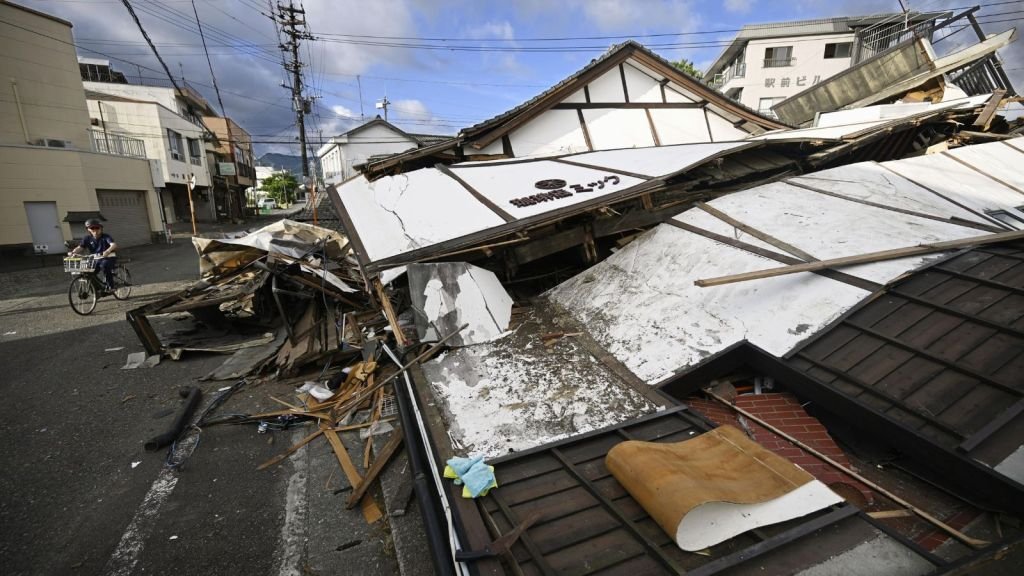
japan is once again confronting the devastating impact of a major Natural Disaster after a 7.1 magnitude earthquake struck the Kumamoto area on the southern island of Kyushu. According to Japanese authorities, the death toll has risen to 13, while emergency teams continue searching for people believed to be trapped beneath collapsed structures.
Prime Minister Sanae Takaichi described the rescue effort as “a race against time,” emphasizing that every available resource is being deployed to locate survivors. The earthquake, which struck late Tuesday afternoon, caused significant damage in affected communities and prompted nationwide Emergency Response measures.
As Rescue Operations continue, officials have urged residents to remain alert for aftershocks, avoid damaged buildings, and protect themselves from the intense summer heat, which poses additional risks to both survivors and emergency personnel.
What Happened?
The earthquake struck the Kumamoto Prefecture on Japan’s southern main island of Kyushu. Measuring 7.1 on the moment magnitude scale, the quake generated violent shaking across the region, damaging homes, roads, and public Infrastructure.
Emergency services were dispatched immediately after the earthquake, with firefighters, police officers, military personnel, and medical teams working through the night to rescue trapped residents.
Authorities confirmed that 13 people had lost their lives, while rescue crews continued searching areas where buildings collapsed or suffered severe structural damage.
Earthquake at a Glance
| Category | Details |
|---|---|
| Magnitude | 7.1 |
| Location | Kumamoto Prefecture, Kyushu, Japan |
| Date | Tuesday afternoon |
| Confirmed Deaths | 13 |
| Main Response | Large-scale search and rescue operation |
| Major Risks | Aftershocks, structural damage, extreme summer heat |
Prime Minister Sanae Takaichi Calls Rescue a ‘Race Against Time’
Following the disaster, Prime Minister Sanae Takaichi expressed condolences to the families of those WHO died and assured the public that the government was mobilizing all available resources.
“There are people who are still waiting to be rescued, and it’s a race against time. We will marshal all available resources on the ground to save and rescue as many people as possible.”
She also urged residents in affected communities to prioritize their Health and safety while following evacuation guidance issued by local authorities.
Why Rescue Operations Are Critical During the First 72 Hours
Emergency management experts often describe the first three days after a major earthquake as the most critical period for finding survivors trapped under debris.
Search teams typically focus on:
- Collapsed residential buildings.
- Commercial structures.
- Schools and public facilities.
- Roads blocked by landslides.
- Areas where emergency calls were last received.
Advanced equipment, including search dogs, thermal imaging devices, Drones, and specialized listening instruments, is commonly used to locate survivors as quickly as possible.
Why Kumamoto Is Vulnerable to Earthquakes
Kumamoto lies on Japan’s southern island of Kyushu, one of the country’s most geologically active regions. Japan sits along the Pacific Ring of Fire, where several major tectonic plates meet.
The country experiences thousands of earthquakes every year because of the movement of these plates beneath the Earth’s surface. While most are too small to cause damage, stronger earthquakes can trigger widespread destruction.
Kumamoto itself has experienced significant Seismic Activity in the past, making earthquake preparedness an important part of local disaster planning.
Japan’s Earthquake Preparedness System
Japan is widely regarded as one of the world’s most earthquake-prepared nations. Over decades, the country has invested heavily in:
- Strict earthquake-resistant building standards.
- Nationwide early warning systems.
- Regular disaster preparedness drills.
- Advanced seismic monitoring networks.
- Public education on emergency response.
These measures have significantly reduced casualties in many earthquakes, although powerful seismic events can still overwhelm infrastructure and emergency services.
Summer Heat Adds Another Challenge
Beyond the immediate impact of the earthquake, authorities have warned that high summer temperatures present additional dangers.
Rescue workers face physically demanding conditions while operating for long hours, and displaced residents staying in temporary shelters are at increased risk of dehydration and heat-related illnesses.
Officials have advised residents to:
- Drink sufficient water.
- Stay in shaded or cooled areas whenever possible.
- Follow official evacuation instructions.
- Avoid entering damaged buildings.
- Monitor local emergency updates.
How Earthquakes of Magnitude 7.1 Can Cause Damage
A magnitude 7.1 earthquake releases enormous amounts of energy and is capable of causing severe destruction, particularly near its epicenter.
| Potential Impact | Description |
|---|---|
| Building Damage | Collapse of older or weakened structures |
| Infrastructure | Road, bridge and utility disruptions |
| Landslides | Possible in mountainous terrain |
| Power Supply | Localized outages may occur |
| Transport | Rail and road services may be suspended for inspections |
Aftershocks Remain a Serious Concern
Following a major earthquake, smaller aftershocks frequently occur over the following hours, days, or even weeks.
These secondary tremors can:
- Further weaken damaged buildings.
- Trigger additional landslides.
- Complicate rescue operations.
- Create new hazards for displaced residents.
Authorities generally advise people to stay away from damaged structures until engineers determine they are safe.
Economic and Community Impact
Major earthquakes affect communities far beyond the immediate loss of life.
Potential consequences include:
- Temporary closure of businesses.
- Disruption to transportation networks.
- Damage to schools and hospitals.
- Housing shortages.
- Recovery costs running into billions of dollars.
Local governments typically begin damage assessments soon after rescue operations stabilize, allowing reconstruction planning to begin.
Comparison With Previous Earthquake Response Lessons
Japan’s disaster management system has evolved significantly through experience with previous major earthquakes. Improvements in building standards, emergency communication, and public preparedness have strengthened the country’s ability to respond quickly.
| Preparedness Area | Modern Approach |
|---|---|
| Building Codes | Earthquake-resistant construction standards |
| Emergency Alerts | Nationwide earthquake early warning system |
| Public Education | Regular evacuation and safety drills |
| Search Operations | Rapid deployment of specialized rescue teams |
| Medical Response | Coordinated national disaster assistance |
Expert Insight: Preparedness Saves Lives, But Nature Remains Unpredictable
Disaster management specialists frequently point to Japan as a global leader in earthquake preparedness. Advanced engineering, strict construction regulations, and highly trained emergency responders have significantly improved survival rates during many earthquakes.
However, experts also emphasize that earthquakes remain inherently unpredictable. Even in countries with robust disaster planning, powerful seismic events can still result in casualties and widespread disruption, particularly when they strike populated areas.
The current Rescue Operation highlights both the strengths of Japan’s emergency response system and the continuing challenges posed by major natural disasters.
What Happens Next?
Authorities will continue search-and-rescue operations while engineers inspect buildings, bridges, roads, and other critical infrastructure for structural damage.
As rescue efforts progress, officials are expected to:
- Update casualty figures.
- Assess infrastructure damage.
- Provide emergency shelter for displaced residents.
- Restore essential public services.
- Begin long-term recovery planning.
Future Outlook
Japan’s immediate priority remains locating survivors and ensuring the safety of residents in affected communities. Once rescue operations conclude, attention will shift toward rebuilding damaged infrastructure, supporting displaced families, and evaluating lessons that may strengthen future disaster preparedness.
Given Japan’s extensive experience in earthquake recovery, reconstruction efforts are expected to be systematic and carefully coordinated, although complete recovery may take months or longer depending on the extent of the damage.
Conclusion
The 7.1 magnitude earthquake that struck Kumamoto has claimed at least 13 lives and prompted an extensive emergency response across southern Japan. As rescue teams continue searching for survivors, authorities remain focused on protecting residents from aftershocks, damaged infrastructure, and extreme summer temperatures.
The disaster serves as another reminder of Japan’s unique geological challenges and the importance of strong disaster preparedness. While the country has developed one of the world’s most advanced earthquake response systems, the ongoing rescue effort underscores that powerful natural events continue to test even the most resilient communities.
For breaking news and live news updates, like us on Facebook or follow us on Twitter and Instagram. Read more on Latest World on thefoxdaily.com.



COMMENTS 0