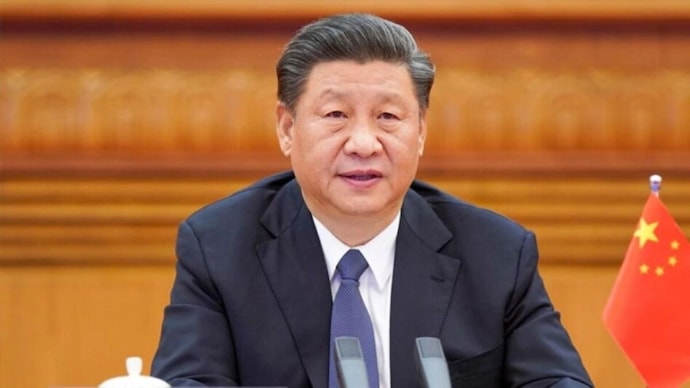
Chinese President Xi Jinping’s arrival in Cairo marks more than a ceremonial milestone in China–Egypt relations. His first visit to Egypt in a decade comes as Beijing seeks a larger role in the Middle East, while Egypt is trying to diversify its strategic partnerships beyond its long-standing relationship with the United States.
Xi was welcomed by Egyptian President Abdel Fattah el-Sisi on Tuesday, September 1, beginning a three-day state visit that coincides with the 70th anniversary of diplomatic relations between China and Egypt. The two countries established formal ties in 1956, making Egypt the first Arab and African country to establish diplomatic relations with the People’s Republic of China.
The timing gives the visit additional significance. The Middle East is facing major security and economic disruptions, including the continuing Iran conflict and disruption to shipping through the Strait of Hormuz. At the same time, China is seeking to present itself as a long-term economic partner and diplomatic actor in a region where the United States remains deeply involved but faces growing questions about its future commitments.
Why Xi’s Egypt visit matters now
China and Egypt have been strengthening their relationship for years, but the current regional environment gives their partnership a much broader strategic dimension.
For Beijing, Egypt offers access to one of the most important countries in the Arab world, as well as a gateway between Africa, the Middle East, the Mediterranean and major global shipping routes. For Cairo, closer relations with China provide another source of investment, infrastructure financing, technology and diplomatic support at a time when Egypt wants greater freedom to work with multiple global powers.
Xi’s visit therefore fits into a wider Chinese strategy: build relationships with countries that have significant geographic, economic and political importance without requiring them to abandon their existing partnerships with Washington or other Western governments.
Egypt remains an important American security partner and receives substantial US military assistance. Yet Cairo has also expanded its engagement with China, Russia, Europe and other emerging powers. That diversification allows Egypt to avoid relying exclusively on one major international partner.
China and Egypt mark 70 years of diplomatic ties
The anniversary of diplomatic relations gives the visit a carefully chosen political backdrop.
Egypt and China have gradually moved from conventional diplomatic relations to a comprehensive strategic partnership. Their relationship has expanded into infrastructure, manufacturing, energy, transport, telecommunications, education, technology and defense cooperation.
Xi marked the anniversary in an opinion article published in Egyptian state media, emphasizing the historical depth of the relationship and calling for a new phase of cooperation. El-Sisi has similarly highlighted China’s investments and the expansion of bilateral economic and political ties.
The symbolism matters because Beijing often places considerable emphasis on long-term relationships with developing countries. By highlighting seven decades of diplomatic cooperation, China can frame its role in Egypt not as a recent attempt to gain influence but as part of a much longer partnership.
Egypt is becoming an important part of China’s economic strategy
Economic cooperation is at the center of the China-Egypt relationship.
China has invested more than $10 billion in Egypt across projects including manufacturing, infrastructure and the development of a new administrative and business district east of Cairo. Chinese companies have also become involved in transportation and industrial projects.
Bilateral trade has expanded substantially, with annual trade estimated at around $20 billion according to government figures. That makes China one of Egypt’s most important economic partners.
The Belt and Road Initiative has provided another framework for cooperation. Egypt joined the initiative and has sought Chinese participation in projects designed to improve industrial capacity and transport connectivity.
For Beijing, Egypt is attractive because its importance extends well beyond its domestic market. The country sits at the intersection of Africa, Asia and Europe and controls the Suez Canal, one of the world’s most important maritime trade routes.
That geography gives Chinese investment in Egypt a potential strategic value that cannot be measured simply by the size of individual construction projects.
The Suez Canal makes Egypt especially valuable to Beijing
The importance of Egypt becomes even clearer when global shipping disruptions are taken into account.
The Strait of Hormuz has faced severe disruption during the Iran conflict, creating uncertainty for oil and other energy shipments moving out of the Persian Gulf. That has increased attention on alternative routes and on the countries controlling major maritime chokepoints.
The Suez Canal cannot simply replace the Strait of Hormuz for all cargo because the two waterways serve different geographic functions. But the canal remains a crucial link between the Red Sea and the Mediterranean and is particularly important for trade between Asia, Europe and parts of the Middle East.
For China, maintaining strong relations with Egypt therefore has an economic and strategic logic. Beijing has a major interest in keeping international trade routes open and ensuring that its commercial connections with Europe, Africa and the Middle East remain resilient.
Egypt also benefits from this relationship because its geographic importance gives Cairo leverage when negotiating with major powers seeking access to its infrastructure, markets and strategic location.
China wants a larger diplomatic role in the Middle East
China’s ambitions in the region are not limited to infrastructure and trade.
Beijing has increasingly attempted to portray itself as a diplomatic actor capable of working with countries that have historically depended more heavily on the United States.
One of the clearest examples came in 2023, when China helped broker the restoration of diplomatic relations between Saudi Arabia and Iran. The agreement attracted international attention because Riyadh had long been a major US partner while Tehran remained one of Washington’s principal regional adversaries.
The episode allowed Beijing to demonstrate that its influence in the Middle East could extend beyond economic investment.
China has also consistently supported a two-state solution to the Israeli-Palestinian conflict and has maintained relations with the Palestinian leadership. Beijing has used such positions to appeal to Arab governments that often criticize Western policy toward the Palestinian issue.
That does not mean China has replaced the United States as the region’s dominant security power. American military deployments, alliances and defense relationships remain considerably deeper. China’s approach is different: economic dependence, diplomatic engagement and political partnerships are being built alongside selective military cooperation.
China and Egypt are also expanding defense cooperation
The relationship has recently moved into an increasingly important military dimension.
In August, China and Egypt conducted a multi-day air exercise at several Egyptian bases. The exercise involved Chinese J-16 fighter jets and Egypt’s French-made Rafale aircraft, highlighting the increasingly diverse nature of Egypt’s defense relationships.
Egypt’s military has traditionally relied heavily on Western equipment, particularly from the United States and France. Its willingness to conduct exercises with China shows that Cairo is prepared to broaden military engagement even while maintaining its established Western partnerships.
For China, exercises with Egypt provide valuable military-to-military engagement in a strategically important region. They also demonstrate that Chinese defense equipment and military cooperation are increasingly visible outside East Asia.
However, the exercise should not be interpreted as evidence that Egypt is switching military alliances. Cairo has strong and longstanding defense relationships with Washington and European countries. Its broader strategy appears to be diversification rather than choosing Beijing over the West.
BRICS and the changing global alignment
Egypt’s participation in the BRICS grouping also reflects the country’s broader diplomatic strategy.
Egypt was invited to join BRICS in 2023 and became part of the expanded grouping in 2024. The organization has increasingly been presented as a platform through which emerging economies can increase their influence in global economic and political affairs.
China is one of the most influential members of BRICS, giving Beijing and Cairo another institutional framework for cooperation.
Egypt’s engagement with BRICS does not automatically mean it is moving away from Western institutions. Cairo continues to maintain important economic, diplomatic and security relationships with the United States and Europe.
Instead, Egypt’s approach reflects a broader trend among middle powers: maintaining multiple relationships simultaneously so that economic and strategic options remain open.
Iran adds another layer to Xi’s Egypt visit
The regional security crisis surrounding Iran makes Xi’s visit even more consequential.
China has maintained close economic relations with Iran and remains a major buyer of Iranian oil. At the same time, Beijing has tried to preserve working relationships with Iran’s regional rivals, including Saudi Arabia and other Gulf states.
This balancing strategy is central to China’s Middle East policy. Beijing has little interest in becoming trapped inside the region’s rivalries. Its economic interests depend on maintaining relationships across competing political camps.
The current conflict makes that challenge harder.
Disruption to energy supplies and shipping threatens China’s economic interests because the country remains heavily dependent on imported energy and global trade. The longer regional instability continues, the greater the incentive for Beijing to maintain diplomatic channels with as many governments as possible.
Egypt provides one such channel because Cairo has historically maintained relationships with a wide range of regional and international actors.
Egypt wants investment without giving up strategic flexibility
For el-Sisi’s government, closer ties with China are also driven by economic necessity.
Egypt needs investment to support infrastructure development, industrial expansion, energy projects and employment. Chinese companies can provide financing, construction capabilities and manufacturing expertise that complement investment from Western and Gulf partners.
At the same time, Cairo has little incentive to abandon its relationship with Washington. The United States remains important to Egypt’s military, security cooperation and diplomatic calculations.
The result is a pragmatic foreign-policy model in which Egypt can cooperate with China on infrastructure, trade and technology while continuing to work with the United States on defense and regional security.
That balancing act is becoming increasingly common across the Middle East. Countries are seeking relationships with several major powers rather than placing all their strategic interests in one camp.
What China gains from a stronger relationship with Egypt
China’s interest in Egypt can be understood through several overlapping objectives.
- Trade and investment: Egypt provides a large market and an industrial base connecting China with African, Arab and European markets.
- Strategic geography: The Suez Canal gives Egypt an exceptional position in global shipping.
- Diplomatic influence: Egypt is one of the most influential political actors in the Arab world.
- Africa access: Cairo can help Beijing strengthen relationships across the African continent.
- Energy security: Stable relationships with Middle Eastern countries are important to China’s energy interests.
- Global South Diplomacy: Cooperation with Egypt strengthens Beijing’s message that developing countries should have a larger role in international affairs.
These interests explain why Xi’s visit is about much more than signing economic agreements or celebrating an anniversary.
What the visit means for the United States
Washington still has significantly deeper military and security ties with Egypt than Beijing does. That reality is unlikely to change because of a single presidential visit.
But the expansion of China’s relationship with Cairo illustrates a longer-term challenge for the United States: countries that have traditionally depended on Washington are increasingly willing to build parallel relationships with Beijing.
For Egypt, this creates additional options. For China, every such relationship expands its diplomatic network.
The competition is therefore not necessarily about forcing countries to choose between China and America. In many cases, Beijing’s strategy is to become important enough that countries do not have to choose at all.
Xi’s Egypt visit points to a broader Middle East strategy
Xi Jinping’s return to Egypt after ten years demonstrates how significantly the China-Egypt relationship has evolved since his previous visit in 2016.
The partnership now combines infrastructure investment, trade, political coordination, defense contacts and diplomatic cooperation. The 70th anniversary of formal relations provides the occasion, but the strategic circumstances give the visit its wider importance.
Egypt is particularly valuable because of its location, its influence in the Arab world and its role in global transportation. China, meanwhile, is trying to build influence through economic engagement and diplomacy at a time when Middle Eastern governments are reassessing their relationships with major powers.
The visit does not signal an immediate replacement of American influence by Chinese influence in Egypt or the wider Middle East. The United States retains major military, economic and diplomatic advantages in the region.
But the direction of travel is clear: China is becoming harder to ignore.
As regional conflicts reshape energy markets, shipping routes and diplomatic alliances, Beijing’s relationship with Cairo gives it another important foothold at the intersection of the Middle East, Africa and Europe. For Egypt, meanwhile, closer ties with China provide another pillar in an increasingly diversified foreign policy.
The real test will come after Xi leaves Cairo. If the two countries turn political goodwill and large infrastructure projects into deeper industrial, technological and trade cooperation, the visit could become an important milestone in China’s long-term expansion across the Middle East.
For breaking news and live news updates, like us on Facebook or follow us on Twitter and Instagram. Read more on Latest World on thefoxdaily.com.




COMMENTS 0