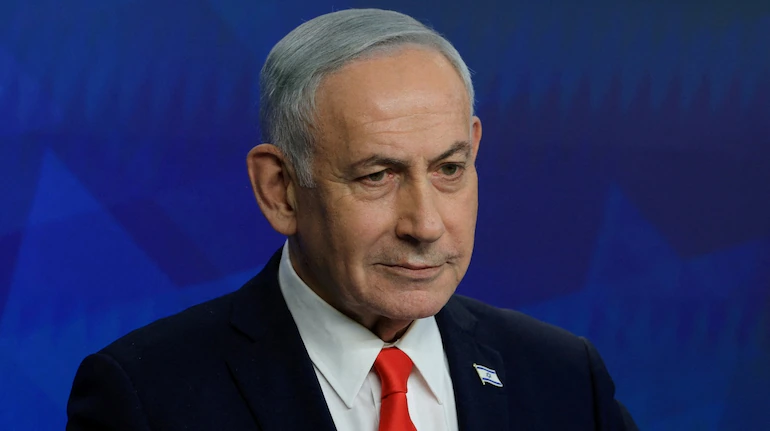
Israeli Prime Minister Benjamin Netanyahu and Mossad chief Roman Gofman reportedly sought to carry out an operation against Iran in the days before Israel’s October 27 election, but the plan was abandoned after the United States learned about the preparations and intervened, according to an Israeli television report.
The report, broadcast by Channel 12 on November 6, has added to growing accounts of disagreements within Israel’s security establishment over the timing and potential consequences of military action against Tehran. Senior Israeli security officials were reportedly concerned that an operation could trigger a wider confrontation with Iran and potentially disrupt the election.
According to the broadcaster, an Israeli security operative inadvertently exposed the preparations to Washington after acting rashly. The United States then moved to stop the proposed operation.
Neither the nature of the operation nor its intended targets inside Iran have been publicly disclosed. The report also did not provide details about how the operative revealed the preparations or precisely how Washington intervened.
Netanyahu’s office rejected the account, saying: “The prime minister himself clarified in real time that an attack before the Israeli elections was not on the agenda.”
The allegations remain unconfirmed. However, they follow several reports published in the days before the election describing disagreements between Netanyahu, senior military officials and intelligence figures over possible action against Iran.
What the Report Says About Netanyahu and Mossad Chief Roman Gofman
Channel 12 reported that Netanyahu and Gofman supported preparations for an operation against Iran shortly before Israelis went to the polls on October 27. Other senior figures in Israel’s security establishment reportedly opposed the proposal because of the potential for escalation.
The report suggested that the concerns were not limited to the military consequences. A confrontation with Iran could have created an emergency situation that might have forced authorities to postpone the election, disrupting the political calendar at a sensitive moment.
Despite the reported objections, preparations for the unspecified operation allegedly continued. The situation changed after an Israeli operative made a mistake that alerted the United States to the plan. Washington then reportedly moved quickly to prevent it from proceeding.
The broadcaster did not identify the operative, explain the nature of the alleged mistake or describe the American response in detail. It also did not establish whether the proposed action involved intelligence activity, sabotage or another form of operation inside Iranian territory.
There is an important distinction between the latest report and earlier accounts of disagreements over a possible Israeli airstrike. The November 6 report specifically describes an alleged operation involving Netanyahu and Gofman that was stopped after Washington learned about it. The earlier reports focused on a separate, unspecified military action that Israel Defence Forces Chief of Staff Eyal Zamir reportedly opposed.
Whether these plans were connected, separate stages of the same strategy or different proposals remains unclear.
Netanyahu Reportedly Clashed With IDF Chief Eyal Zamir
The latest allegations follow a report published by Channel 12 on October 25, two days before Israel’s election, describing what it called an “unprecedented confrontation” between Netanyahu and IDF Chief of Staff Eyal Zamir.
According to that report, the disagreement concerned an instruction from Netanyahu for unspecified military action connected to Iran. Defence officials reportedly feared that the proposed move could provoke Tehran into responding militarily, creating a wider confrontation at a particularly sensitive time.
Zamir was reportedly reluctant to carry out the proposed action without further deliberations. He also sought written authorisation from Netanyahu confirming that the operation had received the necessary legal approval.
A military source cited by Channel 12 warned that the proposed action could trigger a flare-up with Iran and create the possibility of a serious miscalculation. Officials were also reportedly concerned that political leaders could be attempting to use the Iranian issue for electoral advantage.
Netanyahu rejected the account of a confrontation during an interview with Channel 14. He described the report as “nonsense” and said there had been “no fight” between him and Zamir.
He also said that he had instructed the IDF and Mossad to work towards toppling the Iranian regime. However, that broader statement did not establish that a particular operation had been approved or that it was the same action described in the reports about the pre-election disagreement.
Other Israeli Security Chiefs Reportedly Opposed Military Action
On October 26, Israeli television networks Channel 12 and Channel 13 reported that Zamir was the only senior security chief opposing military action backed by Netanyahu and Defence Minister Israel Katz.
According to those reports, the military leadership was concerned that the proposed move could lead to an escalation with Iran and potentially derail the election. The disagreement highlighted the difficulty of balancing military objectives against the risks of opening another confrontation while Israel was already facing significant regional security challenges.
The New York Times also reported on October 26 that Netanyahu had spent weeks attempting to organise another airstrike against Iran but faced resistance from Zamir. The newspaper, citing Israeli defence officials and other people familiar with the discussions, reported that the military chief believed there was no urgent reason to launch a strike immediately before the election.
The report further suggested that Zamir was concerned about a separate action short of an overt airstrike. He reportedly believed even a limited operation could be interpreted by Tehran as an attack and provoke retaliation against Israel.
These accounts indicate that the disagreement was not necessarily about whether Iran posed a security threat to Israel. Rather, the reported dispute centred on the timing, form and possible consequences of military action.
Netanyahu’s reported support for action also appeared to extend beyond the IDF. A separate report by Haaretz said tensions had emerged within the Mossad after Gofman backed plans associated with the prime minister, while some senior intelligence officials reportedly questioned the timing and political implications.
The Mossad did not confirm the reported disagreement. In a statement responding to the coverage, the intelligence agency said professional discussions involving different viewpoints were a normal part of its work. It also stressed that the organisation operated in the interests of Israel’s security and should not be drawn into political disputes.
Ehud Barak Alleges Netanyahu Planned a Mossad Operation
Former Israeli prime minister Ehud Barak has also raised allegations about Netanyahu’s approach to Iran ahead of the election. In an interview with Channel 12, Barak accused the prime minister of planning a “provocation” involving Iran through the Mossad, allegedly without the knowledge of the IDF chief of staff.
Barak is a prominent critic of Netanyahu, and his remarks should be understood as an allegation rather than independent confirmation of the reported operation.
Nevertheless, his comments have drawn attention because they broadly overlap with the latest Channel 12 account, which describes an alleged operation involving Netanyahu and Gofman that senior security officials reportedly opposed.
The reports raise questions about coordination between Israel’s political leadership, military command and intelligence agencies. These institutions have different responsibilities, but major operations involving Iran could require close cooperation because of the possibility of retaliation and wider regional consequences.
They also highlight the importance of legal authorisation and professional assessments before military action. Zamir’s reported request for written approval, if accurately described, suggests that the disagreement involved not only strategic calculations but also questions about the formal responsibility for ordering an operation.
Netanyahu and Trump Reportedly Differ Over Renewed Strikes on Iran
The reported pre-election operation comes amid diplomatic efforts to prevent the conflict between the United States and Iran from escalating again. Qatar has been playing a mediating role between Washington and Tehran, while Netanyahu has reportedly pushed for a tougher approach.
Channel 12 reported earlier in the week that Netanyahu urged US President Donald Trump to resume military action against Iran immediately after the November 3 US midterm elections. Trump, however, reportedly preferred to give negotiations with Tehran more time.
The reported difference reflects competing priorities. Netanyahu is concerned that a diplomatic agreement could ease international pressure on Iran and leave Tehran with greater room to rebuild its military and strategic capabilities. Washington, meanwhile, has an interest in exploring whether negotiations can prevent another costly round of fighting.
The Financial Times had previously reported that Trump opposed a separate, more extensive Israeli offensive against Iran that was reportedly prepared for October 10. That reported plan should not be confused with the alleged Mossad-linked operation before Israel’s October 27 election. The available accounts describe different proposals and do not establish that they were part of one coordinated operation.
Washington has reportedly asked Israel not to disrupt diplomatic efforts. A renewed Israeli offensive could undermine negotiations and increase the possibility that Iran would retaliate against Israeli or American interests across the region.
For Israel, however, delaying military action could carry its own strategic risks if its leadership believes Iran is using negotiations to gain time. This tension helps explain why the reported disagreements have extended beyond the question of whether to launch a strike, involving the timing and scale of any possible operation.
Qatar Says US-Iran Negotiations Have Made Progress
Qatar’s mediation efforts continued after the US midterm elections. On November 7, Qatari Prime Minister Sheikh Mohammed bin Abdulrahman Al-Thani said Washington remained willing to reach an agreement with Tehran and that progress had been made in diplomatic discussions.
Speaking about the negotiations, Al-Thani indicated that the parties should not allow the search for a perfect agreement to prevent them from reaching a workable settlement.
“We cannot wait to reach a perfect agreement; we hope to reach a good agreement,” he said, according to Reuters.
His comments suggested that diplomatic engagement had not ended despite concerns about a possible return to military action. Qatar has continued to work between the two sides to prevent the situation from spiralling out of control.
Trump also indicated that Washington was communicating with Tehran. Speaking to reporters outside the White House on November 6, he said: “We’ve beaten Iran. We are doing very well with Iran. We’re talking to Iran. We haven’t lost a soldier in six or seven months.”
He also repeated his claim that the US intervention had prevented Iran from acquiring a nuclear weapon, arguing that Israel and the wider Middle East would not exist today without American action.
These statements combine a willingness to negotiate with continued public pressure on Tehran. They do not, by themselves, establish that a final agreement is close or that the possibility of renewed military action has been ruled out.
Why a New Iran-Israel Confrontation Could Affect the Wider Middle East
Any renewed military confrontation between Israel and Iran could have consequences well beyond the two countries. Iran has repeatedly warned that it would retaliate against US and Israeli targets in neighbouring countries if it came under attack. Such a response could place American military facilities and regional partners at risk.
The Strait of Hormuz is another major concern. The narrow waterway connects the Persian Gulf with the Gulf of Oman and is one of the world’s most important routes for international oil and gas shipments. Any disruption could affect energy supplies, shipping costs and global markets.
For countries that depend heavily on imported energy, including India, renewed instability could increase the risk of higher crude oil prices and transportation costs. A prolonged crisis could also affect trade routes, insurance premiums and the confidence of businesses operating across West Asia.
The diplomatic stakes are therefore significant. A limited military operation could develop into a wider confrontation if either side misjudges the other’s response. Even an operation intended to avoid a full-scale war could produce consequences that its planners did not anticipate.
What Remains Unclear About the Alleged Pre-Election Operation
Despite the detailed reporting, several central questions remain unanswered. Channel 12 has not disclosed what the alleged operation was intended to achieve, which Iranian targets were involved or how far preparations had progressed before Washington reportedly intervened.
There is also no publicly available independent confirmation of the claim that an Israeli operative inadvertently exposed the plan to the United States. The reported American intervention has not been accompanied by a detailed public account from Washington.
Netanyahu’s office has directly rejected the central allegation, maintaining that an attack before the Israeli election was not under consideration. The Mossad’s broader response to reports of internal disagreements has emphasised professional debate within the organisation rather than confirming a specific operation.
The separate reports concerning Zamir’s resistance, Gofman’s alleged support and Barak’s accusation provide additional context, but they do not independently establish the details of the November 6 report.
The most significant development may therefore be the apparent strain described in multiple accounts between Israel’s political leadership and parts of its military and intelligence establishment. Whether the alleged operation was a limited covert mission or part of a broader strategy against Iran remains unknown.
For now, the reported intervention by Washington, Netanyahu’s denial and continuing Qatar-mediated negotiations illustrate how military calculations and diplomacy remain closely linked. Any decision to resume strikes could reshape the regional conflict, while a negotiated settlement would depend on whether Washington and Tehran can agree on terms that address their competing security demands.
For breaking news and live news updates, like us on Facebook or follow us on Twitter and Instagram. Read more on Latest World on thefoxdaily.com.




COMMENTS 0