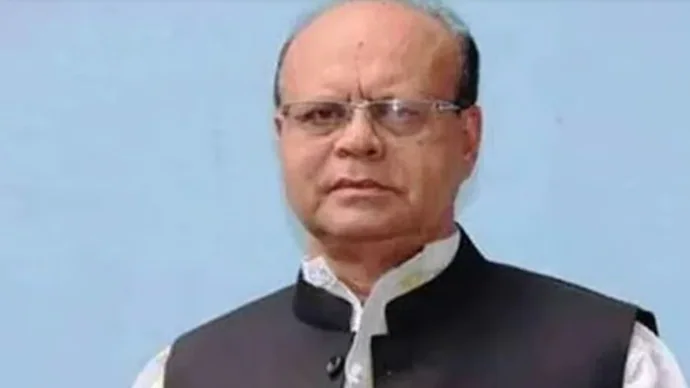
Former Bangladesh state minister Swapan Bhattacharjee was arrested in Dhaka on Sunday night as fresh Political Violence erupted across the country during a two-day nationwide lockdown called by supporters of the banned Awami League. His detention comes amid an intensifying crackdown on leaders and activists linked to ousted Prime Minister Sheikh Hasina‘s party, with authorities accusing him of financing activities aimed at creating instability.
Bhattacharjee, who served as state minister for rural development and cooperatives between 2019 and 2024, was detained by a team of the Detective Branch (DB) of Dhaka Metropolitan Police in the Gulshan area at approximately 9:11 pm local time on November 29. Police alleged that he had provided financial support for activities linked to sabotage. Several cases have also reportedly been filed against him.
The arrest coincided with the first day of the Awami League’s 48-hour nationwide lockdown, which was marked by clashes, crude bomb explosions, arson attacks and road blockades in several parts of Bangladesh. At least two people were reported killed in clashes involving Awami League supporters and workers of the ruling Bangladesh Nationalist Party (BNP).
Former State Minister Swapan Bhattacharjee Detained in Dhaka
Swapan Bhattacharjee was arrested during a Detective Branch operation in Gulshan, an area of the Bangladeshi capital. The operation was conducted by officers from the Gulshan Division of the DB, with police identifying the former minister as a suspect in alleged activities intended to destabilise the country.
According to the Bangladesh Sangbad Sangstha (BSS), police alleged that Bhattacharjee had financially supported activities aimed at creating instability. The allegations have not been established through a court verdict, and the former minister’s arrest does not by itself establish his guilt.
Bhattacharjee held the position of state minister for rural development and cooperatives from 2019 to 2024 under Hasina’s government. He was also a former member of Parliament representing the Jessore-5 constituency.
He first won the Jessore-5 seat as an independent candidate in the 2014 general election before returning to Parliament as an Awami League candidate in the 2018 election. Bhattacharjee belongs to Bangladesh’s Hindu minority community, making his arrest another development involving a prominent former political figure from the country’s minority population.
Reports have also indicated that several cases have been filed against him. The details and legal status of those cases will be important in determining the grounds on which authorities intend to proceed against the former minister.
Crackdown on Awami League Leaders Intensifies
Bhattacharjee’s arrest comes against the backdrop of a prolonged crackdown on the Awami League following the collapse of Sheikh Hasina’s government in August 2024. Hasina left Bangladesh after weeks of student-led protests and widespread unrest brought an end to her 15-year rule.
Since her departure, several senior Awami League figures, former ministers and party activists have been arrested. Many others have reportedly gone into hiding or left the country as legal proceedings and police operations targeting members of the former ruling establishment continued.
The party’s position changed significantly in May 2025, when the interim government led by Muhammad Yunus prohibited its political activities. The Election Commission also suspended the Awami League’s registration, preventing it from contesting the February 2026 parliamentary election.
The restrictions remained in place after the BNP won the election and its leader, Tarique Rahman, became prime minister in February 2026. The new government maintained the ban, leaving the Awami League outside formal parliamentary politics.
Although the party cannot operate through the normal activities of a registered political organisation, it continues to have supporters and a political presence across Bangladesh. Its leaders have attempted to organise demonstrations and other forms of protest, but these activities have taken place under significant restrictions and amid heightened security operations.
The government’s approach has also generated questions about political accountability, law enforcement and the treatment of former ruling-party members. Authorities have said arrests are linked to allegations of criminal activity and efforts to maintain public order. However, the wider political environment remains deeply polarised, with the Awami League and its opponents offering sharply different accounts of the country’s unrest.
Fresh Violence Marks First Day of Awami League’s Nationwide Lockdown
Bangladesh witnessed renewed violence on Sunday as the Awami League began a two-day nationwide lockdown covering November 29 and 30. The party called the shutdown amid its continuing opposition to the restrictions on its political activities and the treatment of its leaders and supporters.
The first day was marked by confrontations between Awami League supporters and BNP workers, along with incidents of arson, crude bomb explosions and road blockades. Several areas experienced transport disruptions as security forces attempted to restore movement and prevent further clashes.
The most serious reported confrontation occurred near the Padma Bridge in Shariatpur district, where two people were killed during clashes involving supporters of the rival political groups. Several others were injured, according to local reports.
The violence affected areas around the Dhaka-Bhanga Expressway, an important transport link connecting the capital with several southern and southwestern districts. Road blockades and attacks on vehicles disrupted traffic, while fires involving motorcycles and commercial establishments added to the tension.
Reports of unrest also emerged from other parts of the country, including Pabna and Gopalganj. Police faced attacks in some locations, while crude explosives and arson incidents contributed to concerns about the security situation.
The incidents occurred despite increased deployment of security personnel and police operations in areas considered vulnerable to political clashes.
Clashes and Road Blockades Disrupt Transport Across Bangladesh
The lockdown affected transport and commercial activity in several districts, with road blockades preventing vehicles from moving freely along important routes. Areas surrounding the Padma Bridge experienced particular disruption after clashes and fires affected movement across the connecting roads.
In Shariatpur, the confrontation near the bridge involved supporters of the Awami League and the BNP. Local reports described attacks, arson and damage to vehicles and businesses. Movement along the Dhaka-Bhanga Expressway was interrupted before authorities gradually restored traffic.
In Pabna, Bera Model Police Station came under attack during the unrest. Police reportedly used tear gas and rubber bullets to disperse those involved and regain control of the area. A police motorcycle was set on fire, while a passenger bus operating on the Pabna-Dhaka route was vandalised.
Gopalganj also witnessed road blockades and demonstrations by Awami League supporters. Traffic along major routes, including the Dhaka-Khulna highway, was disrupted. Reports also described an attack on a Grameen Bank branch in Muksudpur, where furniture and documents were damaged and burned.
These incidents added to concerns about the broader impact of the lockdown on ordinary residents. Transport interruptions can affect access to workplaces, hospitals, markets and essential services, while attacks on public and commercial establishments create additional pressure on local communities.
Security Forces Intensify Operations Amid Political Unrest
Bangladeshi authorities increased security measures as the lockdown began, deploying additional personnel and conducting operations in areas affected by clashes and alleged sabotage.
Police operations in Dhaka and other districts resulted in hundreds of arrests during the period surrounding the lockdown. Authorities said the operations were intended to prevent violence, stop attacks on public property and maintain law and order.
The security response reflects the government’s concern that the unrest could spread beyond isolated confrontations. The combination of road blockades, crude bomb attacks, arson and clashes between rival political supporters has created a difficult situation for law enforcement agencies.
However, the continuing arrests of Awami League-linked figures have also kept the political dispute at the centre of the crisis. The government faces pressure to prevent violence while ensuring that criminal allegations are handled through legal procedures rather than political retaliation.
For the Awami League, the lockdown represents an attempt to demonstrate that the party retains support despite the ban on its activities. For the BNP government, the immediate challenge is to prevent further disruption and maintain security without allowing the situation to escalate into wider political confrontation.
Sheikh Hasina Sentenced to Death in Absentia
The latest unrest is also unfolding against the background of the legal cases involving Sheikh Hasina. The former prime minister has been living in India since leaving Bangladesh in August 2024 following the student-led uprising that ended her government.
In November 2025, Bangladesh’s International Crimes Tribunal sentenced Hasina to death in absentia after finding her guilty of crimes against humanity connected to the crackdown on protesters during the 2024 unrest.
Hasina rejected the allegations and disputed the proceedings against her. Her absence from Bangladesh meant that the trial and verdict took place without her participation in person.
The case remains a major source of political tension between Hasina’s supporters and the authorities. Her supporters have criticised the legal action, while the government has maintained that accountability for abuses committed during the former administration is necessary.
Bangladesh has sought Hasina’s extradition from India. New Delhi has said that the request is being examined through the relevant legal and internal processes, but Hasina remains in India.
Hasina’s Expected December 16 Return Adds to Political Tensions
Hasina’s possible return to Bangladesh has become another important factor in the country’s political situation. December 16, celebrated as Victory Day, marks Bangladesh’s victory over Pakistan in the 1971 Liberation War and the country’s independence.
Hasina has indicated an intention to return on that date, a development that has drawn attention from both her supporters and the current government. However, her return is not confirmed, and the legal consequences could be significant if she enters Bangladesh while the death sentence and other proceedings remain in force.
Bangladesh’s government has said that she would face arrest if she returned. Dhaka has also continued to press India over the extradition request, keeping the issue relevant to relations between the two neighbouring countries.
The prospect of Hasina’s return has contributed to the political atmosphere surrounding the Awami League’s lockdown. Supporters have used the date to rally around the former prime minister, while authorities have prepared for possible demonstrations and security challenges.
Bangladesh Faces a Difficult Test of Political Stability
The arrest of Swapan Bhattacharjee and the violence accompanying the Awami League’s nationwide lockdown highlight the continuing instability in Bangladesh more than two years after Hasina’s removal from power. The country has moved from an interim administration to an elected BNP government, but the political transition has not ended tensions between the former ruling party and its opponents.
The Awami League remains barred from formal political activity, while its leaders and supporters continue to face arrests and legal proceedings. At the same time, clashes between rival groups, attacks on public property and transport disruptions have raised concerns about public safety.
Bhattacharjee’s case will now depend on the allegations against him and the legal process that follows his arrest. Police have accused him of financing activities intended to create instability, but those claims must be tested through the appropriate judicial procedures.
For the BNP government, the immediate priority is to contain the violence and prevent further disruption during the remaining hours of the lockdown. For Bangladesh more broadly, the challenge is to ensure that political disagreements and accountability proceedings do not deepen the cycle of confrontation.
The latest developments show that the struggle over the Awami League’s political future, Hasina’s legal status and the country’s post-2024 political order remains unresolved. With fresh violence reported across multiple districts and more arrests taking place, Bangladesh faces another critical period in its effort to restore political stability.
For breaking news and live news updates, like us on Facebook or follow us on Twitter and Instagram. Read more on Latest World on thefoxdaily.com.



COMMENTS 0