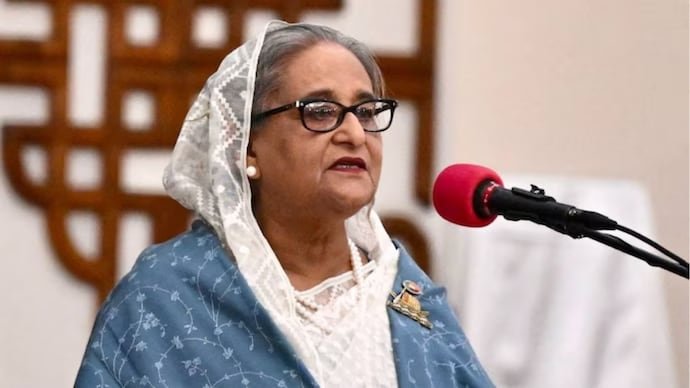
Bangladesh is preparing for another potentially tense chapter in its evolving political landscape as the Bangladesh Awami League has called for nationwide protests demanding the reversal of the International Crimes Tribunal’s verdict sentencing former Prime Minister Sheikh Hasina to death. The demonstrations, scheduled across the country, are expected to become one of the biggest political mobilizations since the dramatic political upheaval that ended Hasina’s tenure nearly two years ago.
The protest call comes at a time when Bangladesh continues to navigate deep political polarization following the violent events surrounding the 2024 anti-government movement. While the Awami League describes the tribunal’s decision as unconstitutional and politically motivated, the current administration maintains that the judicial process represents accountability for alleged Human Rights violations committed during the suppression of nationwide protests.
The latest developments extend beyond domestic politics. They carry significant implications for Bangladesh’s democratic institutions, investor confidence, regional stability in South Asia, and diplomatic relations with neighboring India, where Sheikh Hasina remains after leaving Bangladesh.
Key Developments at a Glance
| Issue | Current Situation | Potential Impact |
|---|---|---|
| Awami League Protest | Nationwide demonstrations announced | Renewed political mobilization |
| Sheikh Hasina Verdict | Death sentence and additional imprisonment handed down by the International Crimes Tribunal | Legal and political controversy |
| Political Climate | Highly polarized environment following the 2024 crisis | Risk of further instability |
| India Connection | Hasina remains in India after leaving Bangladesh | Diplomatic considerations over extradition |
Why the Protest Call Matters
The Awami League’s announcement represents more than opposition to a court ruling. It reflects the continuing struggle over Bangladesh’s political future following one of the country’s most consequential transitions in recent decades.
The party has urged supporters nationwide to participate in demonstrations demanding that the tribunal’s verdict be annulled and the tribunal itself dissolved. According to the Awami League, both the judicial process and the verdict are unconstitutional and politically motivated.
The government, however, views the tribunal’s proceedings as part of efforts to establish accountability for alleged crimes committed during the deadly crackdown on protesters in 2024.
The competing narratives highlight the extraordinary level of political division that continues to shape Bangladesh’s public discourse.
Background: How Bangladesh Reached This Point
The current political confrontation has its roots in the nationwide unrest of July and August 2024.
What initially emerged as student-led demonstrations against the quota system for government jobs rapidly evolved into a broader anti-government movement. Large-scale protests spread across multiple cities, drawing participants from diverse social and political backgrounds.
The unrest resulted in widespread violence, casualties, and significant political upheaval. The crisis ultimately led to the collapse of the Awami League government and Sheikh Hasina’s departure from Bangladesh.
Since then, Bangladesh has experienced one of its most dramatic political transitions since the restoration of parliamentary democracy.
Timeline of the Political Crisis
| Period | Major Development |
|---|---|
| July 2024 | Student-led protests begin over government job quota policies. |
| August 2024 | Protests expand into a nationwide anti-government movement accompanied by widespread unrest. |
| Post-2024 Crisis | Sheikh Hasina leaves Bangladesh and later remains in India. |
| 2025 | International Crimes Tribunal conducts proceedings against former government officials. |
| November 2025 | Tribunal sentences Sheikh Hasina and former Home Minister Asaduzzaman Khan Kamal. |
| Current Phase | Awami League announces nationwide protests challenging the verdict. |
Understanding the International Crimes Tribunal
The International Crimes Tribunal (ICT) occupies a unique place in Bangladesh’s legal and political framework. Originally established to prosecute crimes committed during Bangladesh’s 1971 Liberation War, the tribunal has remained one of the country’s most closely scrutinized judicial institutions.
Over the years, its proceedings have attracted both domestic support and international debate. Supporters argue that the tribunal strengthens accountability, while critics have periodically questioned aspects of due process, political neutrality, and procedural fairness.
The latest verdict involving Sheikh Hasina has once again placed the tribunal at the center of intense political debate.
The Charges Against Sheikh Hasina
According to court proceedings, the tribunal found Sheikh Hasina guilty of multiple offences connected to the government’s response during the 2024 protests.
The allegations included incitement, responsibility for ordering security actions, and failure to prevent atrocities during the unrest.
The tribunal concluded that the former prime minister bore responsibility for the use of lethal force against demonstrators.
In addition to the death sentence, the court imposed an additional sentence of imprisonment until natural death on separate charges related to alleged inflammatory remarks and the use of helicopters, drones, and other force during the protests.
Hasina and former Home Minister Asaduzzaman Khan Kamal were tried in absentia after leaving Bangladesh.
Awami League Rejects the Verdict
The Awami League has categorically rejected both the tribunal and its findings.
According to the party, Sheikh Hasina’s administration was responsible for significant economic progress, poverty reduction, infrastructure expansion, and Bangladesh’s emergence as a lower-middle-income economy during her years in office.
The party argues that the judicial proceedings have become politicized and maintains that the verdict represents an attempt to eliminate its leadership from national politics.
It also claims that previous requests for independent international investigations into various incidents during Hasina’s tenure were not adequately pursued.
These remain the party’s allegations and are disputed within Bangladesh’s broader political debate.
The Government’s Position
The current administration maintains that legal accountability is necessary following the violence associated with the 2024 protests.
Supporters of the tribunal argue that judicial institutions must investigate allegations of serious human rights violations regardless of the political status of those accused.
The administration has defended the broader accountability process as part of strengthening the rule of law following Bangladesh’s political transition.
The sharp disagreement between government and opposition illustrates how judicial decisions have become closely intertwined with the country’s political future.
India’s Role in the Ongoing Crisis
The political developments also have important regional dimensions.
Sheikh Hasina remains in India after leaving Bangladesh following the collapse of her government. Bangladesh has sought her extradition, but India has not publicly indicated that it intends to comply with that request.
The issue introduces additional diplomatic complexity into relations between the two neighboring countries.
India and Bangladesh share extensive cooperation on trade, connectivity, energy, water resources, border management, and regional security. Any prolonged political dispute involving a former prime minister residing in India inevitably attracts regional attention.
Economic Implications of Political Uncertainty
Political stability plays a critical role in sustaining economic growth.
Bangladesh has earned international recognition over the past two decades for rapid expansion in manufacturing, particularly the ready-made garment sector, improvements in poverty reduction, rising exports, and significant infrastructure investment.
Periods of prolonged political confrontation, however, can create uncertainty for investors, businesses, and financial markets.
Large-scale demonstrations may affect transportation, supply chains, commercial activity, and public services if disruptions become widespread.
Although Bangladesh has previously demonstrated resilience during political crises, maintaining economic momentum often depends on preserving institutional stability and public confidence.
Democracy, Accountability, and Political Polarization
The current confrontation reflects broader questions facing many democracies around the world.
How should governments pursue accountability for alleged abuses of power while ensuring judicial independence and public confidence?
How can political competition remain peaceful after highly contested transitions?
What institutional safeguards are necessary to prevent legal proceedings from becoming perceived as political instruments?
These questions extend beyond Bangladesh and are frequently debated in countries experiencing major political transitions.
Comparison with Previous Political Crises
Bangladesh has experienced periods of intense political confrontation throughout its modern history, often characterized by nationwide strikes, demonstrations, election disputes, and legal challenges involving major political leaders.
However, the current situation differs in several important respects.
- A former prime minister has been sentenced to death by a domestic tribunal.
- The country’s largest political parties remain deeply polarized.
- The principal opposition leader remains outside Bangladesh.
- The legal proceedings carry significant international attention.
- Regional diplomatic considerations involving India have become increasingly important.
These factors combine to create a political environment that is considerably more complex than routine opposition protests.
What Could Happen Next?
Several developments may shape Bangladesh’s political trajectory in the coming weeks and months.
| Possible Scenario | Potential Outcome |
|---|---|
| Peaceful demonstrations | Political mobilization without major disruption |
| Escalation of protests | Heightened political tensions and increased security measures |
| Judicial or legal developments | Further legal challenges and political debate |
| Diplomatic engagement | Continued discussions regarding extradition and bilateral relations |
| Political dialogue | Potential opportunities for de-escalation if stakeholders engage constructively |
The direction events take will depend on the conduct of demonstrations, responses from authorities, judicial developments, and the willingness of political actors to pursue dialogue alongside legal processes.
A Broader Regional Perspective
Bangladesh occupies a strategically significant position in South Asia, with strong economic links to India and growing engagement with global manufacturing, regional connectivity initiatives, and international investment.
Political developments inside Bangladesh therefore attract close attention from neighboring countries, international organizations, investors, and diplomatic partners.
A stable Bangladesh contributes to regional economic integration, cross-border trade, and security cooperation, while prolonged political instability could create broader geopolitical implications.
Future Outlook
The nationwide protest called by the Awami League marks another defining moment in Bangladesh’s post-2024 political transition. Whether the demonstrations remain peaceful or evolve into a broader confrontation will significantly influence the country’s immediate political environment.
Beyond the legal questions surrounding Sheikh Hasina’s conviction, Bangladesh faces the larger challenge of balancing accountability, democratic legitimacy, judicial credibility, and political reconciliation. Long-term stability is likely to depend not only on court decisions but also on the ability of institutions to maintain public trust and ensure that political disagreements are managed within constitutional and democratic frameworks.
Conclusion
The Awami League’s call for nationwide protests underscores the continuing divisions that have shaped Bangladesh since the political upheaval of 2024. At the center of the dispute is the International Crimes Tribunal’s verdict against former Prime Minister Sheikh Hasina, a decision that supporters view as accountability and opponents describe as politically motivated.
As Bangladesh prepares for fresh demonstrations, the stakes extend well beyond one court ruling. The coming days will test the resilience of the country’s democratic institutions, the effectiveness of its legal processes, and the capacity of political leaders to navigate one of the most consequential periods in the nation’s recent history. The outcome will not only shape Bangladesh’s domestic politics but could also influence regional Diplomacy, investor confidence, and South Asia’s broader political landscape for years to come.
For breaking news and live news updates, like us on Facebook or follow us on Twitter and Instagram. Read more on Latest World on thefoxdaily.com.




COMMENTS 0