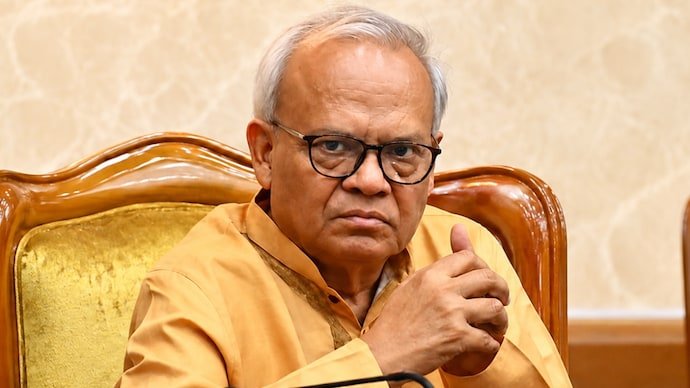
A political controversy has emerged in Bangladesh after a senior leader of the ruling Bangladesh Nationalist Party (BNP) linked a temporary shutdown at Adani Power’s Godda thermal plant in Jharkhand to Prime Minister Tarique Rahman’s decision not to attend the BRICS Summit in New Delhi.
One of the plant’s two generating units was taken offline late on September 10 after what was reported as a boiler-related technical fault. The unit returned to the grid on September 13, restoring the plant’s ability to supply electricity to Bangladesh.
The timing of the outage prompted BNP Acting Secretary General Ruhul Kabir Rizvi to question whether the incident was connected to Bangladesh’s decision to stay away from the summit. Rizvi alleged that India was pursuing a “web of conspiracy” against Bangladesh and suggested that the power disruption was not simply a technical event.
There is, however, an important distinction between the political allegation and the available evidence. The reported cause of the Godda shutdown was a technical fault, and no evidence has been presented publicly establishing that the plant was deliberately switched off because Tarique Rahman did not attend the BRICS meeting.
What happened at the Godda power plant?
The Godda plant, operated by Adani Power, has a total installed capacity of 1,600 MW, divided between two 800 MW units. It supplies electricity to Bangladesh under a long-term cross-border power arrangement.
On September 10, one of the two units developed a boiler problem and was taken offline. The outage reduced the electricity being supplied from Godda to Bangladesh substantially at a time when the country was already experiencing a power shortage.
The affected unit was restored on September 13, according to reports. The temporary disruption therefore lasted roughly three days.
The timing was particularly difficult for Bangladesh because its electricity system was already facing a supply deficit. Reports put the country’s power shortfall at around 2,500 MW, with load-shedding affecting several areas for periods ranging from a few hours to much longer interruptions.
The Godda disruption therefore had a genuine impact on an already stressed power system. The existence of that impact, however, does not by itself establish that the outage was politically motivated.
Why did the BNP leader connect the outage to the BRICS decision?
Rizvi raised the issue at a protest event outside Dhaka’s Jatiya Press Club. His remarks came after Tarique Rahman did not Travel to New Delhi for the BRICS Summit held on September 12-13.
According to Bangladeshi media reports, Rizvi pointed to the sequence of events: Rahman decided not to attend the summit, and the following day a unit of the Godda plant went offline.
He questioned why the shutdown occurred at that particular time and suggested that the fact that the plant is physically located in India gave New Delhi the ability to control Bangladesh’s electricity supply.
The argument is political rather than an established technical finding. The publicly reported explanation for the outage was a boiler fault, and the unit was subsequently repaired and returned to service.
Rizvi had already raised similar questions two days earlier. On September 12, he questioned whether sabotage or a wider conspiracy could be behind repeated disruptions affecting Bangladesh’s energy infrastructure.
His comments therefore form part of a broader political narrative within the BNP about Bangladesh’s dependence on Indian energy infrastructure and its wider relationship with New Delhi.
Godda was not the only recent energy disruption
Rizvi’s suspicions were also influenced by another energy disruption in Bangladesh involving the country’s LNG infrastructure.
The LNG terminal at Maheshkhali experienced problems after a fire damaged electrical cables associated with its boiler system. The incident reduced gas supply to Bangladesh’s national grid by hundreds of millions of cubic feet per day.
The terminal partially resumed operations in August before experiencing another technical problem later that month.
Against that backdrop, the separate Godda outage became politically sensitive. Rizvi argued that multiple technical problems occurring within a relatively short period warranted questions about whether something more than ordinary equipment failures was taking place.
But repeated technical problems do not, on their own, establish sabotage. Energy infrastructure contains complex mechanical, electrical and fuel-handling systems, and individual failures can occur independently. A claim of deliberate interference would require evidence identifying who caused the disruption, how it was carried out and what evidence connects it to a political decision.
Bangladesh was already facing a serious power shortage
The timing of the Godda outage mattered because Bangladesh was already struggling to balance electricity demand and available generation.
The country depends on a combination of domestic gas-fired generation, imported fuels, renewable sources and electricity imported from neighbouring countries. Cross-border electricity therefore represents an important component of Bangladesh’s overall power supply.
When a large generating unit unexpectedly goes offline, the effect can be amplified if the national system has limited spare capacity. A temporary reduction in imported electricity can consequently contribute to load-shedding even when the outage originates outside Bangladesh.
That vulnerability is one reason the Godda plant has acquired political significance in Bangladesh. The plant is located in India, while much of the electricity generated there is intended for Bangladesh. This creates a cross-border infrastructure relationship in which technical incidents can quickly become diplomatic and political issues.
It also explains why the plant’s shutdown attracted more attention than an ordinary equipment failure at an isolated generating station.
What did Bangladesh say about Tarique Rahman’s BRICS invitation?
The dispute over the Godda plant cannot be separated from the disagreement surrounding Tarique Rahman’s invitation to the BRICS Summit.
Bangladesh did not send Rahman to the New Delhi summit. Officials in Dhaka had maintained that the invitation was extended to Rahman in his capacity as the current chair of BIMSTEC, rather than to him as the leader of a BRICS member or partner country.
That distinction became politically important because Bangladesh wanted its prime minister’s participation to be understood in the context of bilateral relations and national status.
Rizvi argued that Rahman, as prime minister of an independent and sovereign country, should not be expected to attend an international event merely to occupy a secondary position.
He presented Rahman’s decision not to attend as a matter of defending Bangladesh’s sovereignty and political dignity.
India says Rahman received two separate invitations
India has offered a different account of the invitation issue.
On September 15, Ministry of External Affairs spokesperson Randhir Jaiswal said that Rahman had received two separate invitations from India: one for a bilateral visit and another for the BRICS Summit.
India’s explanation was that the BRICS invitation was extended to Rahman in his capacity as the chair of BIMSTEC, following the practice of inviting heads of regional organisations or groupings to the summit’s outreach programme.
The distinction matters because it means the BRICS invitation did not necessarily imply that Bangladesh had been given the same status as a BRICS member or partner country.
Jaiswal also said that India had not received an update regarding Rahman’s proposed bilateral visit. The two invitations were therefore separate diplomatic engagements rather than a single invitation with two components.
This disagreement over the nature of the invitation has become part of the wider political debate between Dhaka and New Delhi.
Rizvi’s claim about Godda remains unsubstantiated
The central allegation is that the Godda unit was deliberately shut down after Rahman decided not to attend the BRICS Summit. At present, that connection has not been established by publicly presented evidence.
The sequence of events is straightforward: Rahman did not attend the New Delhi summit; a Godda generating unit subsequently developed a reported boiler fault; and the unit was restored several days later.
The existence of that sequence does not demonstrate causation.
There is also a practical technical question. A major thermal generating unit cannot simply be treated like a household electrical switch. A boiler fault can require the unit to be removed from service to protect equipment and personnel. Restarting a large thermal unit also involves technical procedures and safety checks.
Therefore, the fact that the plant is located in India does not by itself demonstrate that the unit was intentionally switched off as a political response to Bangladesh’s diplomatic decision.
Any conclusion of deliberate retaliation would require evidence beyond timing, including operational records, technical inspection findings or other verifiable information showing that the shutdown was ordered rather than caused by equipment failure.
This is not Rizvi’s first confrontation with India-related issues
Rizvi has previously taken a strongly critical position toward India.
In December 2024, he publicly advocated boycotting Indian products and burned an Indian saree belonging to his wife during an event in Rajshahi. His latest comments therefore fit into a broader pattern of criticism of India’s role in Bangladesh’s domestic and economic affairs.
His political position should be distinguished from an independently established assessment of the Godda incident. A politician’s allegation is evidence that the allegation has been made; it is not, by itself, evidence that the alleged event occurred.
Why the Godda plant matters to Bangladesh
The controversy also highlights a deeper issue that exists independently of Rizvi’s allegation: Bangladesh’s reliance on cross-border energy supplies.
The Godda project was developed specifically to supply electricity to Bangladesh, making it an important part of the two countries’ energy relationship. Its location in India means that Bangladesh receives a significant supply from infrastructure outside its own territory.
Cross-border electricity trading can provide major benefits by allowing neighbouring countries to use generation resources more efficiently. But it also means that equipment failures, transmission constraints, fuel shortages or other disruptions on one side of the border can affect consumers on the other.
That interdependence becomes particularly sensitive when diplomatic relations are under political strain.
The Godda episode demonstrates how an ordinary technical problem can quickly acquire a geopolitical dimension when the affected infrastructure sits at the centre of a politically contested relationship.
India-Bangladesh tensions provide the wider backdrop
The latest dispute comes amid a period of political adjustment between India and Bangladesh following major changes in Bangladesh’s domestic politics.
Issues surrounding the former Bangladesh government, India’s relationship with former prime minister Sheikh Hasina, border management, Trade, water-sharing and energy cooperation have all contributed to a complicated bilateral environment.
The disagreement over Tarique Rahman’s BRICS participation has added another layer to that relationship.
India has maintained that its engagement with Bangladesh is centred on the interests of the people of both countries and has continued to emphasise bilateral cooperation. Bangladesh’s political leadership, meanwhile, has stressed sovereignty and the need for a relationship based on what it regards as greater equality.
The two positions do not necessarily rule out cooperation, but they show how easily individual events can become symbols in a wider political argument.
What the power outage actually tells us
The Godda shutdown has two separate stories attached to it.
The first is an energy story. A major generating unit supplying Bangladesh experienced a technical problem, temporarily reducing electricity availability during an existing power shortage. The unit was repaired and restored to the grid within several days.
The second is a political story. A senior BNP leader interpreted the timing of the outage as evidence of a possible Indian conspiracy connected to Bangladesh’s decision not to attend the BRICS Summit.
Those two stories should not be treated as established fact simply because they occurred at roughly the same time.
For now, the publicly reported technical explanation is a boiler fault. Rizvi’s allegation has not been accompanied by publicly presented evidence demonstrating that the shutdown was deliberately ordered in response to Rahman’s BRICS decision.
The episode nevertheless raises a legitimate broader question about Bangladesh’s Energy Security: how much dependence on foreign infrastructure is strategically comfortable when relations with the supplying country are politically sensitive?
That question is likely to remain relevant regardless of whether the Godda incident ultimately proves to have been nothing more than a technical breakdown.
For breaking news and live news updates, like us on Facebook or follow us on Twitter and Instagram. Read more on Latest World on thefoxdaily.com.





COMMENTS 0