The investigation into alleged irregularities in Jharkhand recruitment examinations has widened further, with the state Crime Investigation Department (CID) making fresh arrests in cases involving the Jharkhand Staff Selection Commission and Jharkhand Public Service Commission.
In the JSSC Combined Graduate Level (JSSC-CGL) 2023 case, the latest arrests have taken the number of people arrested in connection with the alleged irregularities to 13, according to officials. The agency has also arrested a Ranchi-based coaching centre operator in the separate investigation into alleged irregularities in examinations conducted by the JPSC.
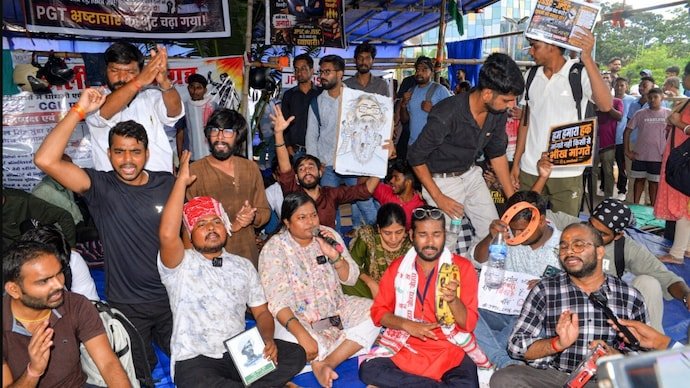
The latest action comes after weeks of student Protests, demands for cancellation of disputed examinations and government decisions affecting multiple recruitment processes. The controversy has now moved beyond the question of whether individual examinations should be cancelled, with investigators attempting to establish how alleged malpractice occurred and who benefited from it.
Who was arrested in the JSSC-CGL case?
One of the latest accused identified by the CID is Dilip Kumar Paswan, 41, a resident of Bihar’s Jamui district.
According to the agency, Paswan allegedly provided unfair assistance to several candidates who appeared for the JSSC-CGL examination. His arrest takes the number of arrests in the JSSC-CGL irregularities investigation to 13.
The allegation is significant because it points investigators toward the possibility that the suspected malpractice involved more than isolated actions by candidates. If candidates received assistance through intermediaries or other people outside the examination process, investigators would need to determine how that assistance was arranged, who coordinated it and whether it formed part of a wider network.
However, an arrest represents an allegation under investigation and does not by itself establish guilt. The evidence gathered by the CID will ultimately have to withstand judicial scrutiny.
Ranchi coaching operator arrested in JPSC probe
In a related but separate development, the CID arrested Sanjit Kumar, a Ranchi resident who operates Shivangan Coaching in the city.
The agency described Kumar as an alleged agent or intermediary in the examination-related irregularities under investigation. He was arrested and sent to judicial custody.
The JPSC investigation is considerably larger than the JSSC-CGL case in terms of the number of people arrested. Officials have said that more than 20 people have been arrested in the JPSC-related investigation so far, including former JPSC chairman L Khiangte.
Khiangte, a former chief secretary of Jharkhand, was arrested on August 10 after being questioned by the CID as part of the investigation into alleged irregularities in recruitment examinations. A special CID court later rejected his bail plea, with the court considering the seriousness of the allegations while deciding the application.
Why the two cases matter together
The JSSC-CGL and JPSC investigations concern different recruitment systems, but they have become part of the same broader crisis of confidence surrounding competitive examinations in Jharkhand.
The Jharkhand Staff Selection Commission conducts recruitment examinations for various state government posts, while the Jharkhand Public Service Commission handles recruitment for higher-level state services. Allegations of manipulation in either system can have consequences far beyond individual candidates because government recruitment depends heavily on the credibility of examination procedures.
For candidates who spend years preparing for competitive examinations, the value of a selection process rests on the belief that everyone faces the same conditions. Allegations that some candidates received advance assistance, technical help or other unfair advantages can therefore undermine confidence even among candidates who were not directly involved.
The investigation has been expanding beyond the original arrests
The JSSC-CGL probe has steadily expanded since the first arrests. Earlier in the investigation, the CID questioned successful candidates and other people suspected of having information about alleged malpractice.
Investigators have also examined whether candidates who cleared the examination had connections with people allegedly involved in facilitating unfair advantages.
In one earlier case, the CID alleged that an accused took several aspirants to a hotel in West Bengal and made them memorise answers to questions that were expected to appear in the examination. Such allegations, if established in court, would point to organised assistance rather than a simple individual act of cheating inside an examination hall.
The investigation has also involved questioning a large number of candidates and suspects as the agency attempts to establish links between different people involved in the alleged irregularities.
Student protests put the recruitment system under pressure
The controversy escalated into a major protest movement among job aspirants in Jharkhand.
Students began staging demonstrations in Ranchi on July 25, demanding action over alleged irregularities in JPSC and JSSC recruitment examinations. Among their demands were cancellation of disputed examinations and a Central Bureau of Investigation probe.
The protests reflected a broader concern among aspirants that irregularities in one examination could have a long-term effect on their careers.
For candidates preparing for government recruitment, an examination is not merely an academic test. It can determine appointments, income, career progression and, in many cases, years of personal investment in preparation. When an examination is later questioned or cancelled, both successful and unsuccessful candidates can face uncertainty.
Government cancelled multiple examinations
The pressure eventually led the Jharkhand government to take a major decision in August.
The state government announced the cancellation of the JSSC-CGL examination along with other recruitment examinations connected to agencies under scrutiny. The government also ordered wider examination-related investigations, extending the scrutiny beyond the most immediate cases.
The move temporarily changed the direction of the dispute. Student protesters had demanded action over alleged irregularities, while the government sought to demonstrate that it was willing to act on the findings emerging from investigations.
But cancellation immediately created another problem: what should happen to candidates who had cleared examinations and, in some cases, had already received government appointments?
High Court intervention changed the situation again
The cancellation decisions soon reached the Jharkhand High Court, where successful candidates challenged the government’s action.
The court subsequently stayed the cancellation of the JSSC-CGL examination and the Child Development Project Officer examination. The intervention provided temporary relief to selected candidates whose appointments had been put at risk by the government’s decision.
The court’s intervention highlights the difficult balance involved in recruitment-exam disputes. If an examination was genuinely compromised, authorities have an obligation to investigate and take appropriate action. But cancelling an entire selection process can also affect candidates who may have had no involvement in any alleged wrongdoing.
This creates two competing concerns: protecting the integrity of the recruitment system and protecting the rights of candidates who participated in good faith.
Why cancellation alone cannot solve the problem
The continuing arrests show why simply cancelling an examination does not necessarily resolve the underlying problem.
If investigators identify people who allegedly supplied unfair assistance, the authorities still need to establish how the system was compromised. That may involve examining the role of candidates, intermediaries, coaching centres, examination agencies, technical personnel and other individuals who may have had access to sensitive information.
A credible investigation therefore has to answer several questions: How was the alleged malpractice carried out? Who had access to examination-related information? How were candidates selected for assistance? How did money or other benefits allegedly change hands? And were there weaknesses in the examination system that made manipulation possible?
The answers could determine whether the problem was limited to individual misconduct or exposed broader weaknesses in the recruitment process.
The JPSC case has an even wider institutional dimension
The separate JPSC investigation has raised questions about the functioning of the state’s top recruitment body.
The arrest of former chairman L Khiangte brought the controversy to the highest level of the commission’s administration. Khiangte had resigned from the post before his arrest and had said he chose to step down to facilitate an impartial investigation.
The CID investigation has also involved other officials and individuals connected with the examination process.
In one major development, the investigation focused on the role of TSR Data Processing Limited (TDPL), a private agency involved in examination-related work. Allegations surrounding the agency became an important part of the wider controversy and contributed to the government’s decision to scrutinise examinations associated with it.
The case therefore extends beyond the actions of individual candidates. It raises questions about how examination agencies are selected, how sensitive examination data is protected and what oversight mechanisms are in place when private companies participate in public recruitment.
Why coaching centres are under scrutiny
The arrest of a coaching centre operator adds another dimension to the investigation.
Coaching institutes occupy an important position in India‘s competitive-examination ecosystem. Most operate legitimately by providing instruction, study material and test preparation. But when an operator is accused of acting as an intermediary in examination malpractice, investigators have to determine whether the organisation was used to connect candidates with people capable of providing unfair assistance.
That does not mean coaching centres generally are responsible for examination irregularities. Any allegation against a particular operator must be established through evidence in the individual case.
Nevertheless, the arrest demonstrates why investigators may examine Relationships between candidates, coaching operators and other intermediaries when suspected malpractice appears to involve organised assistance.
The biggest challenge is restoring trust
For Jharkhand’s recruitment system, the consequences of the controversy extend beyond the criminal investigation.
Even after arrests are made, confidence will depend on whether candidates believe future examinations are secure, transparent and fairly administered.
That requires more than identifying accused individuals. Examination authorities may need to review how question papers and digital systems are secured, how vendors are selected, how candidate data is protected, how examination centres are monitored and how suspicious activity is detected.
It also requires clear communication when irregularities are discovered. Candidates need to know what evidence prompted an investigation, why a particular examination is being cancelled or retained, and how innocent candidates will be protected from the consequences of someone else’s alleged misconduct.
What happens next in the Jharkhand exam cases?
The CID investigation is likely to remain the immediate focus as investigators question additional suspects and examine links between the accused.
The legal proceedings surrounding cancelled examinations will develop separately. The Jharkhand High Court’s intervention means that the final fate of affected examinations and appointments cannot be determined solely by the government’s cancellation orders.
For candidates, this creates an unusual situation in which the criminal investigation and the legal challenge to examination cancellations are unfolding simultaneously.
The outcome of the criminal cases will depend on evidence collected by investigators and the subsequent judicial process. The outcome of the recruitment disputes will depend on the courts’ assessment of the government’s decisions and the rights of candidates who challenged them.
The latest arrests consequently represent another step in a much larger examination crisis. The JSSC-CGL case has now reached 13 arrests, while the separate JPSC investigation has crossed 20 arrests. But the ultimate test will not be the number of people arrested. It will be whether investigators can establish how the alleged irregularities occurred, whether those responsible are held accountable through due process, and whether Jharkhand can rebuild confidence in the fairness of its government recruitment system.
For breaking news and live news updates, like us on Facebook or follow us on Twitter and Instagram. Read more on Latest India on thefoxdaily.com.





COMMENTS 0