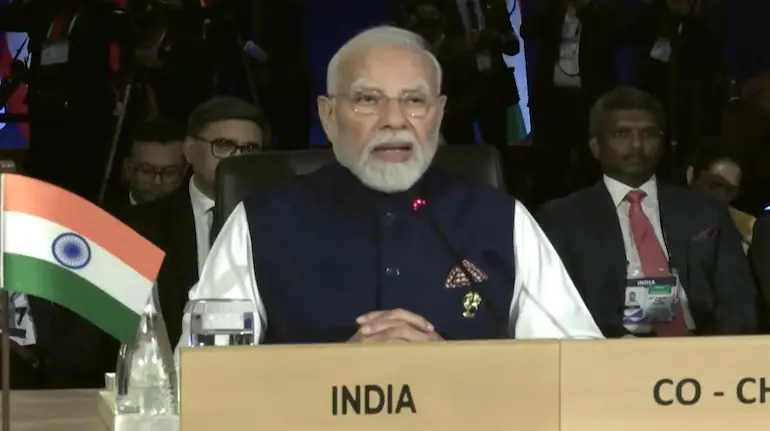
Prime Minister Narendra Modi has outlined an expanded roadmap for India’s engagement with Southeast Asia, proposing free electronic visas for tourists from Association of Southeast Asian Nations (ASEAN) countries and a long-term maritime cooperation plan. The proposals reflect India’s effort to deepen economic, technological, security and people-to-people connections with the region.
Addressing the 23rd ASEAN-India Summit in Manila, Philippines, on Tuesday, Modi called for a partnership built on cooperation, innovation and shared development. He said India and ASEAN, together representing nearly a quarter of the world’s population, should shape the future through collaboration rather than competition.
The Prime Minister also urged both sides to move beyond simply using technologies developed elsewhere and work together to create new solutions. His proposals covered maritime security, cyber forensics, nuclear energy, space, critical minerals, education, tourism and youth engagement.
Free E-Visas Aim to Strengthen India-ASEAN Tourism
One of the prominent announcements from Modi’s address was the proposal to offer free e-visas to tourists from ASEAN countries. The initiative is intended to make travel to India more accessible and encourage greater movement between India and Southeast Asia.
Tourism is an important part of the India-ASEAN relationship because it creates opportunities for cultural exchange, business travel and closer connections between communities. Easier visa access could also benefit India’s hospitality, aviation, transport and tourism-related industries if the proposal is implemented.
Modi highlighted the progress already made in improving regional connectivity. India now has direct flights with nine ASEAN countries, while tourism and other people-to-people exchanges have expanded over the years.
The proposed free e-visa facility would build on these developments by reducing one of the practical barriers to international travel. Its eventual impact will depend on the implementation arrangements, eligibility conditions and operational details.
Long-Term Maritime Cooperation Plan Covers Security and Connectivity
Maritime cooperation was another major focus of the Prime Minister’s address. Modi proposed a long-term ASEAN-India Maritime Cooperation Plan covering several areas, including connectivity, scientific research, disaster management and maritime security.
The proposed framework would also encourage cooperation between Coast Guard agencies, improve maritime domain awareness and strengthen the security of seafarers.
These priorities are particularly important because India and ASEAN share extensive maritime interests across the Indian Ocean and wider Indo-Pacific region. Sea routes support international trade, energy supplies and the movement of essential goods. Disruptions or security threats in these waterways can affect economies far beyond the immediate region.
Greater coordination on maritime monitoring, emergency response and disaster management could help participating countries address shared challenges more effectively. Cooperation in scientific research and connectivity could also support sustainable use of marine resources and stronger regional links.
The proposal comes as India continues to emphasise a free, open, inclusive and rules-based Indo-Pacific. For New Delhi, closer maritime engagement with ASEAN is both an economic priority and an important part of its wider regional strategy.
India and ASEAN Push for Joint Technology Development
Modi urged India and ASEAN to become partners in technological innovation rather than remain consumers of technologies developed elsewhere. He called for joint efforts to co-create technologies and build the skills required to use them effectively.
The Prime Minister identified several areas where the two sides could expand technical cooperation. These included a joint cyber forensics training programme, technical exchanges in nuclear energy and an ASEAN-India Space Hackathon.
The proposed cyber forensics programme could help strengthen regional capabilities to investigate digital crimes and respond to increasingly complex cyber threats. As businesses, public services and financial systems become more dependent on digital infrastructure, cooperation in digital investigations and cybersecurity is gaining importance.
The space hackathon would provide another platform for collaboration, particularly by encouraging young innovators and technical communities to develop solutions to shared challenges. It could also strengthen connections between universities, research institutions and start-up ecosystems.
Modi also called for stronger cooperation in mining and critical minerals. These resources are essential for several modern industries, including electronics, renewable energy, electric vehicles and advanced manufacturing. Developing reliable supply chains and sharing technical expertise could become an important area of India-ASEAN economic cooperation.
Youth Exchanges, Scholarships and Creative Partnership
Beyond technology and maritime security, Modi placed considerable emphasis on strengthening people-to-people connections. He proposed an ASEAN-India Youth Connect initiative that would include a youth summit, exchanges between young parliamentarians and start-up hackathons.
The initiative is intended to give young people from both sides more opportunities to interact, exchange ideas and develop professional networks. Such engagement can help build long-term relationships beyond formal diplomatic and government-level cooperation.
The Prime Minister also proposed increasing scholarships for students from ASEAN countries at Nalanda University. The move would strengthen educational links and provide more opportunities for students from Southeast Asia to study in India.
Another proposal was to establish an ASEAN-India Creative Partnership Pavilion at the World Audio Visual and Entertainment Summit (WAVES) 2027. The platform could encourage collaboration in creative industries, including entertainment and audiovisual production.
Together, these proposals indicate that India wants its regional partnership to extend beyond trade and security into education, entrepreneurship, culture and innovation.
Act East Policy Gives Fresh Momentum to Regional Relations
Modi said India’s Act East Policy had given India-ASEAN relations fresh momentum and greater depth. The policy has been an important part of India’s engagement with Southeast Asia, with cooperation expanding from shared cultural and historical connections into digital technology, defence, space and economic development.
India’s geographical position and historical links with Southeast Asia provide a foundation for this relationship. However, the partnership has increasingly focused on contemporary priorities such as supply-chain resilience, infrastructure, regional security and technological development.
Modi highlighted the progress made since 2014, noting that India and ASEAN had undertaken more than 100 initiatives, launched nearly 250 Quick Impact Projects and provided over 10,000 skill-building scholarships.
These activities have helped expand cooperation at different levels, including government institutions, educational organisations and local communities. Direct air connections and growing tourism have also contributed to stronger regional engagement.
The Prime Minister reaffirmed India’s commitment to ASEAN unity and centrality, describing the partnership as an important contributor to a secure, inclusive and prosperous Indo-Pacific.
2027 to Mark Two Important Milestones for India-ASEAN Ties
Modi noted that 2027 would be a significant year for India and ASEAN. The two sides will mark 35 years of dialogue relations and five years of their Comprehensive Strategic Partnership.
He linked the ASEAN Community Vision 2045 with India’s Viksit Bharat 2047 vision, saying both could help advance the shared aspirations of their populations.
The two development roadmaps provide a long-term context for cooperation. ASEAN’s vision focuses on building a more integrated, resilient and people-centred regional community, while India’s 2047 goal aims to transform the country into a developed nation by the centenary of its independence.
Aligning these priorities could create opportunities for cooperation in infrastructure, trade, education, technology, connectivity and sustainable development.
Modi also congratulated Philippine President Ferdinand Marcos Jr. on successfully chairing ASEAN under the theme ‘Navigating Our Future, Together’. He conveyed his best wishes to Singapore, which will take over the ASEAN chairship.
The leaders also adopted the ASEAN-India Joint Statement on Cooperation in Disaster Management, reinforcing the importance of coordination when responding to natural disasters and humanitarian emergencies.
Modi Proposes Four Initiatives at the East Asia Summit
Alongside the ASEAN-India Summit, Modi attended the 21st East Asia Summit in Manila, where he called for dialogue, mutual respect and cooperation to address global challenges.
He stressed the importance of a free, open, inclusive and rules-based Indo-Pacific, saying the East Asia Summit should contribute to international peace, stability and predictability.
The Prime Minister also highlighted how conflicts can disrupt food, fuel and fertiliser supplies. He called for the protection of commercial ships and seafarers operating in international waterways and reiterated India’s support for peaceful resolutions to the conflicts in Ukraine and West Asia.
He also flagged terrorism as a continuing threat to regional and international security.
To strengthen practical cooperation among East Asia Summit members, Modi proposed four initiatives:
- Seafarers’ Safety Initiative: A framework focused on joint training and emergency response to improve the safety of seafarers.
- EAS Cyber Crime Conference: A conference at the National Forensic Sciences University to promote cooperation in tackling cybercrime.
- EAS Maritime Heritage Festival: An initiative in Lothal to highlight maritime history and shared heritage.
- EAS University Conclave: A gathering in Nalanda to encourage academic cooperation and stronger links between universities.
These proposals reflect India’s attempt to connect diplomatic commitments with practical programmes in maritime safety, digital security, cultural exchange and education.
Why the New Proposals Matter for India’s Southeast Asia Strategy
The initiatives announced at the Manila summit show that India’s engagement with ASEAN is becoming broader and more closely connected to emerging regional priorities. Tourism and education can strengthen social links, while technology and critical minerals offer opportunities for economic cooperation.
Maritime security is equally significant. With international trade heavily dependent on safe sea routes, stronger coordination between India and Southeast Asian countries could support regional stability and protect commercial activity.
The proposals also underline India’s interest in playing a more active role in shaping the Indo-Pacific. ASEAN’s central position in regional diplomacy makes its partnership important for India’s economic and strategic objectives.
However, the success of the announcements will depend on how quickly they move from proposals to operational programmes. Free e-visas will require clear implementation arrangements, while maritime and technology initiatives will need sustained coordination among participating countries.
For India, the Manila summit was therefore an opportunity not only to reaffirm its commitment to ASEAN but also to outline a more ambitious agenda for the years ahead. As both sides approach major milestones in 2027, the focus will increasingly be on turning shared priorities into measurable cooperation.
For breaking news and live news updates, like us on Facebook or follow us on Twitter and Instagram. Read more on Latest India on thefoxdaily.com.




COMMENTS 0