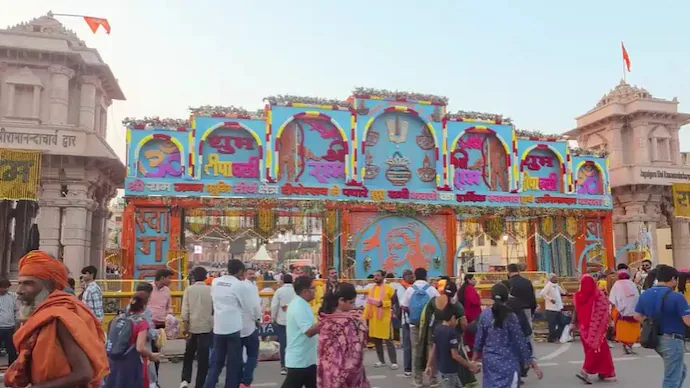
For generations, business in Ayodhya followed a familiar rhythm. Traders waited for religious festivals, fairs and special occasions to bring large crowds into the city. Those busy periods often determined how much shopkeepers, vendors and hospitality operators could earn for the months ahead. When the crowds disappeared, business slowed down.
That pattern is changing.
Since the construction of the Ram Temple and the consecration of Ram Lalla in January 2024, Ayodhya has experienced a sustained increase in Religious Tourism and commercial activity. The city is increasingly attracting visitors beyond its traditional festival calendar, creating a more continuous market for shops, restaurants, transport services and accommodation.
The transformation is visible in everyday economic activity. Street vendors report more customers, transport workers describe higher earnings, and established traders say their businesses have expanded. Meanwhile, commercial property owners are benefiting from sharply higher rental demand, with some shops that previously rented for Rs 1,000 to Rs 2,000 a month now reportedly commanding Rs 30,000 to Rs 50,000 in certain locations.
For investors, Ayodhya is also becoming a destination for commercial property and hospitality projects. People from outside the city are exploring opportunities to establish hotels, service ashrams, shops and other businesses linked to the growing number of visitors.
However, the most meaningful measure of this economic shift is not simply the number of new properties or businesses. It is how the changing flow of visitors is affecting the livelihoods of people who work in the city every day.
From Seasonal Crowds to Year-Round Business
One of the biggest changes in Ayodhya’s economy is the shift away from dependence on a few major religious occasions. Previously, many small traders and informal workers relied on festivals and fairs to generate a significant share of their annual income. The growing presence of devotees throughout the year is creating more opportunities to earn on ordinary days.
Lavkush Vishwakarma, who moved from Jalaun district to Ayodhya to sell pani puri from a roadside cart, says the increase in visitors has improved his business and created employment opportunities for others.
He describes the change as something that extends beyond individual shop owners. Rickshaw drivers, street vendors and people offering religious services such as applying sandalwood tilak are also finding work as the number of visitors increases.
His experience highlights an important feature of the tourism-driven economy: its benefits can spread across different types of employment. A visitor who comes for temple darshan may also purchase food, hire local transport, buy religious items or use other services. Each activity creates demand for workers and small businesses beyond the immediate temple area.
This wider commercial activity matters because informal workers often have limited financial reserves. More regular customers can help them earn more consistently instead of depending on a handful of high-revenue days.
E-Rickshaw Drivers and Street Vendors See Higher Earnings
The growth in visitor numbers is also changing the economics of local transport. E-rickshaws connect important parts of the city, helping devotees travel between religious sites, markets and other visitor destinations.
Surya Pandey, a local resident who drives an e-rickshaw between Lata Mangeshkar Chowk and the Ram Ki Paidi market, says his earnings have increased nearly fourfold since the temple’s construction.
He charges passengers Rs 20 for the journey and says the expansion of commercial activity is visible across Ayodhya. Areas that once had only scattered shops now have a much larger concentration of businesses.
His account illustrates how tourism creates economic activity beyond the main pilgrimage destination. More visitors mean greater demand for short-distance transport, food, shopping and other everyday services. Even relatively small transactions can add up when customer numbers remain high.
For people who depend on daily earnings, the difference between occasional festival crowds and a more regular flow of passengers can be substantial. It can also encourage more people to consider working in transport and other visitor-facing services.
Shop Rents Rise as Commercial Demand Increases
Perhaps the clearest sign of Ayodhya’s changing commercial environment is the reported increase in shop rentals.
Local businessman Ashok Kumar Tiwari says shops that once rented for around Rs 1,000 to Rs 2,000 per month can now command Rs 30,000, Rs 40,000 or even Rs 50,000 in some locations.
Tiwari has rented out his own shop, Anshika Matching Centre, while his family continues to live in the house above it. He also says his business has grown by eight to ten times, reflecting what he considers a much larger change than a simple increase in sales.
According to Tiwari, the most important difference is that customers are no longer concentrated around particular festivals. Devotees now visit throughout the year, making it difficult to distinguish between traditional peak periods such as Pitru Paksha, Navratri and Diwali.
This change has two sides. Property owners can benefit from higher rental income as businesses compete for commercially attractive locations. But entrepreneurs entering the market face a different financial calculation.
A shop that once required a relatively modest monthly rental commitment may now demand a much larger investment before a business can even begin operating. New traders must therefore consider whether expected customer demand will be sufficient to cover rent, staff costs, inventory and other expenses.
In other words, rising property values and rentals are evidence of commercial demand, but they do not automatically mean that every business will become more profitable.
Women-Owned Shops Benefit From a Larger Customer Base
Ayodhya’s expanding visitor economy is also creating opportunities for women running small businesses. Shops selling religious and traditional products can benefit from the demand generated by devotees purchasing items for worship or personal use.
Sangeeta Singh, who operates a sindoor and bindi shop, says her business has improved since the Ram temple was built. She also describes feeling more secure while working at her shop, including during the evening and night.
Her experience adds an important dimension to the city’s economic transformation. Business growth is not only about larger hotels, commercial buildings or established traders. Small retail outlets operated by individual entrepreneurs can also benefit when customer traffic becomes more consistent.
For women running their own shops, the ability to remain open for longer hours and serve visitors across different seasons can create additional earning opportunities. A stronger sense of security, as described by Singh, can also influence how comfortably business owners operate.
However, the long-term benefits will depend on whether smaller businesses can continue to afford commercial space as demand and rental costs rise.
Investors Look Beyond Pilgrimage Tourism
Ayodhya’s growing commercial activity is attracting interest from people who see opportunities beyond immediate retail sales. Investors from outside the city are reportedly exploring land and property purchases, with plans that include hotels, service ashrams and other projects connected with religious tourism.
Rakesh Kumar Gupta says people are increasingly interested in owning property in Ayodhya, including relatively small plots. Some want to establish accommodation facilities, while others are looking at projects that could serve pilgrims and contribute to the city’s development.
The attraction is linked to the possibility of sustained demand. A city receiving visitors throughout the year can support a broader range of businesses than one that experiences intense activity only during a few annual events.
Hotels and guest houses can serve visitors who want to stay overnight. Restaurants and food outlets can cater to different budgets, while shops can sell religious goods, clothing, souvenirs and daily necessities. Transport operators and service providers can benefit from movement between the city’s various destinations.
For investors, the opportunity is therefore connected to the wider tourism ecosystem rather than the temple alone.
Still, investment interest should not be confused with guaranteed returns. The profitability of any hotel, shop or commercial property will depend on its location, operating costs, competition, occupancy levels and the ability to attract customers beyond peak periods.
Better Connectivity and Infrastructure Support the Boom
The increase in commercial activity is also being linked to improvements in Ayodhya’s infrastructure. The development of roads and other public facilities has changed how visitors move through the city and how businesses access customers.
Pankaj Gupta, president of the Ayodhya Dham Trade Association, says his family has been involved in the hospitality business for decades. He operates a guest house that is around 40 years old and a restaurant that has been running for approximately 35 years.
He recalls a time when businesses depended heavily on religious fairs. Traders would sometimes borrow money to operate during these events and repay their loans using the income generated when large crowds arrived.
According to Gupta, the current situation is different. Business is growing more regularly, and the city increasingly feels as though it is hosting a fair every day.
He points to infrastructure projects such as Ram Path and Bhakti Path, along with road improvements and better rail and air connectivity, as important factors supporting the expansion. Easier access can make travel more convenient for devotees and help distribute commercial activity across a wider area.
Infrastructure plays a particularly important role in pilgrimage tourism because the visitor experience depends on more than the main religious attraction. Roads, transport connections, accommodation, public facilities and access to markets all influence how easily people can travel and how long they remain in a destination.
The Next Challenge: Encouraging Visitors to Stay Longer
Despite the improvement in visitor numbers, Ayodhya’s tourism economy has another opportunity to explore: increasing the length of visitors’ stays.
Gupta says the city needs to encourage devotees and tourists to spend more time in Ayodhya rather than completing darshan and leaving soon afterwards.
This distinction is important for local businesses. A visitor who stays for several hours may spend money on transport and a meal. Someone who stays overnight or for multiple days may also use hotels, guest houses, restaurants, shops and other services repeatedly.
Longer stays can therefore increase the economic value of each visit. They can also support a wider range of businesses, including those that do not operate directly around the main temple area.
For hospitality operators, the challenge is to offer visitors enough reasons and facilities to extend their trips. For the wider city, it means ensuring that transport, accommodation, public services and visitor facilities can support a growing tourism economy.
Rising Rents Raise Questions About Small Traders
Ayodhya’s commercial expansion has created clear opportunities, but the sharp increase in property rentals also raises concerns about affordability and who ultimately benefits from the boom.
Property owners who rent out shops can earn significantly more than they did before the temple’s construction. Established businesses with suitable locations may also benefit from increased customer traffic. But a small entrepreneur trying to enter the market could face much higher initial costs.
For street vendors and informal workers, the situation may be different from that of commercial property owners. They can benefit from increased visitor numbers without necessarily having the financial resources to purchase or rent a permanent shop. Their ability to earn will depend on access to suitable vending spaces, customer movement and the cost of operating in busy areas.
There is also a need to distinguish between rising demand and sustainable growth. Higher rents may reflect strong commercial interest, but businesses still need enough customers and reasonable operating costs to remain viable.
If commercial space becomes unaffordable for smaller traders, some of the people who helped build Ayodhya’s traditional visitor economy could find it harder to participate in its next phase.
Can Ayodhya Sustain Its New Economic Momentum?
The long-term success of Ayodhya’s business transformation will depend on whether the current visitor flow can support stable demand across seasons and different parts of the local economy.
Religious tourism can generate substantial opportunities, but a sustainable commercial ecosystem requires more than large crowds at one destination. It needs reliable transport, accessible markets, affordable business spaces, quality accommodation and services that encourage visitors to explore the city.
It also requires a balance between investment and local participation. Large hospitality and infrastructure projects may expand the city’s capacity, but small traders, transport workers, vendors and local service providers need opportunities to benefit as well.
For now, the changes are evident in the experiences of people working across Ayodhya. A pani puri seller who moved from Jalaun has found a livelihood opportunity, an e-rickshaw driver reports a major increase in earnings, shop owners are seeing stronger demand, and established hospitality businesses are experiencing a different pattern of customer activity.
The Ram temple has therefore become more than a major religious destination in the city’s economic story. Its growing visitor base, alongside infrastructure development and rising investment interest, has helped reshape how Ayodhya’s commercial markets operate.
The real test will be whether this momentum translates into lasting prosperity for the wider population. If the city can maintain visitor demand while keeping opportunities accessible to small businesses and local workers, its transformation could extend well beyond the initial construction and consecration period.
Ayodhya’s traders once waited for the next festival to bring customers. Today, many describe a city where business continues throughout the year. Turning that momentum into inclusive and sustainable growth will determine how far the new economic chapter can go.
For breaking news and live news updates, like us on Facebook or follow us on Twitter and Instagram. Read more on Latest India on thefoxdaily.com.






COMMENTS 0