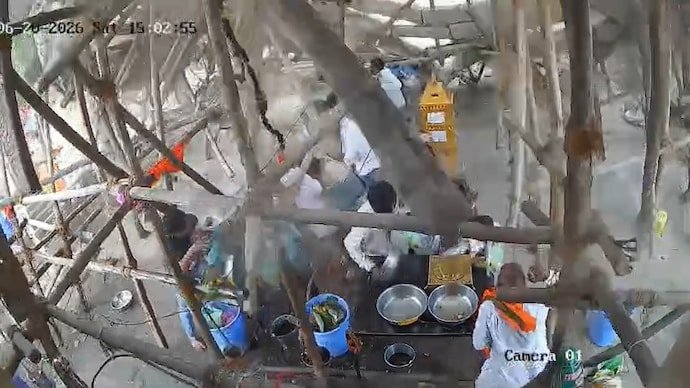
A tragic accident at the Yashwadi Maruti Temple in Maharashtra’s Parbhani district has once again brought the spotlight on Infrastructure safety at religious places across India. On Saturday, the roof of an under-construction sabha mandap reportedly collapsed while a large number of devotees were present at the temple premises, resulting in at least six deaths and leaving several others injured or trapped beneath the debris.
The incident occurred during a period of heavy footfall, when devotees had gathered in significant numbers. Rescue teams, police personnel, district officials, and medical workers rushed to the site as emergency operations began to search for survivors and transport the injured to nearby hospitals.
While authorities continue rescue efforts and investigations, the disaster has reignited a broader national conversation about structural safety standards, construction oversight, crowd management, and disaster preparedness at temples, mosques, churches, gurudwaras, and other public gathering places.
What Happened at the Yashwadi Maruti Temple?
According to preliminary reports, the roof of an under-construction sabha mandap situated in front of the temple suddenly collapsed while devotees were present in the area. The collapse created panic as concrete, metal, and construction material fell on worshippers gathered beneath and around the structure.
Initial reports indicated that approximately 30 to 40 devotees could have been trapped under the rubble. Emergency responders immediately launched rescue operations, deploying heavy machinery, ambulances, medical teams, and disaster response personnel.
Prime Minister Narendra Modi expressed condolences over the loss of lives and wished a speedy recovery to those injured. State authorities also initiated emergency measures to assist victims and their families.
As investigations proceed, officials are expected to examine whether structural defects, construction quality issues, engineering lapses, material failures, or inadequate safety precautions contributed to the collapse.
Why Temple Infrastructure Safety Has Become a National Concern
India is home to some of the world’s largest religious gatherings. Millions of devotees visit temples, shrines, and pilgrimage sites every year, especially during festivals and weekends. Many religious institutions continuously expand their facilities to accommodate growing crowds.
However, rapid expansion often creates challenges.
- Large numbers of visitors increase structural stress.
- Temporary or ongoing construction projects may remain accessible to the public.
- Safety audits are not always conducted regularly.
- Crowd control mechanisms may be inadequate during peak periods.
- Emergency evacuation plans are often underdeveloped.
The Parbhani tragedy highlights the dangers that can emerge when construction activity and public access overlap without sufficient safeguards.
Understanding the Role of a Sabha Mandap
A sabha mandap is a gathering hall or assembly area commonly found in many Hindu temples. It serves multiple purposes, including religious discourses, cultural events, community meetings, and accommodation for large congregations of devotees.
Because these structures are designed to handle significant crowds, their engineering standards become especially important. Any compromise in construction quality, load-bearing calculations, or material strength can create severe risks.
In modern temple complexes, sabha mandaps are often expanded to accommodate rising visitor numbers. Such projects require strict compliance with engineering standards, building codes, and safety regulations.
A Timeline of the Incident
| Event | Details |
|---|---|
| Construction Activity | Sabha mandap structure was reportedly under construction. |
| Heavy Devotee Presence | Large crowds gathered at the temple premises on Saturday. |
| Roof Collapse | The structure suddenly gave way, trapping devotees. |
| Emergency Response | Police, district officials, rescue teams, and ambulances rushed to the site. |
| Rescue Operations | Search-and-rescue efforts continued to locate trapped individuals. |
| Investigation Begins | Authorities started examining the cause of the collapse. |
The Hidden Risk of Under-Construction Public Structures
One of the most significant aspects of the Parbhani incident is that the collapsed structure was reportedly still under construction.
Construction sites inherently carry risks because:
- Structural components may not yet be fully secured.
- Temporary supports can fail under unexpected pressure.
- Load distribution may not be complete.
- Weather conditions can affect unfinished sections.
- Public access can expose people to hazards.
Globally, safety regulations often require strict separation between active construction zones and public areas. Experts frequently recommend barricades, restricted access, warning systems, and periodic inspections to prevent accidents.
The tragedy raises questions about whether adequate precautions were in place while construction work continued near devotees.
India’s Growing Challenge: Managing Religious Crowds Safely
India witnesses some of the world’s largest human gatherings. Religious tourism contributes significantly to local economies, generating employment and supporting businesses ranging from hotels and restaurants to transportation services.
According to various government tourism assessments over the years, domestic pilgrimage travel accounts for a substantial portion of India’s tourism movement. Major temples can receive thousands or even millions of visitors annually.
This growing footfall increases pressure on infrastructure.
Modern crowd-management strategies increasingly focus on:
- Digital visitor management systems.
- Capacity monitoring.
- Emergency medical stations.
- Structural health monitoring.
- Real-time surveillance.
- Disaster response planning.
Many large religious sites have already begun adopting these measures, but implementation remains uneven across smaller and medium-sized institutions.
Who Could Be Held Accountable?
Whenever a structural collapse occurs, investigators generally examine multiple layers of responsibility.
Potential areas of scrutiny include:
- Construction contractors.
- Structural engineers.
- Project supervisors.
- Temple management committees.
- Local authorities responsible for approvals.
- Safety inspection agencies.
The objective is not only to determine immediate causes but also to identify systemic failures that may have contributed to the accident.
If negligence is established, legal proceedings may follow under applicable criminal, civil, and regulatory frameworks.
What Structural Audits Actually Involve
A structural audit is a detailed assessment of a building’s condition and safety. These audits are increasingly recommended for public buildings, especially those that host large crowds.
Typical structural audits evaluate:
- Foundation integrity.
- Load-bearing capacity.
- Material quality.
- Corrosion or deterioration.
- Roof stability.
- Compliance with safety standards.
Experts often compare structural audits to health check-ups for buildings. Just as medical examinations identify health risks before they become emergencies, engineering inspections can identify vulnerabilities before they lead to disasters.
The Economic and Social Impact of Such Disasters
Beyond the tragic loss of life, incidents like the Parbhani temple collapse create broader consequences.
Families face emotional trauma, medical expenses, and financial hardship. Local communities often experience shock and reduced public confidence in public infrastructure.
Religious institutions may face increased scrutiny and operational disruptions. Authorities may be compelled to conduct safety reviews across multiple locations, leading to temporary closures and expensive corrective measures.
The economic impact can therefore extend well beyond the immediate site of the disaster.
Lessons from Previous Infrastructure Failures
India has witnessed multiple incidents involving public infrastructure collapses over the years, including bridges, community halls, stadium structures, and religious facilities.
Investigations frequently identify recurring themes:
- Inadequate maintenance.
- Poor-quality construction materials.
- Failure to follow approved designs.
- Overcrowding.
- Lack of periodic inspections.
- Delayed repairs.
One lesson consistently emerges: prevention costs far less than disaster response.
Investment in safety inspections, engineering oversight, and preventive maintenance is generally more effective than managing the consequences of structural failures.
Technology Could Prevent Future Tragedies
Advances in engineering and digital monitoring are creating new opportunities to improve safety.
Modern technologies include:
- Structural sensors that detect stress and movement.
- AI-based monitoring systems.
- Drone inspections.
- Digital construction management platforms.
- Real-time crowd density analysis.
- Predictive maintenance systems.
Large infrastructure projects worldwide increasingly use such tools to identify problems before they become dangerous.
As India’s religious tourism sector continues expanding, adoption of these technologies could significantly reduce risks.
The Bigger Question: Should Safety Certification Be Mandatory?
The Parbhani tragedy revives an important policy debate: should all religious sites above a certain visitor threshold undergo mandatory annual safety certification?
Supporters argue that such a framework could ensure:
- Regular engineering inspections.
- Updated emergency preparedness plans.
- Crowd management compliance.
- Improved accountability.
- Greater public confidence.
Critics point to implementation costs and administrative challenges. However, the growing scale of religious tourism may make stronger safety standards increasingly difficult to avoid.
What Happens Next?
In the immediate term, rescue operations remain the priority. Authorities are focused on locating any remaining trapped devotees, providing medical care to the injured, and supporting affected families.
Investigators are expected to determine the precise cause of the collapse and identify whether construction, design, material, or management failures contributed to the disaster.
The findings could influence future safety guidelines for under-construction public facilities and religious institutions across India.
Conclusion
The collapse of the under-construction sabha mandap at the Yashwadi Maruti Temple in Maharashtra’s Parbhani district is more than a local tragedy. It is a stark reminder of the importance of infrastructure safety in spaces that attract large public gatherings.
With at least six lives lost and many others affected, the incident underscores the need for rigorous construction standards, independent safety audits, effective crowd management, and stronger accountability mechanisms.
As India’s religious tourism sector continues to grow, ensuring that faith and safety coexist must become a national priority. The outcome of the Investigation may shape future policy decisions, but the larger lesson is already clear: Public Safety cannot remain an afterthought, especially where thousands gather in trust and devotion.
The coming weeks will reveal the exact causes of the collapse, but the broader challenge extends far beyond a single temple. The future of religious infrastructure in India may increasingly depend on how seriously authorities, institutions, and communities embrace safety as a fundamental responsibility rather than a regulatory formality.
For breaking news and live news updates, like us on Facebook or follow us on Twitter and Instagram. Read more on Latest India on thefoxdaily.com.






COMMENTS 0