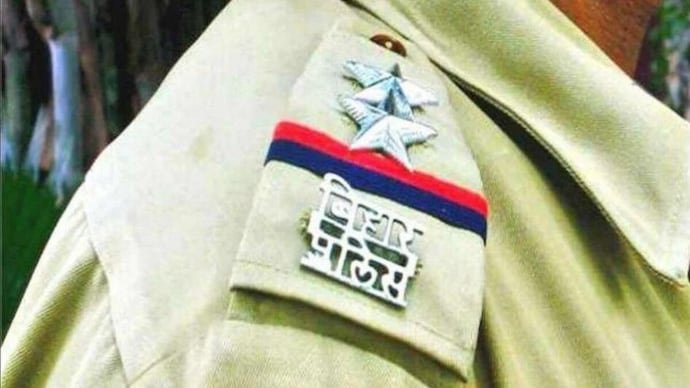
The Bihar government has transferred 18 senior IPS officers in a major police reshuffle, with the Superintendents of Police of Siwan and Bhojpur among the most prominent officers moved. The changes come weeks after an AK-47 firing incident during a student protest in Siwan and amid continuing scrutiny of a police encounter involving activist Bharat Tiwari in Bhojpur.
Siwan SP Pooran Kumar Jha has been transferred and placed at Bihar Police Headquarters while awaiting a new posting. He has been replaced by IPS officer Bharat Soni. In Bhojpur, SP Mister Raj has been transferred to Rohtas, while IPS officer Awadhesh Dixit has been given charge of the district.
The timing of the reshuffle is likely to attract attention because both districts have recently been at the centre of public and political controversy. However, the transfer order itself does not establish that any officer has been punished for either incident. A transfer can be an administrative decision, and the reasons for an individual posting are not necessarily the same as the public controversy surrounding a district.
What makes the Siwan change particularly significant is that Jha was the district police chief when a police constable, identified in reports as his bodyguard, was seen using an AK-47 during the July 25 student protest. The incident triggered questions over police conduct, the use of force during demonstrations and command responsibility.
Siwan SP Pooran Kumar Jha moved after AK-47 controversy
The Siwan transfer comes less than a month after dramatic scenes during a student-led protest in the district.
On July 25, students were demonstrating as part of a Bihar-wide bandh linked to demands concerning examination irregularities and the Education system. The protest became tense in several places, including Siwan, where clashes between demonstrators and police were reported.
During the confrontation, video footage circulated showing a policeman carrying and firing an AK-47 rifle. The footage prompted widespread criticism and questions about why such a weapon was being used during a civilian demonstration.
Bihar Police subsequently suspended the constable and initiated departmental proceedings. Police officials said the firing was carried out in the air and that the officer had acted without orders. The official explanation also focused on the difficult circumstances faced by police personnel during the confrontation.
The incident nevertheless raised a larger question: how should police respond when a protest turns violent, and what weapons and procedures are appropriate when officers are facing an aggressive crowd?
That question is especially important in Siwan because the controversy was not simply about the presence of an AK-47. It was about the circumstances in which the weapon was used, whether established procedures were followed and whether the response was proportionate to the threat faced by police.
What happened during the Siwan student protest?
The July 25 protest was part of a broader student mobilisation in Bihar. Demonstrators were raising issues connected with examination irregularities and accountability in the education system.
The situation deteriorated in several locations, with reports of stone-pelting, clashes and police action. In Siwan, the confrontation became particularly controversial after footage showing the use of an AK-47 emerged.
Police later said that the constable had fired into the air after police personnel were surrounded. The officer’s suspension and the subsequent departmental inquiry were intended to establish the circumstances behind the firing and whether police protocols had been violated.
The distinction between firing at protesters and firing into the air is important. The latter is how police authorities described the action, while the visual footage generated public concern that the weapon was being used against demonstrators. Establishing exactly what happened requires an examination of the video, witness accounts, injuries, forensic evidence and the departmental inquiry rather than assumptions based solely on political claims.
The incident also produced a wider political backlash. Opposition leaders criticised the use of an assault rifle during a student protest and demanded accountability from officials responsible for maintaining Law and Order.
For the police administration, the episode created a difficult balance. Officers are expected to protect people and public property when protests become violent, but the use of firearms in civilian situations carries a particularly high threshold of responsibility.
Why the transfer of Siwan SP matters
An SP is the senior police officer responsible for policing and law-and-order management in a district. The SP does not necessarily personally direct every action taken by individual personnel, but the office carries overall responsibility for district-level policing and supervision.
That is why the transfer of the Siwan SP has attracted attention even though the government has not publicly established that the officer himself ordered the AK-47 firing.
Placing Jha on the waiting list is also different from announcing disciplinary action. A waiting-list posting means the officer is not immediately assigned a new field district in the transfer order. It should not automatically be interpreted as a finding of misconduct.
The more important question will be whether the government or Police Department takes any further action after departmental inquiries or other investigations are completed.
For the new Siwan SP, the immediate challenge will be to restore confidence in the district police’s handling of public demonstrations while maintaining control when protests become disorderly. That is not an easy task, particularly when relations between student groups and law-enforcement agencies have already become strained.
Bhojpur SP Mister Raj also transferred
The Bihar reshuffle extends beyond Siwan. Bhojpur SP Mister Raj has also been transferred and posted as SP of Rohtas, while Awadhesh Dixit has been appointed the new SP of Bhojpur.
The Bhojpur change comes against the backdrop of controversy surrounding the encounter involving local activist Bharat Tiwari in Shahpur.
The case generated public and political concern over the circumstances surrounding the police operation. As with the Siwan incident, the transfer should not by itself be treated as proof that an officer was found responsible for wrongdoing.
What is clear is that Bihar has chosen to change the district-level leadership in two places where the police have recently faced intense scrutiny.
That gives the reshuffle a significance beyond routine personnel movement. New SPs now have the opportunity to establish their own policing priorities and communication with local communities while the controversies surrounding their predecessors continue to receive attention.
New leadership in Siwan and Bhojpur
| District | Officer transferred | New arrangement |
|---|---|---|
| Siwan | Pooran Kumar Jha | Bharat Soni appointed as SP |
| Bhojpur | Mister Raj | Awadhesh Dixit appointed as SP |
The changes mean both districts will begin a new phase under different police leadership at a time when public confidence and law-and-order management are already sensitive issues.
For district administrations, a change in SP can affect policing priorities, deployment patterns, communication with political and civil-society groups and the approach taken towards demonstrations and local disputes.
18 IPS officers moved in Bihar police reshuffle
The changes involving Siwan and Bhojpur are only part of a wider reshuffle affecting 18 senior IPS officers.
The officers moved in the exercise include personnel from different batches and ranks, with several appointments shifting officers between district policing and specialised organisations.
Some officers have been assigned responsibilities involving vigilance, prohibition, the Narcotics and other specialised task structures, the Anti-terrorism Squad and the Crime Investigation Department. The reshuffle therefore combines district-level changes with broader adjustments within Bihar’s specialised police machinery.
Among the changes reported are the appointment of officers to senior roles in vigilance and investigation-related units, as well as changes involving district SP positions.
This wider pattern is important because it suggests the government is not making changes only in the two districts currently attracting public attention. The administration is simultaneously reorganising several parts of the police structure.
Why Bihar frequently reshuffles district police chiefs
Transfers are a normal part of the Indian Police Service system, particularly in a large state police force where officers move between district command, headquarters and specialised assignments.
A district SP can be transferred because of administrative requirements, vacancies, promotions, organisational restructuring or broader law-and-order considerations. A transfer occurring after a controversial incident does not automatically establish that the transfer was ordered as punishment.
At the same time, timing matters politically. When a district has experienced a highly visible policing controversy, changing the senior officer can allow the government to signal that the situation is being addressed and give a new officer responsibility for restoring normalcy.
That appears particularly relevant in Siwan, where the AK-47 episode became a national talking point after video footage spread online.
The AK-47 issue raises a larger policing question
The Siwan incident was unusual because AK-47 rifles are associated with high-risk armed operations rather than routine crowd management.
Modern police forces use different levels of force depending on the threat faced. Crowd-control situations typically require officers to follow specific procedures designed to disperse demonstrators while limiting the risk of serious injury. The use of a sophisticated firearm therefore immediately raises questions about necessity, authorisation and proportionality.
In the Siwan case, police said the constable fired in the air and did so after the police team was surrounded. The departmental inquiry is consequently important because it can establish whether the officer’s conduct was consistent with the orders and procedures applicable at the time.
There is also a command dimension. Even where an individual constable acts independently, senior officers can face questions about supervision, deployment and the instructions given to personnel before a protest.
Those questions should be answered through evidence rather than political speculation.
What the reshuffle means for law and order in Bihar
The immediate practical effect of the transfers is that two districts at the centre of recent controversies now have new police leadership.
For Siwan, the priority will be to manage public demonstrations and rebuild confidence after the firing controversy. The new administration will also have to ensure that future protests are handled within established legal and operational procedures.
In Bhojpur, the new SP will inherit a district where the police have faced scrutiny over the Bharat Tiwari encounter. Maintaining public confidence will similarly require transparent communication and a clear distinction between legitimate policing and allegations that remain under investigation or dispute.
For the wider Bihar Police, the movement of officers into specialised wings could also affect the state’s approach to investigation, vigilance, prohibition enforcement, counter-terrorism and crime detection.
What happens next after the Bihar IPS transfers?
The most important developments will not necessarily be the transfers themselves. Attention will now shift to the investigations and administrative actions connected with the controversies that preceded them.
In Siwan, the departmental proceedings against the constable involved in the AK-47 incident remain important. Their findings can help establish whether established rules were followed and whether additional action is warranted.
The new SP will also face the practical task of ensuring that future protests do not escalate in a manner that produces another confrontation between police and students.
In Bhojpur, scrutiny of the Bharat Tiwari encounter will remain relevant as the new police leadership takes charge. The key issue will be whether the facts surrounding the operation are established through a credible process.
Meanwhile, the wider reshuffle will place a number of experienced IPS officers in new operational and specialised roles. Their performance will ultimately be judged not by the transfer order itself but by how effectively the police respond to crime, protests, investigations and public-safety challenges.
Why this reshuffle is significant
Bihar’s decision to transfer 18 senior IPS officers comes at a sensitive time for the state’s police administration. The moves involving Siwan and Bhojpur are particularly notable because both districts have recently faced controversy over police action.
Still, it is important not to confuse administrative movement with a disciplinary verdict. The transfer of Pooran Kumar Jha does not by itself establish responsibility for the AK-47 incident, just as Mister Raj’s transfer does not establish wrongdoing in the Bharat Tiwari case.
The real test will be what follows: whether investigations establish clear facts, whether policing procedures are strengthened and whether the new district chiefs can restore confidence while maintaining law and order.
For Siwan in particular, the July 25 incident has already raised difficult questions about the use of force during protests. With Bharat Soni now taking charge, the district enters a new phase in which the handling of future demonstrations and the findings of the inquiry into the firing will be closely watched.
The Bihar government’s reshuffle therefore represents more than a list of new postings. It changes the police leadership in two districts facing heightened scrutiny while simultaneously moving senior officers across specialised units. Whether that translates into improved accountability and public confidence will depend on the actions that follow the transfers.
For breaking news and live news updates, like us on Facebook or follow us on Twitter and Instagram. Read more on Latest India on thefoxdaily.com.



COMMENTS 0