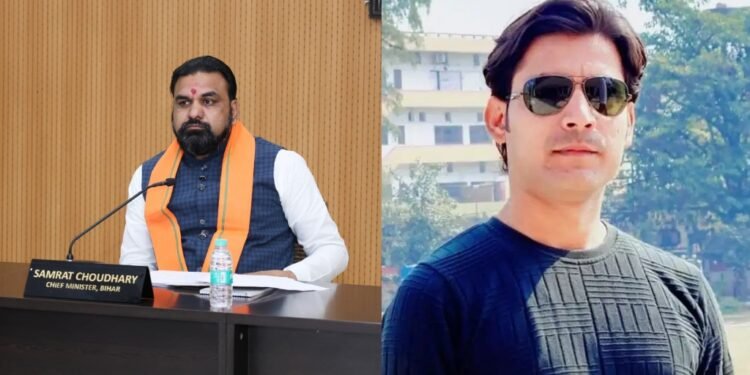
The Bihar government has ordered an independent judicial enquiry into the controversial Police Encounter in Bhojpur district that resulted in the death of Bharat Bhushan Tiwari, a resident of Bilauti village. The decision comes amid conflicting narratives, suspension of police personnel, circulation of disputed videos on Social Media, and growing public scrutiny over the circumstances surrounding the operation.
Deputy Chief Minister Samrat Choudhary announced that the enquiry would be conducted under the supervision of a retired High Court judge to ensure a transparent and impartial Investigation into every aspect of the incident. The move signals the seriousness with which the state government is treating allegations and questions surrounding the encounter.
Beyond the immediate case, the Bhojpur encounter has reopened a broader discussion about the use of force by Law Enforcement agencies, encounter protocols, judicial oversight, and public trust in policing institutions.
What Happened in the Bhojpur Encounter?
The incident took place in Bilauti village under the Shahpur police station area of Bhojpur district. According to the police version, officers were conducting an operation when Bharat Bhushan Tiwari allegedly opened fire on Security personnel.
Police claimed that officers retaliated in self-defence and to protect public safety. During the exchange, Tiwari sustained gunshot injuries and was taken for medical treatment. However, he died while being transported to Patna Medical College and Hospital.
While authorities initially described the operation as a legitimate response to an armed threat, subsequent developments complicated the narrative.
The suspension of four police personnel, including a Station House Officer, and the emergence of videos purportedly showing events before the encounter have raised fresh questions about what exactly happened during the operation.
Why Has the Bihar Government Ordered a Judicial Enquiry?
Judicial enquiries are generally ordered when incidents involve significant public concern, allegations of misconduct, disputed facts, or loss of life under controversial circumstances.
In the Bhojpur case, several factors contributed to the government’s decision:
- Conflicting versions of events.
- Circulation of videos raising questions about police conduct.
- Suspension of police officials involved in the operation.
- Public debate over whether standard procedures were followed.
- Demands for transparency from local residents and civil society.
A judicial enquiry led by a retired High Court judge is expected to independently assess evidence, witness statements, official records, and forensic findings before arriving at conclusions.
The Conflicting Narratives Around Bharat Bhushan Tiwari
One of the most controversial aspects of the case is the differing portrayal of Bharat Bhushan Tiwari.
According to initial police statements, he was reportedly described as mentally unstable. However, family members and several local residents offered a different picture.
They claimed Tiwari was a social activist WHO regularly raised local issues and engaged with government authorities regarding public concerns.
This contrast has intensified public interest in the case because perceptions about the deceased can significantly influence how the encounter is interpreted.
The judicial enquiry will likely examine whether previous interactions between Tiwari and local authorities played any role in the events leading up to the operation.
The Role of Viral Videos in Modern Investigations
A major reason the Bhojpur encounter attracted statewide attention is the emergence of videos circulating on social media.
One purported video allegedly showed an armed individual pointing a weapon at police personnel while officers appeared hesitant to react immediately.
Another video reportedly showed the individual discarding a weapon before the encounter took place.
These videos have not been independently verified. Nevertheless, they have become central to public discussions about the incident.
In today’s digital age, video footage frequently shapes public opinion before formal investigations are completed. While such evidence can be valuable, experts caution against drawing conclusions until authenticity, timing, editing, and context are verified through forensic examination.
How Judicial Enquiries Typically Work
Unlike departmental investigations conducted within police structures, judicial enquiries operate independently and generally enjoy greater public confidence.
The process usually involves:
- Collection of documentary evidence.
- Review of police records and operational reports.
- Examination of forensic findings.
- Analysis of video and digital evidence.
- Statements from witnesses.
- Questioning of police personnel involved.
- Recommendations regarding accountability and reforms.
The enquiry’s findings can influence administrative action, criminal investigations, policy reforms, or legal proceedings.
Understanding Police Encounter Protocols in India
Police encounters remain among the most scrutinised areas of law enforcement in India.
While police officers are legally permitted to use force under certain circumstances, strict procedural safeguards exist to prevent misuse.
Generally, the use of lethal force must meet principles such as:
- Necessity.
- Proportionality.
- Legality.
- Accountability.
Whenever a death occurs during a police operation, authorities are expected to follow detailed reporting and investigation procedures.
Courts have repeatedly emphasised that encounter killings must undergo independent scrutiny to ensure public confidence and constitutional safeguards.
Why Public Trust Matters in Policing
Law enforcement agencies depend heavily on public cooperation.
When controversial incidents occur, maintaining trust becomes just as important as conducting investigations.
Public confidence is strengthened when authorities:
- Act transparently.
- Share factual updates.
- Allow independent reviews.
- Hold officials accountable where necessary.
- Protect the integrity of investigations.
The Bihar government’s decision to order a judicial probe can be viewed as an attempt to ensure that the investigation is perceived as fair by all stakeholders.
The Significance of Suspending Four Police Personnel
The suspension of four police personnel, including a Station House Officer, is among the most significant developments in the case.
Suspensions do not imply guilt. However, they often indicate that authorities believe a thorough investigation is necessary and that officials involved should not influence the enquiry process.
Such actions are generally intended to preserve evidence, protect witness testimony, and reinforce confidence in the investigation.
The enquiry will likely examine whether operational decisions taken by officers before, during, and after the encounter complied with established procedures.
Technology Is Changing Accountability in Law Enforcement
The Bhojpur case demonstrates how Technology is reshaping modern investigations.
Today, smartphones, CCTV systems, drone footage, and social media platforms often generate evidence that can complement or challenge official narratives.
This technological transformation has created both opportunities and challenges.
| Benefits | Challenges |
|---|---|
| Greater transparency | Misinformation risks |
| Independent evidence | Manipulated content |
| Faster public awareness | Premature conclusions |
| Improved accountability | Context may be missing |
Investigators must therefore balance public concerns with careful forensic verification of digital evidence.
What the Enquiry Could Examine
The judicial investigation is expected to focus on several critical questions:
- Was the police operation properly planned?
- Did officers face an immediate threat?
- Were standard encounter procedures followed?
- What do forensic findings reveal?
- Are the viral videos authentic?
- Do witness statements support the police version?
- Could non-lethal alternatives have been used?
The answers to these questions will determine whether the encounter was justified under law or whether procedural failures occurred.
The Broader Debate Over Police Reforms
The Bhojpur case arrives at a time when discussions about police reforms are gaining renewed attention across India.
Policy experts frequently advocate for:
- Greater use of body-worn cameras.
- Independent police complaints authorities.
- Enhanced training in de-escalation techniques.
- Improved forensic capabilities.
- Stronger operational oversight.
- Technology-driven transparency measures.
Supporters argue that such reforms can reduce disputes surrounding police actions while protecting both officers and citizens.
Lessons From Similar Cases
Across India, judicial and independent enquiries have often played a crucial role in clarifying controversial incidents involving law enforcement.
Some investigations have validated police actions after reviewing evidence, while others have identified procedural lapses or misconduct.
The common lesson is that independent review mechanisms strengthen institutional credibility and help ensure that facts, rather than speculation, determine outcomes.
The Bihar government’s decision reflects this principle by placing the matter before an external authority rather than relying solely on departmental investigations.
Potential Impact on Bihar’s Law-and-Order Narrative
The outcome of the judicial enquiry may have implications beyond Bhojpur district.
Depending on its findings, the probe could influence:
- Future police operational guidelines.
- Training protocols.
- Use-of-force procedures.
- Public confidence in law enforcement.
- Political discussions surrounding governance and accountability.
For Bihar, where law-and-order issues often become significant public and political topics, the handling of this case could shape perceptions of institutional transparency.
Conclusion
The Bihar government’s decision to order a judicial enquiry into the Bhojpur police encounter marks an important step toward establishing clarity in a case surrounded by conflicting claims and public scrutiny.
The death of Bharat Bhushan Tiwari, suspension of police personnel, emergence of disputed videos, and questions surrounding the official version have elevated the matter beyond a routine police operation. It has become a test of transparency, accountability, and public trust.
As the retired High Court judge-led enquiry begins its work, attention will focus on evidence, witness accounts, forensic findings, and operational procedures. The investigation’s conclusions will not only determine what happened in Bilauti village but may also contribute to broader conversations about policing standards and institutional accountability in India.
Ultimately, the significance of the enquiry extends beyond assigning responsibility. It represents an opportunity to reinforce public confidence in democratic institutions by ensuring that truth, fairness, and due process remain at the centre of justice.
For breaking news and live news updates, like us on Facebook or follow us on Twitter and Instagram. Read more on Latest India on thefoxdaily.com.






COMMENTS 0