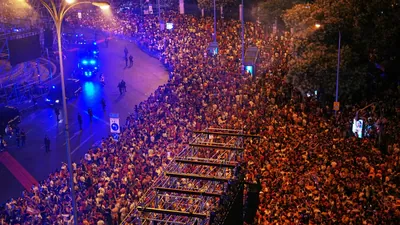
Spain’s World Cup triumph was expected to be remembered as one of the nation’s greatest sporting moments. Instead, celebrations in the historic city of Ciudad Rodrigo were overshadowed by tragedy after a public fountain collapsed during post-match festivities, resulting in the death of a 13-year-old boy and injuries to several others.
The incident occurred as thousands of fans across Spain celebrated the national team’s return to football’s summit. While the victory united the country in joy and pride, the accident highlighted an often-overlooked reality: major public celebrations can quickly become dangerous when crowds gather around structures never designed to support large numbers of people.
This tragedy is not only a local story from western Spain. It raises broader questions about crowd management, Public Safety planning, infrastructure resilience, and how cities worldwide prepare for large-scale sporting celebrations.
What Happened in Ciudad Rodrigo?
According to local authorities, emergency services received multiple calls shortly after midnight reporting that a fountain had collapsed beneath a group of people gathered during World Cup celebrations.
The structure reportedly gave way after numerous supporters climbed onto it while celebrating Spain’s victory. Emergency responders rushed to the scene, where several people were found injured. Tragically, a 13-year-old boy lost his life as a result of the collapse.
The municipality expressed its condolences and described the incident as a heartbreaking turn during what should have been a night of national celebration.
Investigators are expected to examine the circumstances surrounding the collapse, including:
- The number of people standing on the structure.
- The fountain’s load-bearing capacity.
- Its maintenance history and structural condition.
- Whether any warning signs or restrictions were in place.
- The effectiveness of crowd control measures.
Spain’s World Cup Victory and the Scale of Celebrations
Spain’s latest World Cup success carried enormous emotional significance. The victory marked the country’s return to the pinnacle of international football for the first time since its historic triumph in 2010.
Across Madrid, Barcelona, Valencia, Seville, and countless smaller towns, supporters flooded streets, plazas, and public spaces. Flags waved from balconies, car horns echoed through city centers, and crowds gathered around monuments and fountains that have traditionally become focal points for celebrations.
Such scenes are common after major sporting victories. However, they also create unique challenges for local authorities because infrastructure designed for everyday use suddenly faces extraordinary pressure from thousands of excited supporters.
Why Public Monuments Become Celebration Hotspots
Throughout football history, fans have often climbed statues, fountains, bridges, and public monuments during celebrations. These locations become symbolic gathering points because they are highly visible, centrally located, and capable of attracting large crowds.
However, most public structures are designed primarily for aesthetic or functional purposes—not as viewing platforms for hundreds of people.
Engineers frequently warn that decorative structures can face severe stress when large groups climb onto them simultaneously. Even if a monument appears solid, concentrated weight can place enormous strain on components that were never intended to bear such loads.
In many cases, the danger is not immediately obvious to celebratory crowds focused on the excitement of the moment.
The Hidden Risks of Mass Celebrations
Sporting celebrations are often viewed as joyful community events, but history shows they can carry significant safety risks.
Large crowds can create several hazards:
- Structural failures involving monuments, fountains, and barriers.
- Stampedes caused by sudden movement or panic.
- Falls from elevated structures.
- Traffic-related accidents.
- Emergency access challenges for rescue teams.
- Overcrowding in confined public spaces.
When thousands of people gather spontaneously, authorities may have limited time to implement crowd-control measures, especially in smaller cities where large celebrations occur less frequently.
Why Crowd Psychology Matters
One of the most important factors during mass celebrations is crowd psychology.
Individuals often behave differently when surrounded by large groups. Actions that might seem risky when alone can feel normal when hundreds of others are doing the same thing.
This phenomenon is particularly visible during sporting celebrations. When a few people climb a monument or fountain, others frequently follow. Within minutes, a structure intended for decorative use can become overloaded.
Experts in crowd behavior note that excitement, emotional intensity, and collective enthusiasm can reduce awareness of potential dangers, especially among younger supporters.
Lessons from Similar Incidents Around the World
The tragedy in Ciudad Rodrigo is not the first instance of a major sporting celebration ending in disaster.
Over the years, football, basketball, cricket, and other sporting victories have occasionally been followed by accidents involving overcrowding, collapsing structures, or falls from public monuments.
These incidents reveal a recurring pattern: infrastructure designed for normal urban use often faces unexpected stress during moments of national celebration.
| Risk Factor | Potential Consequence | Prevention Strategy |
|---|---|---|
| Overloaded structures | Collapse and injuries | Restricted access and barriers |
| Uncontrolled crowds | Crushing incidents | Crowd management zones |
| Limited emergency access | Delayed rescue operations | Dedicated emergency routes |
| Poor public awareness | Risk-taking behavior | Safety campaigns and announcements |
| Insufficient policing | Overcrowding | Increased security deployment |
The Challenge Facing Smaller Cities
Major capitals often have detailed event-management plans for large celebrations. Smaller municipalities, however, may face greater challenges.
Cities like Ciudad Rodrigo typically have fewer resources, smaller police forces, and less experience handling crowds comparable to those seen after a World Cup victory.
When national celebrations spread beyond major urban centers, local infrastructure can quickly become overwhelmed.
This creates a difficult balancing act: allowing communities to celebrate freely while ensuring public safety remains protected.
Could the Accident Change Future Celebration Planning?
Tragic events often lead to policy changes and renewed focus on safety procedures.
Authorities across Spain may now review how public spaces are managed during major sporting events. Potential measures could include:
- Temporary barriers around vulnerable monuments.
- Additional police presence at celebration hotspots.
- Real-time crowd monitoring systems.
- Public safety messaging before major matches.
- Structural assessments of popular gathering locations.
- Emergency response drills for post-match celebrations.
Many experts believe prevention is far more effective than responding after an incident occurs.
The Human Cost Behind the Headlines
While discussions about infrastructure and crowd management are important, the central tragedy remains the loss of a young life.
For the family of the 13-year-old victim, a night that should have been associated with national pride became an unimaginable personal tragedy.
Moments like these serve as a reminder that behind every headline are real people, families, friends, and communities whose lives can change instantly.
The emotional impact is likely to be felt far beyond Ciudad Rodrigo. Across Spain, many supporters who celebrated the World Cup victory will now reflect on the fragility of such moments and the importance of safety during public gatherings.
How Sports Can Unite—and Why Safety Must Keep Pace
Football has a unique ability to unite entire nations. World Cup victories create shared memories that can last generations, bringing together people from different regions, backgrounds, and age groups.
Yet the scale of modern celebrations means safety planning must evolve alongside the growing passion of supporters.
Urban planners, engineers, emergency responders, and sporting authorities increasingly recognize that celebration management is becoming as important as event management itself.
The challenge is not preventing celebrations but making them safer without diminishing the joy and spontaneity that make sporting victories special.
A Broader Lesson for Future Global Sporting Events
As international tournaments continue to attract massive audiences, cities around the world can learn from incidents like the one in Ciudad Rodrigo.
Future World Cups, European Championships, Olympic Games, and other major sporting events will likely generate similar nationwide celebrations. Authorities may increasingly focus on identifying vulnerable structures, predicting crowd behavior, and implementing proactive safety measures.
The goal is simple: ensuring that moments of collective happiness do not become moments of preventable tragedy.
Conclusion: A Victory Remembered With Mixed Emotions
Spain’s World Cup victory will remain one of the most significant achievements in the country’s sporting history. Millions celebrated the triumph as a symbol of national pride, resilience, and footballing excellence.
However, the tragedy in Ciudad Rodrigo has become an inseparable part of that story. The death of a 13-year-old boy and injuries suffered by others serve as a sobering reminder that large public celebrations carry real risks.
As investigations continue, the incident is likely to spark important discussions about crowd safety, urban infrastructure, and event planning across Spain and beyond.
The ultimate legacy of this heartbreaking event may be a renewed commitment to protecting supporters during future celebrations—ensuring that football’s greatest moments remain occasions for joy rather than sorrow.
For breaking news and live news updates, like us on Facebook or follow us on Twitter and Instagram. Read more on Latest Sports on thefoxdaily.com.






COMMENTS 0