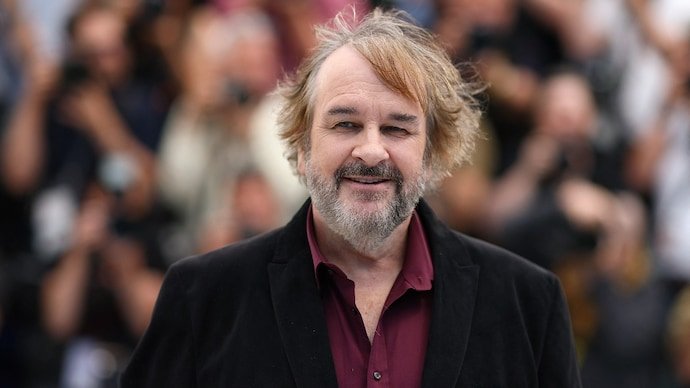
- Why Peter Jackson’s AI Comments Matter More Than Typical Hollywood Reactions
- The Real Fear in Hollywood: Stolen Actor Likenesses
- Peter Jackson’s Unique Relationship With Digital Filmmaking
- Why Jackson Thinks Andy Serkis Was Treated Unfairly
- The Bigger Hollywood Divide Over AI
- AI in Movies Is Already Here Just Not in the Way Many People Think
- Could AI Change Acting Forever?
- The New Lord of the Rings Film Adds Another Layer to the AI Debate
- Peter Jackson’s “Destroy the World” Warning Explained
- Hollywood’s AI Future Will Likely Be Hybrid, Not Fully Automated
- Conclusion: Peter Jackson Sees AI as a Tool Not the Artist
Oscar-winning filmmaker Peter Jackson has entered Hollywood’s increasingly heated Artificial Intelligence debate with a characteristically balanced and deeply cautionary perspective. Speaking during a masterclass at the Cannes Film Festival after receiving an Honorary Palme d’Or, the director behind
The comments reflect the complicated reality facing the modern Film Industry. On one hand, AI Tools are rapidly transforming visual effects, voice recreation, script analysis, and digital production workflows. On the other, fears about intellectual property theft, job displacement, deepfakes, and unauthorized digital replicas of actors have triggered widespread concern across Hollywood.
Jackson’s remarks stand out because they come from one of cinema’s most influential innovators a filmmaker whose groundbreaking use of motion-capture technology helped redefine blockbuster storytelling decades before AI became Hollywood’s latest obsession.
Why Peter Jackson’s AI Comments Matter More Than Typical Hollywood Reactions
Unlike many directors now criticizing AI from the sidelines, Peter Jackson has spent much of his career pushing the boundaries of filmmaking technology. From the revolutionary motion-capture work used to create Gollum to advanced visual effects pioneered by Weta Workshop and Weta Digital, Jackson’s career has been built on tools that were once viewed with skepticism.
That context makes his latest comments especially significant.
Jackson is not rejecting AI outright. Instead, he is arguing that artificial intelligence in cinema should be treated similarly to CGI, prosthetics, green-screen technology, or motion capture another technical method filmmakers can use to tell stories.
“To me, it’s just a special effect,” Jackson said during the Cannes discussion.
That statement directly challenges a growing narrative in Hollywood that AI represents something fundamentally separate from earlier filmmaking innovations.
For Jackson, the problem is not necessarily the technology itself. The real issue is consent, ownership, and ethical use.
The Real Fear in Hollywood: Stolen Actor Likenesses
One of Jackson’s strongest points focused on the unauthorized use of actors’ digital identities currently one of the biggest flashpoints in Hollywood’s AI debate.
The filmmaker emphasized that digitally recreating actors is acceptable only if the performers have licensed their likenesses and given permission.
That distinction is becoming increasingly important as studios experiment with:
- AI-generated digital doubles
- Voice cloning technology
- De-aging visual effects
- Synthetic background performers
- Digitally resurrected deceased actors
Jackson referenced examples like digitally recreating characters such as Indiana Jones, arguing that such techniques are not inherently unethical when handled transparently and contractually.
Hollywood unions strongly agree on the importance of consent but many actors worry that studios could eventually push those boundaries further.
The concern intensified during the 2023 Hollywood strikes, when artificial intelligence became one of the central issues raised by both actors and writers. Performers feared studios might scan extras once and reuse their digital likenesses indefinitely without fair compensation.
Jackson’s position effectively lands in the middle of the debate:
- AI can be a legitimate filmmaking tool
- Actors must retain ownership of their identities
- Unauthorized replication crosses an ethical line
That nuance is often missing from broader public conversations about AI in Entertainment.
Peter Jackson’s Unique Relationship With Digital Filmmaking
Few filmmakers are better positioned to comment on AI and performance technology than Jackson himself.
His
Using motion-capture technology, Serkis delivered a deeply human performance layered beneath a digitally generated character. The result blurred the line between acting and visual effects in ways Hollywood had rarely seen before.
At the time, some traditionalists questioned whether motion-capture performances should even count as acting.
More than two decades later, Jackson believes today’s anxiety surrounding AI has revived similar biases.
Why Jackson Thinks Andy Serkis Was Treated Unfairly
A major part of Jackson’s Cannes discussion centered on actor Andy Serkis, whose portrayal of Gollum remains one of cinema’s most celebrated performances.
Jackson argued that growing fears about AI-generated content have unfairly damaged recognition for motion-capture performances.
According to the filmmaker, many people incorrectly group motion-capture acting together with artificial intelligence even though they are fundamentally different processes.
Jackson stressed that Serkis’ work as Gollum was entirely human-driven.
The technology captured Serkis’ facial expressions, voice, body language, and emotional performance. AI did not generate the character’s acting choices.
This distinction matters because hollywood awards bodies have historically struggled to recognize performances enhanced through digital tools.
Even today, questions remain about how future awards systems should evaluate:
- Motion-capture performances
- Digitally altered acting
- AI-assisted performances
- Virtual characters
- Hybrid human-digital acting roles
Jackson’s comments suggest Hollywood may be entering another transitional moment similar to the early CGI era, when the industry initially resisted recognizing technology-enhanced performances as “real acting.”
The Bigger Hollywood Divide Over AI
Jackson’s position highlights a growing divide inside the entertainment industry.
Some filmmakers and actors see AI primarily as a threat:
- Writers fear script automation
- Actors fear digital replacement
- Artists fear intellectual property theft
- Editors and designers fear job displacement
Others view AI more pragmatically as a productivity tool that can reduce costs and expand creative possibilities.
This split is becoming one of the defining industry debates of the decade.
| Hollywood Concern | Why It Matters |
|---|---|
| Actor likeness cloning | Could allow studios to reuse performers without consent |
| AI-generated scripts | Raises copyright and originality concerns |
| Deepfake technology | Can create misleading or unauthorized performances |
| Motion-capture confusion | May reduce recognition for genuine human acting |
| Visual effects automation | Could disrupt VFX industry employment |
What makes Jackson’s stance unique is that he refuses to frame the debate as simply “pro-AI” or “anti-AI.” Instead, he appears focused on defining ethical boundaries around ownership and consent.
AI in Movies Is Already Here Just Not in the Way Many People Think
One important reality often overlooked in public discussions is that artificial intelligence is already deeply embedded in modern filmmaking workflows.
Studios currently use AI-driven systems for:
- Visual effects rendering
- Facial tracking
- Automated editing assistance
- Voice cleanup
- Background crowd generation
- Predictive audience analytics
- Localization and dubbing
In many cases, audiences never notice these tools because they operate behind the scenes.
That is partly why Jackson compares AI to special effects rather than some entirely separate force invading Hollywood.
From his perspective, filmmaking has always evolved through technology.
Silent films gave way to sound. Practical effects evolved into CGI. Analog editing shifted to digital post-production. AI may simply represent the next stage in that progression.
But unlike earlier technological shifts, AI introduces ethical questions involving identity, authorship, and authenticity at a much larger scale.
Could AI Change Acting Forever?
Perhaps the most fascinating implication of Jackson’s comments is what they suggest about the future of performance itself.
As AI tools improve, Hollywood may increasingly blur the line between:
- Human performances
- Digitally enhanced acting
- Fully synthetic characters
- AI-assisted dialogue delivery
This creates difficult philosophical and artistic questions:
- What counts as a “real” performance?
- Who owns a digital character built from multiple contributors?
- Can AI-generated acting ever win major awards?
- Should audiences always know when AI was used?
Jackson’s Defense of Serkis suggests he believes human creativity must remain central even when technology heavily shapes the final image on screen.
That viewpoint could become increasingly important as studios experiment with more advanced AI-generated content.
The New Lord of the Rings Film Adds Another Layer to the AI Debate
Jackson’s comments arrived alongside major updates surrounding the future of
Warner Bros. recently confirmed several high-profile casting announcements for
- Jamie Dornan as Aragorn/Strider
- Andy Serkis returning as Smagol/Gollum
- Ian McKellen returning as Gandalf
- Elijah Wood returning as Frodo
- Lee Pace as Thranduil
- Kate Winslet as Marigol
- Leo Woodall as Halvard
The film’s release date has also shifted from 2026 to December 17, 2027.
Interestingly, the franchise itself represents one of the clearest examples of how digital filmmaking and human performance can successfully coexist.
Gollum was groundbreaking precisely because audiences emotionally connected with a digitally created character powered by authentic acting.
That balance may ultimately become Hollywood’s preferred model for AI as well: technology supporting human storytelling rather than replacing it entirely.
Peter Jackson’s “Destroy the World” Warning Explained
While Jackson defended AI as a filmmaking tool, his darker warning drew just as much attention.
Saying AI is “going to destroy the world” may sound dramatic, but it reflects growing global anxiety extending far beyond Hollywood.
Artificial intelligence is now influencing:
- Military systems
- Cybersecurity
- Financial markets
- Political misinformation
- Surveillance technologies
- Workforce automation
Many technology experts, scientists, and business leaders have warned that unchecked AI development could create massive societal disruption.
Jackson’s comments appear to acknowledge that distinction:
- AI inside filmmaking can be manageable
- AI at a societal scale may become dangerous
That perspective mirrors the growing belief that artificial intelligence itself is not inherently good or evil but its impact depends entirely on regulation, incentives, and human oversight.
Hollywood’s AI Future Will Likely Be Hybrid, Not Fully Automated
Despite fears of fully AI-generated movies replacing human creativity, the more realistic near-term future is likely hybrid filmmaking.
Human writers, actors, directors, and designers will continue driving creative decisions while AI handles technical or repetitive tasks.
That model already exists in many areas of production.
What changes now is the scale and sophistication of the tools.
Studios may increasingly use AI to:
- Speed up visual effects production
- Reduce post-production timelines
- Create more realistic digital environments
- Assist with language localization
- Enhance de-aging effects
But audiences still overwhelmingly respond to authentic storytelling, emotional performances, and creative originality qualities that remain deeply human.
Conclusion: Peter Jackson Sees AI as a Tool Not the Artist
Peter Jackson’s Cannes comments reveal a far more layered perspective on artificial intelligence than the simplistic “AI good” versus “AI bad” arguments dominating Hollywood headlines.
For Jackson, AI in filmmaking is ultimately another cinematic tool comparable to CGI, motion capture, or practical effects. The danger lies not in the technology itself, but in how it is controlled, regulated, and ethically applied.
His defense of Andy Serkis and motion-capture acting also highlights an important truth often lost in current debates: digital tools do not erase human creativity. In many cases, they amplify it.
At the same time, Jackson’s warning about AI’s broader societal risks reflects growing concern that technological progress may be moving faster than ethical safeguards.
Hollywood now faces a defining challenge: embracing innovation without sacrificing artistic authenticity, performer rights, or audience trust.
If the industry gets that balance right, AI could become one of filmmaking’s most powerful creative tools. If it gets it wrong, Jackson’s darker prediction may become harder to ignore.
For breaking news and live news updates, like us on Facebook or follow us on Twitter and Instagram. Read more on Latest Entertainment on thefoxdaily.com.






COMMENTS 0