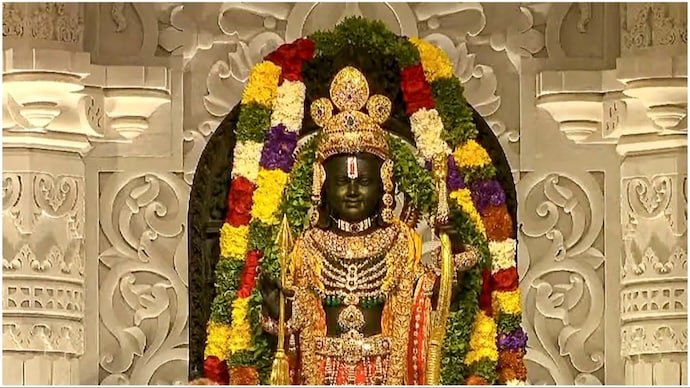
The Ram Temple in Ayodhya is one of India‘s most significant religious institutions, receiving donations worth crores of rupees and precious offerings from devotees across the world. Allegations involving Temple Donations therefore carry enormous public importance, not only because of their financial implications but also because they affect the trust millions of devotees place in the institution. As investigators expand their probe, the focus has shifted from missing valuables to the systems designed to safeguard them.
The latest line of inquiry explores whether stolen ornaments may have been melted into standardized Gold Bars or biscuits, a method that could make identification significantly more difficult. While investigators are examining this possibility, authorities have not publicly confirmed that such conversion actually took place.
What Is the Latest Development in the Ram Temple Investigation?
The Special Investigation Team constituted to investigate the alleged embezzlement of Ram Temple donations is examining whether missing gold ornaments were melted into gold biscuits after being removed from temple custody.
According to officials, this possibility emerged after multiple searches reportedly failed to recover several allegedly missing ornaments. Investigators are therefore exploring whether the original jewellery may have been melted, making identification through physical appearance impossible.
At this stage, this remains an investigative angle rather than an established finding.
Why Would Gold Be Melted?
Gold jewellery contains distinctive characteristics such as:
- Design patterns.
- Temple-specific engravings.
- Craftsmanship.
- Weight records.
- Unique decorative features.
If jewellery is melted, these identifying features disappear permanently. The resulting bullion or gold biscuits become much harder to connect to a particular source unless investigators possess detailed documentation regarding purity, weight, refining records, or transaction histories.
This is one reason financial crime investigations often examine refining activities when precious metals are involved.
How the Investigation Has Expanded
The SIT is no longer focusing solely on the recovery of missing valuables. Investigators are examining the complete chain through which donations move after being received by the temple.
The inquiry now includes:
- Inventory registers.
- Donation records.
- Storage procedures.
- Movement of precious metals.
- Bank documentation.
- Transactions involving the government-owned Printing and Minting Corporation of India.
The objective is to determine whether existing records accurately reflect the quantity and movement of donated precious metals.
Visit to the Ram Temple
As part of the investigation, SIT officials visited the Ram Temple and interacted with temple authorities responsible for managing valuable offerings.
The team reportedly sought information regarding:
- Inventory management.
- Storage facilities.
- Jewellery registers.
- Security procedures.
- Handling of donated ornaments.
Investigators are also examining whether prescribed procedures were consistently followed throughout the donation management process.
Role of the Government Mint
One important aspect of the investigation involves transactions with the government-owned Printing and Minting Corporation of India.
Large religious institutions sometimes send donated precious metals to authorized facilities for:
- Purity testing.
- Weight verification.
- Refining.
- Conversion into standardized bullion.
According to publicly available information, approximately 9.44 quintals (944 kilograms) of silver had earlier been sent by the trust to the government Mint for testing and processing.
The SIT is reviewing records connected with these transactions as part of its broader audit.
Understanding Temple Donation Management
Major temples across India receive a wide variety of offerings, including:
- Cash donations.
- Gold jewellery.
- Silver ornaments.
- Coins.
- Bullion.
- Precious stones.
Managing these donations requires carefully documented procedures involving counting, cataloguing, valuation, storage, banking, auditing, and periodic verification.
Questions Raised During the Investigation
According to investigative sources, officials are examining whether detailed discussions regarding precious metal inventories formed a regular part of the trust’s financial oversight.
The inquiry reportedly seeks to understand:
- How jewellery inventories were maintained.
- How often physical verification occurred.
- Whether valuation records were updated regularly.
- How donated ornaments were secured.
- Whether reconciliation procedures were consistently followed.
Investigators are expected to compare documentary records with available physical inventories.
Why Inventory Management Matters
Unlike cash donations, precious metals present unique administrative challenges.
Temple authorities generally need systems capable of recording:
- Item descriptions.
- Weight.
- Purity.
- Estimated value.
- Storage location.
- Movement history.
Accurate documentation enables periodic audits and reduces opportunities for discrepancies.
Timeline of the Investigation
| Stage | Development |
|---|---|
| June 7 | Alleged embezzlement comes to light. |
| Following the allegations | Uttar Pradesh government constitutes a Special Investigation Team. |
| June 25 | FIR registered based on preliminary findings. |
| Current phase | SIT expands probe to include jewellery inventories, Mint records, and possible melting of ornaments. |
Arrests and Ongoing Investigation
Authorities have arrested several individuals associated with the temple’s donation-counting process as part of the investigation.
Police have also questioned multiple current and former officials connected with temple administration while continuing to gather documentary and physical evidence.
The investigation remains ongoing, and guilt or innocence will ultimately be determined through the legal process.
How Gold Forensic Investigations Work
Recovering stolen gold presents unique challenges for investigators because precious metals can be melted without losing their intrinsic value.
Investigators often rely on:
- Financial transaction records.
- Banking trails.
- Bullion dealer records.
- Digital communications.
- CCTV footage.
- Witness testimony.
- Inventory reconciliation.
Unlike stolen vehicles or electronics, melted gold cannot usually be identified visually once refined into standardized bars.
Broader Importance of Financial Governance at Religious Institutions
India’s prominent temples collectively receive substantial public donations every year. These funds support:
- Religious rituals.
- Pilgrim services.
- Infrastructure.
- Charitable programmes.
- Community welfare.
- Temple maintenance.
Because these contributions are voluntary expressions of faith, robust financial Governance becomes essential for preserving public confidence.
Lessons for Religious Trust Administration
Governance experts often recommend that institutions handling valuable donations strengthen internal controls through:
- Digital inventory systems.
- Barcode or RFID tracking.
- Independent external audits.
- Multi-person verification.
- Continuous CCTV monitoring.
- Regular stock reconciliation.
- Transparent annual reporting.
Such measures not only reduce opportunities for financial misconduct but also protect institutions against unfounded allegations.
Political and Public Reactions
The investigation has generated significant political attention, with opposition parties seeking greater transparency regarding temple donations and financial management.
Various public figures and organizations have also called for a thorough investigation, emphasizing that accountability is necessary regardless of an individual’s position or role.
At the same time, many observers have urged restraint, noting that the investigation is still underway and that conclusions should await the completion of official inquiries.
What Happens Next?
The SIT is expected to continue examining documentary evidence, financial records, inventory registers, and transactions involving precious metals. Investigators may also compare historical records with physical inventories and seek additional forensic or financial analysis where required.
If sufficient evidence emerges, further legal action could follow. Conversely, if allegations cannot be substantiated, investigators are expected to clarify the findings accordingly.
Conclusion
The Ram Temple donation investigation has evolved beyond questions of missing ornaments into a broader examination of financial governance, inventory management, and accountability. The latest investigative angle whether stolen jewellery was melted into gold biscuits illustrates the complexity of investigating crimes involving precious metals, where physical evidence can be transformed while retaining its monetary value.
At present, authorities have not confirmed that any ornaments were melted, and the inquiry remains ongoing. The final findings of the Special Investigation Team will be crucial not only in determining the facts of this particular case but also in reinforcing confidence in the systems that protect the offerings made by millions of devotees. Regardless of the outcome, the investigation underscores the importance of transparent procedures, strong internal controls, and regular audits in safeguarding public trust at one of India’s most revered religious institutions.
For breaking news and live news updates, like us on Facebook or follow us on Twitter and Instagram. Read more on Latest India on thefoxdaily.com.






COMMENTS 0