Prime Minister Narendra Modi on Saturday made a strong case for strengthening India’s Energy Security, arguing that the country’s future economic and technological ambitions will depend on access to reliable and diverse sources of energy.
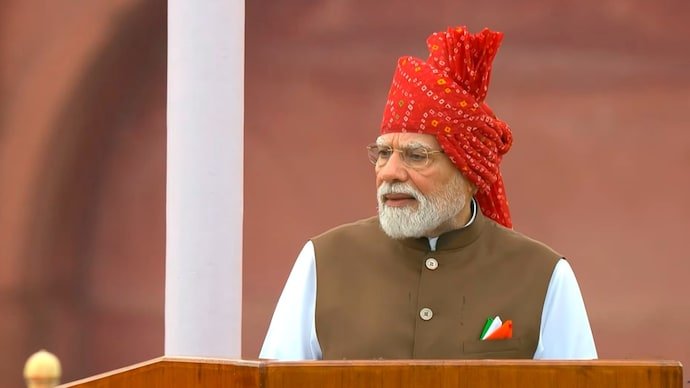
Addressing the nation from the Red Fort on India’s 80th Independence Day, Modi linked energy security directly to the rapid growth of technologies such as artificial intelligence, semiconductors and data centres, all of which require large amounts of electricity.
“Today, it is difficult to run the new world without energy. Whether it is chips, AI or data centres, we need enormous amounts of electricity. Energy security is the need of the hour,” Modi said.
His address outlined a broad strategy that includes five new nuclear reactors this decade, a 100 GW nuclear-capacity target by 2047, expanded offshore oil exploration, alternative energy sources, hydrogen-powered transport and greater access to critical minerals.
Nuclear power at the centre of India’s energy strategy
Nuclear Energy was one of the most prominent elements of Modi’s energy-security roadmap.
The Prime Minister said India was working towards achieving 100 GW of nuclear power capacity by 2047, describing nuclear energy as a major means of strengthening the country’s energy independence.
“By 2047, we will have 100 gigawatts of nuclear power capacity. We are working towards this goal,” Modi said.
He also announced a shorter-term target, saying five new nuclear reactors would begin operations within the current decade.
“In this very decade, we will have five new nuclear reactors starting operations. We have set a target to get them operational,” he said.
The push comes as India seeks to expand nuclear generation as part of a more diversified electricity mix. Nuclear power can provide continuous electricity generation, making it particularly relevant to a country whose electricity requirements are expected to rise alongside industrialisation and the expansion of data-intensive technologies.
India highlights breeder nuclear technology
Modi also pointed to progress in breeder nuclear Technology as an important milestone for India’s long-term nuclear ambitions.
“This year, India has achieved a significant milestone in breeder nuclear technology,” he said.
According to the Prime Minister, the development represents a major step towards greater self-reliance in nuclear fuel.
The emphasis on nuclear fuel security is significant because expanding nuclear generation requires not only reactors but also a reliable supply chain for the fuel and other critical inputs required to operate them.
Government opens more offshore areas for exploration
Another major part of the speech focused on India’s domestic oil and gas potential.
Modi argued that India’s dependence on imported crude oil was partly linked to limitations in the country’s earlier approach to exploring its own resources.
He said nearly 99% of offshore areas previously classified as “no-go” zones had now been opened for exploration.
“Today, India has to depend on crude oil, and this is also a result of the limitations in our thinking,” Modi said.
He argued that India had effectively avoided exploration beneath the sea and said that approach needed to change.
“We had effectively decided not to undertake exploration beneath the sea. This was a poverty of thinking. We decided that this could not continue,” the Prime Minister said.
The government has now opened areas previously designated as “no-go” zones and is pursuing exploration in an effort to discover additional domestic reserves.
Rs 25,000 crore allocated for offshore exploration
As part of the push, Modi said the government had recently allocated Rs 25,000 crore to accelerate offshore exploration.
The move is aimed at increasing exploration activity and potentially expanding India’s domestic resource base.
India remains heavily dependent on imported crude oil, making domestic exploration an important part of efforts to reduce exposure to international Energy Markets.
However, expanding exploration does not automatically eliminate import dependence. New discoveries must be commercially viable and developed at sufficient scale before they can materially change the country’s overall energy balance.
Alternative energy sources get a fresh push
Nuclear power and domestic oil exploration were not the only components of Modi’s energy strategy.
The Prime Minister also called for a stronger push towards alternative energy sources.
“As I said, we need alternative sources of energy as well. It is very necessary to pursue them with full force,” Modi said.
He said India was moving in that direction by increasing the use of appropriate energy sources and accelerating efforts to expand their adoption.
The message reflects the government’s broader attempt to diversify the energy mix rather than rely overwhelmingly on any single source.
For India, diversification can provide greater resilience because different energy sources carry different supply, price and geopolitical risks.
Hydrogen-powered transport enters the conversation
Modi also highlighted India’s move into hydrogen-powered transportation.
“For the first time, the country has started a hydrogen-powered train,” he said, referring to India’s first indigenous hydrogen-powered train, named the ‘NaMo Green Rail’, which was launched on July 17.
Hydrogen is being explored globally as an alternative fuel for sectors where reducing conventional fossil-fuel dependence can be difficult.
The Prime Minister’s reference to hydrogen placed the technology alongside nuclear energy and other alternative sources in his broader argument for greater energy diversification.
Critical minerals become part of energy security
The Prime Minister also connected India’s energy ambitions with access to critical minerals, arguing that these resources are increasingly important to both the technology and energy sectors.
“The entire technology ecosystem depends on critical minerals. India is also working to make itself secure in this regard,” Modi said.
Critical minerals are important inputs for a wide range of modern technologies. As countries expand their manufacturing capabilities in areas such as electronics and advanced energy systems, securing reliable access to these resources has become a strategic priority.
Modi said the government had launched the National Critical Mineral Mission and announced a critical mineral corridor as part of its efforts to strengthen supplies.
He also said several countries were partnering with India in the critical-minerals sector.
“Many countries around the world are now partnering with India in the critical minerals sector. They are placing their trust in us,” he said.
Why critical minerals matter to India’s technology ambitions
The focus on critical minerals is closely connected to India’s wider push for manufacturing and technological self-reliance.
Modern technology supply chains depend on access to specialised raw materials. If supplies are concentrated in a small number of countries, disruptions can create problems for manufacturers and increase strategic vulnerabilities.
For India, developing secure sources of critical minerals could therefore support its ambitions in electronics, advanced manufacturing and energy technologies.
The government is attempting to address the issue through domestic exploration as well as international partnerships.
Fuel security amid global uncertainty
Modi also used the speech to argue that India had become better prepared to deal with global energy and supply disruptions.
“Today, there is gas in the country, there is petrol, there is urea. We are standing on our own strength,” he said.
He acknowledged that global crises had affected countries around the world, including India.
“The world is facing these crises. Everyone has been affected; we have not remained untouched,” Modi said.
But he argued that preparations and policies adopted over the past decade had strengthened India’s ability to withstand such disruptions.
The message was clear: availability in global markets alone cannot be the basis for India’s energy security.
Modi warns against excessive dependence on cheap imports
The Prime Minister also made a broader argument about economic self-reliance.
He acknowledged that many products and resources can be purchased cheaply and quickly from international markets. But he said India must simultaneously build its own capabilities.
“There are many things available in the world that are cheap and can be obtained quickly. But along with that, we need to build our own strength,” Modi said.
He added that India could not simply depend on other countries or leave its domestic capabilities untested.
The argument extends beyond energy. It forms part of a wider push for Atmanirbhar Bharat, in which domestic manufacturing, technology, infrastructure and resource security are treated as strategic priorities.
Energy security tied to AI, chips and data centres
One of the most significant aspects of Modi’s speech was the direct connection he made between energy and emerging technologies.
AI systems, semiconductor manufacturing and large data centres can require substantial amounts of electricity. As India’s digital economy expands, electricity demand from these sectors could become an increasingly important part of the country’s overall energy requirements.
Modi therefore presented energy security as a prerequisite for India’s technological ambitions.
Without adequate and reliable electricity, investments in semiconductor manufacturing, data centres and AI infrastructure could face constraints.
This makes the government’s energy strategy broader than simply securing fuel supplies. It also involves ensuring that India can generate enough electricity to support future industrial and technological growth.
A four-part energy-security strategy
Taken together, Modi’s Independence Day remarks point towards four broad pillars of India’s energy-security strategy:
1. Expand nuclear power
India is targeting 100 GW of nuclear capacity by 2047, with five new reactors expected to begin operations during the current decade.
2. Explore domestic oil and gas resources
The government is opening offshore areas for exploration and has allocated Rs 25,000 crore to accelerate the search for new reserves.
3. Develop alternative fuels
Hydrogen-powered transport and other alternative energy sources are being promoted as part of efforts to diversify India’s energy mix.
4. Secure critical minerals
The National Critical Mineral Mission and proposed critical mineral corridor are intended to strengthen India’s access to resources needed for modern technology and energy systems.
What the energy push means for India’s self-reliance goals
Modi’s message from the Red Fort was ultimately about reducing India’s vulnerability to external shocks.
Energy prices can be affected by wars, geopolitical tensions, supply disruptions and changes in global demand. A country that depends heavily on imports can therefore face significant economic pressure when international conditions deteriorate.
By expanding domestic nuclear generation, exploring offshore resources, developing alternative fuels and securing critical minerals, India is attempting to create a more diversified system.
The strategy does not mean eliminating imports altogether. Instead, the emphasis is on ensuring that India has sufficient domestic capabilities and multiple sources of supply to withstand disruptions.
The challenge ahead
The targets announced by Modi are ambitious, particularly the goal of reaching 100 GW of nuclear power capacity by 2047.
Achieving that objective will require sustained investment, construction of new facilities, fuel security and the development of supporting infrastructure.
Offshore oil and gas exploration also carries uncertainty. Exploration can identify resources, but discoveries must be commercially viable and developed before they can significantly reduce imports.
Alternative fuels such as hydrogen will similarly require infrastructure and wider adoption to become major components of the energy system.
Critical minerals present another long-term challenge because securing supplies may require both domestic exploration and international partnerships.
India’s energy roadmap enters a new phase
Prime Minister Modi’s Independence Day address placed energy security firmly within India’s broader economic and national-security agenda.
The government’s roadmap extends from nuclear reactors and offshore oil exploration to hydrogen, critical minerals and alternative energy, reflecting an effort to diversify the country’s energy base while strengthening domestic capabilities.
The Prime Minister’s central argument was that India’s future cannot depend solely on resources that are available cheaply in international markets today.
As AI, semiconductor manufacturing and data centres increase electricity demand, energy security is becoming increasingly connected to India’s ambitions in technology and manufacturing.
The next test will be implementation: whether the nuclear, exploration, alternative-fuel and critical-mineral initiatives outlined by the government can translate into sufficient new capacity and stronger resilience over the coming decades.
For breaking news and live news updates, like us on Facebook or follow us on Twitter and Instagram. Read more on Latest India on thefoxdaily.com.






COMMENTS 0