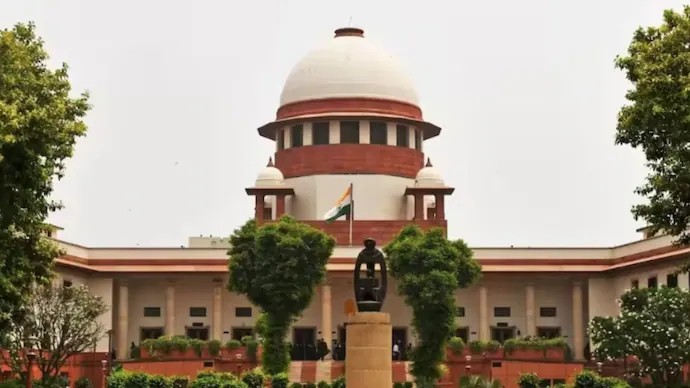
The Supreme Court has reiterated an important principle governing Other Backward Classes (OBC) reservation: a parent’s salary or employment income from a public sector undertaking (PSU) or private-sector company cannot be the sole basis for classifying a candidate under the creamy layer.
The ruling clarifies how authorities must assess the eligibility of OBC candidates seeking reservation benefits. Instead of relying exclusively on salary figures, officials must consider the status and category of the parent’s post alongside the prescribed income or wealth criteria under the applicable rules.
In its latest order, the court also rejected the Centre’s request to restrict the effect of its March 11, 2026, judgment to future cases. The bench held that the candidates before it were entitled to reservation benefits and consequential placement and allotment of posts.
However, the court made an important distinction: completed selections, appointments, seniority arrangements and promotions will not be reopened. It also granted the government an additional two months to implement the ruling, extending the implementation period beyond the six months originally provided in March.
What the Supreme Court Said About OBC Creamy Layer Status
A bench comprising Justices PS Narasimha and R Mahadevan reaffirmed that salary alone cannot determine whether the children of parents employed in PSUs or private-sector organisations fall within the OBC creamy layer.
The decision concerns the interpretation of the rules governing the identification of the creamy layer among OBC communities. Candidates classified under the creamy layer are excluded from OBC Reservation benefits, while eligible non-creamy-layer candidates can claim reservation in applicable recruitment and selection processes.
The court emphasised that the nature and status of a parent’s employment must be considered along with the prescribed financial criteria. Simply earning a salary above a particular amount does not automatically establish that a candidate belongs to the creamy layer when the relevant employment category and other applicable conditions have not been assessed.
The ruling is particularly significant for candidates whose parents work in government-owned companies, public sector undertakings and private organisations. Their eligibility cannot be decided by treating salary income as an independent and conclusive test.
How the 1993 Office Memorandum Determines Creamy Layer Status
The legal framework at the centre of the dispute includes the 1993 Office Memorandum issued by the Department of Personnel and Training (DoPT). It establishes the criteria used to identify the creamy layer among OBC candidates for reservation purposes.
Under this framework, the assessment involves more than simply checking a parent’s annual salary. The status and category of the parent’s post must also be examined alongside the applicable income or wealth test.
This distinction matters because employment categories and service conditions can differ considerably between government departments, public sector organisations and private companies. Treating all salary income in the same way could lead to incorrect classifications.
The Supreme Court’s interpretation reinforces the need to apply the relevant criteria together rather than relying on one financial indicator.
Why the Parent’s Employment Category Matters
The creamy-layer framework considers the position and status of parents’ employment in determining whether their children qualify for OBC reservation. The applicable rules distinguish between different categories of posts and employment arrangements.
For this reason, salary earned by a parent working in a PSU or private company cannot automatically be treated as equivalent to the salary of a government employee holding a particular category of post.
The court’s position does not mean that income is irrelevant. Rather, income must be assessed within the wider framework established by the 1993 memorandum and related instructions.
Centre’s Request to Apply the Ruling Only to Future Cases Rejected
The Centre had asked the Supreme Court to make its March 11, 2026, judgment prospective, meaning that it would apply only to cases arising after the decision rather than benefiting candidates involved in earlier or ongoing recruitment disputes.
The government sought to invoke Article 142 of the Constitution, which gives the Supreme Court power to pass orders necessary to do complete justice in matters before it.
The Centre argued that applying the ruling to past and ongoing recruitment processes could affect people who were not parties to the case. It also warned that changing the treatment of earlier selections could create what it described as “complete administrative chaos”.
The bench rejected this request, finding no convincing or reasonable justification for delaying the implementation of the judgment.
According to the court, granting relief to the candidates before it would not require authorities to disturb the seniority of other employees or reopen selections and appointments that had already been completed.
The decision therefore balances the rights of candidates directly involved in the dispute with the need to maintain stability in completed recruitment and service matters.
Candidates in the Case Entitled to OBC Reservation Benefits
The Supreme Court reaffirmed that the candidates involved in the Union of India vs Rohith Nathan case fell within the OBC non-creamy layer category under the applicable criteria.
As a result, they were entitled to reservation benefits in the selection processes in which they had participated. The court also directed that they receive consequential placement and allotment of posts in accordance with the relief granted.
This clarification is important because the dispute was not limited to interpreting a general policy. It also involved the practical consequences of how the creamy-layer criteria had been applied to candidates seeking public employment.
By refusing to limit the March judgment to future recruitment, the court ensured that the candidates before it could receive the benefits arising from the correct interpretation of the rules.
Why the Court Protected Completed Appointments and Promotions
Although the court rejected the Centre’s request for prospective application, it did not direct authorities to revisit every earlier recruitment decision.
The bench clarified that completed selections, appointments, seniority arrangements and promotions would remain undisturbed. This means the ruling provides relief to the candidates before the court without automatically unsettling the employment positions of people who have already been selected or appointed.
The distinction is significant for government recruitment systems, where changing earlier results can affect several candidates and create disputes over appointment dates, service benefits and seniority.
The court concluded that granting the petitioners their rightful relief did not require such wider disruption.
2016 Civil Services Examination Also Mentioned in the Proceedings
During the proceedings, the bench referred to a letter issued by the Department of Personnel and Training on December 20, 2016.
The communication had clarified that selections through the Civil Services Examination, 2016 were subject to the outcome of the pending appeals.
This reference was relevant to the Centre’s argument about the consequences of applying the judgment to earlier and ongoing recruitment matters. It indicated that the outcome of the legal dispute had already been recognised as relevant to certain selection processes.
The court considered this background while rejecting the request to postpone the effect of its ruling.
Pending OBC Creamy Layer Claims Will Be Decided Individually
The Supreme Court also addressed the position of other candidates who may be in similar circumstances but whose claims are still pending before courts, tribunals or other competent authorities.
The bench clarified that such claims can be examined individually on their own merits. It did not automatically extend the specific relief granted to the candidates in the present case to every person with a similar employment or salary background.
However, the interpretation of the 1993 Office Memorandum and a 2004 government letter laid down in the March judgment may be considered when deciding these pending disputes.
This means that individuals seeking similar relief will need to establish that their circumstances fall within the legal principles identified by the Supreme Court.
The court deliberately avoided expressing an opinion on the outcome of those separate cases, leaving the relevant authorities to assess the facts and applicable rules.
Government Gets Two More Months to Implement the Judgment
The bench granted the government an additional two months to implement the March 11, 2026, ruling. This extension comes on top of the six-month period originally provided by the court.
The additional time gives the executive more room to take the administrative steps required to apply the clarified criteria. However, the extension does not change the court’s central finding that salary alone cannot determine creamy-layer status for candidates whose parents work in PSUs or private-sector organisations.
The government is expected to implement the ruling within the extended period while ensuring that the applicable employment categories and income or wealth criteria are considered properly.
Supreme Court Leaves Policy Changes to the Government
While clarifying how the existing rules must be interpreted, the Supreme Court also recognised the government’s authority to frame reservation and creamy-layer policies within constitutional limits.
The bench said the government remained free to develop policies consistent with the Constitution and the principles established by the court.
It declined to impose a specific deadline for establishing equivalence between different employment posts or consulting stakeholders on the issue. According to the bench, these matters fall within the domain of the executive and legislature.
This distinction separates the court’s role in interpreting existing legal provisions from the government’s responsibility to develop and administer reservation policies.
What the Supreme Court Ruling Means for OBC Candidates
The judgment has important implications for OBC candidates whose parents are employed in public sector undertakings or private-sector organisations. It reinforces that eligibility for non-creamy-layer status cannot be rejected solely because a parent’s salary crosses an income threshold.
Authorities must examine the parent’s employment status and category alongside the relevant financial criteria under the applicable rules. Candidates should therefore have their eligibility assessed using the complete framework rather than a salary-only calculation.
For candidates involved in the Rohith Nathan proceedings, the court has confirmed entitlement to reservation benefits and consequential placement and allotment of posts. For other similarly placed individuals, pending claims will be decided separately based on their facts and the applicable legal principles.
The ruling does not automatically reopen completed appointments, promotions or seniority arrangements, nor does it guarantee relief to every OBC candidate whose parent works in a private company or PSU.
Why the Judgment Matters for Reservation Policy
The Supreme Court’s decision highlights the importance of applying reservation eligibility rules consistently and according to their intended legal framework. A single financial indicator cannot replace a broader assessment when the governing rules require consideration of employment status and other criteria.
By rejecting the Centre’s request to restrict the March judgment to future cases, the court has also reinforced the need to provide appropriate relief to candidates whose rights were affected by the interpretation of the rules.
At the same time, protecting completed selections and appointments avoids automatically disturbing existing service arrangements. The additional implementation period gives the government time to align its administrative processes with the court’s interpretation.
The central message is clear: for OBC creamy-layer classification involving parents employed in PSUs or private-sector organisations, salary alone is not enough. Eligibility must be determined by applying the relevant employment-category and financial criteria together, as required under the governing rules.
For breaking news and live news updates, like us on Facebook or follow us on Twitter and Instagram. Read more on Latest India on thefoxdaily.com.






COMMENTS 0