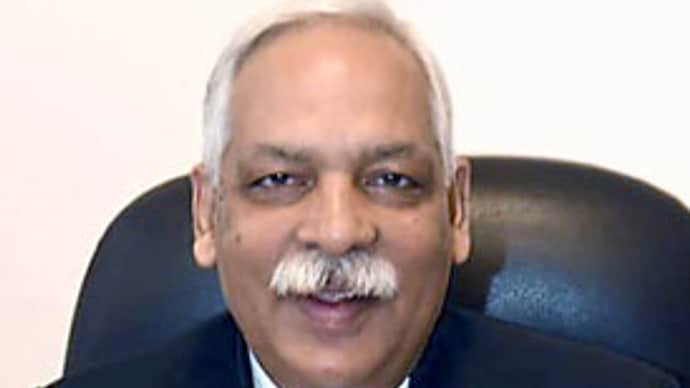
The Supreme Court Collegium has recommended three High Court Chief Justices for appointment as judges of the Supreme Court, including Delhi High Court Chief Justice Devendra Kumar Upadhyaya, in a move that will add three experienced judicial figures to the country’s highest court.
The recommendation was made at the Collegium’s meeting on September 28, 2026. Along with Justice Upadhyaya, the Collegium recommended Gujarat High Court Chief Justice Sunita Agarwal and Telangana High Court Chief Justice Aparesh Kumar Singh for elevation to the Supreme Court.
The recommendation is an important stage in the appointment process, but it does not by itself constitute the final appointment. The proposals will now move through the established procedure for appointments to the Supreme Court.
For Justice Upadhyaya, the recommendation also marks another major step in a judicial career that began with legal practice at the Lucknow Bench of the Allahabad High Court. His professional journey has taken him from advocacy in civil and constitutional matters to senior judicial positions in three major High Courts.
Three High Court Chief Justices recommended for elevation
The Supreme Court Collegium has recommended three serving Chief Justices for appointment to the top court:
- Justice Sunita Agarwal, Chief Justice of the Gujarat High Court, whose parent High Court is the Allahabad High Court.
- Justice Devendra Kumar Upadhyaya, Chief Justice of the Delhi High Court, whose parent High Court is the Allahabad High Court.
- Justice Aparesh Kumar Singh, Chief Justice of the Telangana High Court, whose parent High Court is the Jharkhand High Court.
The Collegium’s September 28 resolution formally records the recommendation of all three Chief Justices for elevation as judges of the Supreme Court.
The recommendations come at a time when vacancies in the Supreme Court are being filled through a series of Collegium decisions. The latest move therefore concerns not only individual judicial careers but also the composition of the country’s apex court.
Who is Justice Devendra Kumar Upadhyaya?
Justice Devendra Kumar Upadhyaya’s career has a strong connection with Uttar Pradesh and, in particular, the Lucknow legal establishment. He was born on June 16, 1965, in Muskarai village in Ambedkar Nagar district of Uttar Pradesh.
He completed his law degree from Lucknow University in 1991 and enrolled as an advocate on May 11 of the same year. His early legal career was shaped by work in the chambers of his father, R.A. Upadhyaya, WHO practised before the Board of Revenue.
He subsequently worked with senior advocates Mohammad Arif Khan and S.K. Kalia. His practice was primarily focused on civil and constitutional matters before the Lucknow Bench of the Allahabad High Court.
That period of legal practice established the foundation for his later judicial career. Unlike a career confined to one branch of law, his work involved areas that frequently raise questions concerning constitutional interpretation, civil disputes and the functioning of public authorities.
From Chief Standing Counsel to High Court judge
Justice Upadhyaya’s career took a significant turn in May 2007 when he was appointed Chief Standing Counsel for the state of Uttar Pradesh. He continued in that position until his elevation to the High Court bench.
On November 21, 2011, he was appointed a judge of the Allahabad High Court. He later became a permanent judge and continued to serve in the institution where he had begun his legal practice.
His association with the Lucknow Bench remained particularly significant. On March 28, 2023, he became the senior judge of the Lucknow Bench, placing him among the most senior members of the judicial establishment there.
His career subsequently moved beyond Uttar Pradesh. He was appointed Chief Justice of the Bombay High Court and took oath on July 29, 2023.
In January 2025, the Union government notified his transfer as Chief Justice of the Delhi High Court. He took oath as Chief Justice of the Delhi High Court on January 21, 2025.
That progression has taken him through advocacy, a senior government law position, more than a decade as a High Court judge and leadership of multiple High Courts.
Why the Lucknow connection matters
The recommendation has drawn attention in legal circles because of Justice Upadhyaya’s roots in the Lucknow Bench of the Allahabad High Court.
According to the information provided by the Delhi High Court and cited by legal practitioners, his elevation would represent only the second instance in the last 25 years of a legal practitioner associated with the Lucknow Bench being elevated to the Supreme Court.
Justice Brijesh Kumar was previously elevated from the Lucknow legal establishment to the Supreme Court in 2000. Justice Upadhyaya’s recommendation therefore adds another chapter to the representation of the Lucknow Bench at the country’s highest judicial level.
Advocate Ritika Singh Sisodiya described the development as significant for the Lucknow legal community, pointing to the limited number of practitioners from the Bench who have reached the Supreme Court through this route.
The distinction is particularly relevant because Justice Upadhyaya spent a substantial part of his early judicial career at the Lucknow Bench before moving into leadership roles at other High Courts.
A career across three major High Courts
Justice Upadhyaya’s judicial career has included responsibilities in three prominent High Courts. His elevation to the Allahabad High Court connected his judicial work with the institution where he had previously practised as a lawyer.
His appointment as Chief Justice of the Bombay High Court in 2023 represented a transition from a senior judge’s role to institutional leadership. The subsequent move to the Delhi High Court placed him at the head of one of India‘s most closely watched constitutional and administrative courts.
As Chief Justice of the Delhi High Court, he has presided over an institution dealing with a wide range of constitutional, civil, criminal, commercial and public law matters. The court also exercises jurisdiction over numerous disputes involving the Union government and central institutions because of Delhi’s position as the national capital.
The recommendation to the Supreme Court now places his judicial career at another stage, subject to completion of the appointment process.
Justice Sunita Agarwal and Justice Aparesh Kumar Singh also recommended
The Collegium’s recommendation is not limited to Justice Upadhyaya. Justice Sunita Agarwal, Chief Justice of the Gujarat High Court, has also been recommended for elevation.
Justice Agarwal’s parent High Court is the Allahabad High Court, making her another nominee with a judicial connection to that institution. Her recommendation alongside Justice Upadhyaya means two of the three names proposed in the latest resolution have their parent High Court in Allahabad.
The third recommendation is Justice Aparesh Kumar Singh, Chief Justice of the Telangana High Court. His parent High Court is the Jharkhand High Court.
All three nominees currently hold the position of Chief Justice of their respective High Courts, meaning the Collegium has selected judges already serving in senior institutional leadership roles for the proposed elevation.
How the Supreme Court Collegium recommendation works
The Supreme Court Collegium is the body that recommends appointments of judges to the Supreme Court under India’s established judicial appointments system. A recommendation by the Collegium is an important stage, but the process continues after the Collegium’s resolution.
The September 28 recommendation therefore should be understood as a proposal for appointment rather than an immediate change in the judges’ status.
The names proceed through the established appointment procedure before a formal appointment is completed. Until that process is concluded, the three judges continue to hold their existing positions as Chief Justices of their respective High Courts.
This distinction is important because reports of a Collegium recommendation and reports of an actual appointment refer to different stages of the judicial appointment process.
Collegium led by Chief Justice Surya Kant
The recommendation was made by the Supreme Court Collegium headed by Chief Justice of India Surya Kant. The Collegium for the decision also included Justices Vikram Nath, B.V. Nagarathna, M.M. Sundresh and P.S. Narasimha.
The body considered the three Chief Justices for elevation and formally recorded its recommendations on September 28.
Once the appointments are completed, the three judges would join the Supreme Court at a time when the court continues to handle cases spanning constitutional law, civil and criminal disputes, taxation, commercial matters, public administration and other areas of national importance.
What Justice Upadhyaya’s elevation would mean for his career
For Justice Upadhyaya, a Supreme Court appointment would cap a judicial career spanning more than a decade on the High Court bench and several senior administrative positions.
He entered the legal profession in 1991, served as Uttar Pradesh’s Chief Standing Counsel from 2007, became an Allahabad High Court judge in 2011, assumed senior judicial responsibilities at the Lucknow Bench in 2023 and later served as Chief Justice of the Bombay and Delhi High Courts.
The trajectory is also notable for the geographical range of his judicial leadership. His career began in Lucknow, moved through the wider jurisdiction of the Allahabad High Court, and later took him to Mumbai and New Delhi as Chief Justice.
If the recommendation proceeds to appointment, his move to the Supreme Court would place a judge whose professional career has been closely linked with constitutional and civil litigation at the national apex court.
Three vacancies and the next stage
The latest recommendations concern three positions in the Supreme Court. The appointments will be completed only after the remaining stages of the established process are followed.
Until then, Justice Sunita Agarwal remains Chief Justice of the Gujarat High Court, Justice Devendra Kumar Upadhyaya remains Chief Justice of the Delhi High Court and Justice Aparesh Kumar Singh remains Chief Justice of the Telangana High Court.
The recommendation nevertheless represents a significant development in the composition of India’s higher Judiciary. For Justice Upadhyaya in particular, it marks a potential transition from leading the Delhi High Court to serving on the Supreme Court, while also highlighting the long judicial journey that began with legal practice at the Lucknow Bench of the Allahabad High Court.
The next steps in the appointment process will determine when and whether the three recommendations translate into formal Supreme Court appointments.
For breaking news and live news updates, like us on Facebook or follow us on Twitter and Instagram. Read more on Latest India on thefoxdaily.com.






COMMENTS 0