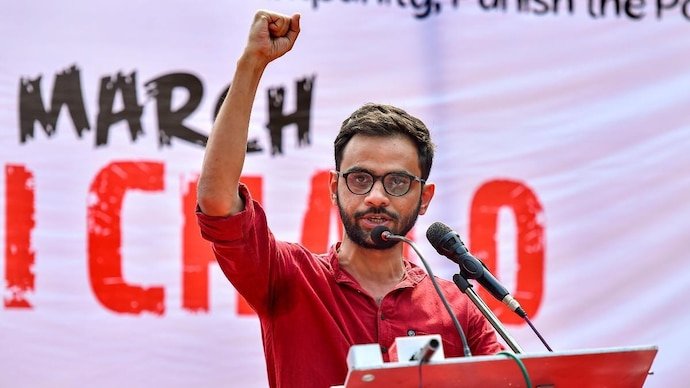
The Delhi High Court on Friday sought a response from the Delhi Police on activist Umar Khalid‘s bail plea in the case related to the alleged larger conspiracy behind the February 2020 North-East Delhi riots. The case is being investigated under the stringent provisions of the Unlawful Activities (Prevention) Act (UAPA), India‘s principal anti-terror legislation.
A division bench comprising Justices Prathiba M. Singh and Vikas Mahajan issued notice to the Delhi Police, directing it to file its reply within two weeks. The court scheduled the next hearing for August 27, when the bail application of co-accused Sharjeel Imam is also listed.
The latest proceedings represent another significant development in one of India’s most closely watched criminal cases arising from the communal violence that shook parts of the national capital in 2020.
Delhi High Court Issues Notice to Delhi Police
During the hearing, Umar Khalid’s legal counsel informed the court that this is his third regular bail application since his arrest in September 2020. The counsel also submitted that an application seeking interim bail has been filed.
After hearing preliminary submissions, the High Court directed the Delhi Police to submit its response within two weeks before considering the merits of the application.
The bench also indicated that Khalid’s case could be heard together with the bail plea of co-accused Sharjeel Imam because both matters involve the same trial court order.
What Is Umar Khalid Challenging?
Khalid has challenged the July 4 trial court order that dismissed his request for bail.
The trial court had observed that it was bound by an earlier Supreme Court judgment and therefore could not independently grant relief.
The latest petition before the Delhi High Court seeks judicial reconsideration of that decision.
Background of the 2020 Delhi Riots Case
The criminal case relates to allegations of a larger conspiracy behind the communal violence that erupted in parts of North-East Delhi in February 2020.
The riots occurred during Protests surrounding the Citizenship (Amendment) Act, 2019 (CAA) and debates over the proposed National Register of Citizens (NRC).
According to official records, the violence resulted in:
- 53 deaths.
- More than 700 people injured.
- Extensive damage to homes, businesses and public property.
The Delhi Police Special Cell subsequently registered a case alleging a larger conspiracy behind the violence.
Why the UAPA Has Been Invoked
The Unlawful Activities (Prevention) Act (UAPA) is India’s primary legislation dealing with terrorism and unlawful activities.
Compared to ordinary criminal law, UAPA contains stricter provisions regarding:
- Bail.
- Investigation timelines.
- Evidence evaluation during bail hearings.
- Detention of accused persons.
Courts considering bail under the UAPA must examine whether there are reasonable grounds to believe that the accusations are prima facie true, making bail proceedings significantly more stringent than under regular criminal statutes.
Who Else Is Named in the Alleged Conspiracy Case?
Apart from Umar Khalid, several other individuals have been named as accused in the larger conspiracy investigation.
Among them are:
- Sharjeel Imam.
- Khalid Saifi.
- Former AAP councillor Tahir Hussain.
- Several other activists and individuals named in the charge sheet.
The investigation has been conducted by the Delhi Police Special Cell.
Previous Court Decisions in the Case
The present bail proceedings follow a series of judicial decisions over the past several years.
| Date | Development |
|---|---|
| September 2020 | Umar Khalid arrested in the alleged larger conspiracy case. |
| September 2025 | Delhi High Court declined his bail plea. |
| January 5, 2026 | Supreme Court upheld denial of bail to Umar Khalid while granting relief to certain co-accused. |
| July 4, 2026 | Trial court rejected Khalid’s fresh bail application. |
| July 31, 2026 | Delhi High Court sought Delhi Police’s response on his latest bail plea. |
What the Supreme Court Previously Observed
In its earlier order, the Supreme Court distinguished between different accused persons based on what it described as the “hierarchy of participation” in the alleged conspiracy.
The Court observed that all accused individuals could not automatically be treated alike for the purpose of deciding bail.
While granting bail to several co-accused, the Supreme Court held that there existed a prima facie case under the UAPA against Umar Khalid and Sharjeel Imam.
Those observations formed an important basis for the trial court’s later decision rejecting Khalid’s fresh bail application.
Why Bail Under UAPA Is Different
Unlike ordinary criminal cases, bail under the UAPA involves a higher legal threshold.
Courts generally examine:
- The allegations contained in the charge sheet.
- The evidence presented at the preliminary stage.
- Whether accusations appear prima facie credible.
- The statutory restrictions contained in the UAPA.
These legal requirements often result in longer judicial consideration before bail is granted or denied.
What Will the Delhi High Court Consider Next?
At the next hearing, the Delhi High Court is expected to examine:
- The Delhi Police’s written response.
- Arguments presented by Umar Khalid’s legal team.
- The relevance of previous Supreme Court observations.
- Whether any new legal grounds justify reconsideration of bail.
The Court is also expected to hear Sharjeel Imam’s bail plea during the same proceedings because both cases arise from the same trial court order.
Legal Significance of the Case
The proceedings continue to attract close legal attention because they involve the interpretation of bail provisions under the UAPA, one of India’s most stringent criminal statutes.
The outcome may also contribute to the evolving judicial approach toward prolonged incarceration, successive bail applications and the application of anti-terror legislation in cases involving allegations of conspiracy.
Timeline of the Case
| Event | Details |
|---|---|
| February 2020 | Communal violence breaks out in North-East Delhi. |
| September 2020 | Umar Khalid arrested under the UAPA. |
| 2025 | Delhi High Court rejects bail. |
| January 2026 | Supreme Court upholds denial of bail. |
| July 2026 | Trial court dismisses fresh bail plea. |
| August 27, 2026 | Delhi High Court to hear latest bail application. |
What Happens Next?
The Delhi Police must now submit its response within the timeframe fixed by the High Court.
After reviewing the reply and hearing arguments from both sides, the bench will consider whether Umar Khalid’s latest bail application raises new legal grounds that warrant relief despite previous judicial findings.
The High Court is expected to hear the matter together with Sharjeel Imam’s bail plea on August 27.
Conclusion
The Delhi High Court’s decision to seek a response from Delhi Police marks the next stage in Umar Khalid’s continuing legal challenge against the denial of bail in the 2020 Delhi riots conspiracy case. While the Court has not expressed any opinion on the merits of the application, the proceedings will revisit questions surrounding successive bail petitions under the UAPA and the relevance of earlier Supreme Court observations.
With the next hearing scheduled for August 27, attention will focus on the submissions of both the prosecution and the defence, as the High Court considers whether the latest plea justifies a fresh examination of Khalid’s request for bail.
For breaking news and live news updates, like us on Facebook or follow us on Twitter and Instagram. Read more on Latest India on thefoxdaily.com.






COMMENTS 0