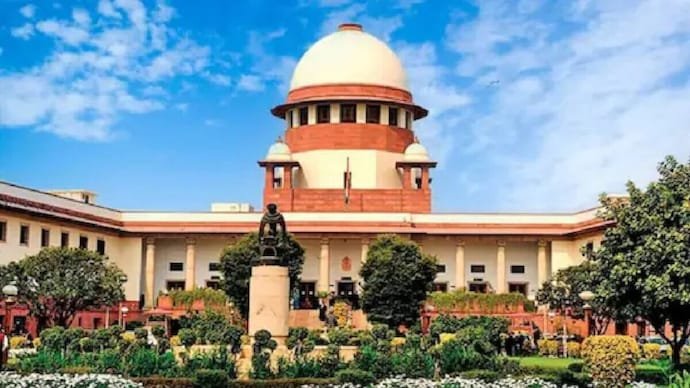
In a landmark decision with far-reaching legal and social implications, the Supreme Court has reaffirmed that adult individuals engaged in voluntary sex work cannot be treated as criminals merely because of their profession. The court clarified that while certain activities associated with prostitution such as trafficking, brothel management, and commercial sexual exploitation remain punishable under law, voluntary sex work by consenting adults is not itself illegal.
The ruling came during proceedings concerning the protection and rehabilitation of victims of trafficking for commercial sexual exploitation. While examining the framework of the Immoral Traffic (Prevention) Act (ITPA), the court stressed that adult sex workers possess Constitutional Rights, including the right to dignity, autonomy, and personal choice.
Perhaps most importantly, the judgment rejects the long-standing assumption that all individuals involved in sex work must automatically be rescued, rehabilitated, or placed in protective homes. Instead, the court held that consent and individual circumstances must remain central to any decision affecting adult sex workers.
The ruling represents one of the most important judicial interventions in recent years concerning the intersection of Human Rights, Law Enforcement, gender justice, and anti-trafficking policy in India.
What Exactly Did the Supreme Court Say?
The Supreme Court clarified that police authorities do not have unrestricted powers to detain, harass, or take action against adults who voluntarily engage in sex work.
While interpreting provisions of the Immoral Traffic (Prevention) Act, the court observed that the legislation does not authorize police action against consenting adults solely because they participate in voluntary sex work.
The bench further emphasized that rehabilitation programs should not be forced upon adult individuals who do not wish to participate in them.
According to the judgment, rehabilitation is a constitutional obligation of the state only when it is offered as support and assistance. It cannot become a mechanism for overriding personal choice or imposing state preferences on competent adults.
This distinction between support and coercion forms the foundation of the court’s reasoning.
Understanding the Immoral Traffic (Prevention) Act
The Immoral Traffic (Prevention) Act is India’s principal legislation dealing with trafficking and activities related to commercial sexual exploitation.
Many people mistakenly assume that prostitution itself is entirely illegal in India. The legal reality is more nuanced.
Indian law generally does not criminalize the act of an adult voluntarily engaging in sex work. However, several activities connected to prostitution are prohibited and punishable.
| Activity | Legal Status |
|---|---|
| Voluntary sex work by consenting adults | Not illegal by itself |
| Human trafficking | Illegal |
| Forced prostitution | Illegal |
| Running a brothel | Illegal |
| Commercial sexual exploitation of minors | Illegal |
| Pimping and procuring persons | Illegal |
This distinction is crucial because anti-trafficking laws are designed primarily to combat exploitation, coercion, and organized criminal activity rather than punish consenting adults.
Why the Ruling Is Considered Landmark
The judgment is significant because it directly addresses a long-standing tension within India’s legal and social framework.
Historically, many enforcement actions have operated on the assumption that individuals found in prostitution-related environments automatically require rescue and rehabilitation.
The Supreme Court has now challenged this assumption.
The court recognized that people involved in prostitution-related situations are not a homogeneous group. Some may be victims of trafficking, coercion, or abuse, while others may have entered sex work voluntarily as adults.
Applying the same response to all cases, the court observed, ignores these important differences.
By emphasizing consent and individual circumstances, the judgment introduces a more rights-based and individualized approach.
The Importance of Consent in the Court’s Reasoning
One of the most notable aspects of the ruling is its focus on consent.
The court repeatedly emphasized that adult individuals possess the right to make decisions concerning their lives, provided those decisions are lawful and made voluntarily.
This principle aligns with broader constitutional protections relating to personal liberty and autonomy.
In practical terms, the ruling means authorities must carefully distinguish between:
- Victims of trafficking
- Individuals subjected to coercion
- Adults engaged in voluntary sex work
- Persons requiring protection
- Persons exercising independent choice
The judgment effectively rejects blanket assumptions and requires a more nuanced evaluation of each situation.
How the Decision Impacts Police Procedures
The ruling is likely to influence how law enforcement agencies conduct raids and investigations involving prostitution-related activities.
Previously, adult sex workers found during police operations were often treated similarly to trafficking victims regardless of their circumstances.
The court has now made it clear that adults voluntarily engaged in sex work should not automatically face detention, harassment, or involuntary placement in protective institutions.
This clarification could lead to important procedural changes in how authorities identify victims, conduct rescues, and implement rehabilitation programs.
It may also encourage greater training for law enforcement personnel regarding consent, trafficking indicators, and constitutional rights.
The Difference Between Sex Work and Human Trafficking
One reason debates surrounding prostitution often become contentious is the tendency to conflate sex work with trafficking.
The Supreme Court’s judgment highlights the importance of distinguishing between the two.
Human trafficking involves recruitment, transportation, harboring, or exploitation of individuals through force, Fraud, coercion, or abuse.
Sex work, in contrast, may involve consenting adults making independent choices without coercion.
Failing to recognize this distinction can create policy problems.
If all sex workers are automatically treated as trafficking victims, genuine trafficking victims may receive inadequate attention because resources become dispersed across cases with fundamentally different circumstances.
The Constitutional Principles Behind the Judgment
The ruling is rooted in several constitutional principles that have increasingly shaped judicial decisions in India.
These include:
- Right to life and personal liberty
- Human dignity
- Personal autonomy
- Equality before the law
- Protection against arbitrary state action
The court’s reasoning reflects a broader constitutional trend that places increasing emphasis on individual agency and informed choice.
Rather than viewing adults as passive subjects requiring state intervention, the judgment recognizes them as rights-bearing individuals capable of making decisions regarding their own lives.
International Trends and Human Rights Perspectives
The debate over sex work and trafficking is not unique to India.
Countries around the world continue to grapple with questions surrounding criminalization, regulation, worker protections, and anti-trafficking strategies.
Different nations have adopted widely varying approaches.
| Policy Model | General Approach |
|---|---|
| Full criminalization | Most prostitution-related activities prohibited |
| Partial criminalization | Certain aspects prohibited while others permitted |
| Legal regulation | Sex work regulated under specific laws |
| Decriminalization | Removal of criminal penalties for consenting adults |
International human rights organizations increasingly emphasize the need to distinguish voluntary adult activity from trafficking and exploitation, a principle reflected in the Supreme Court’s judgment.
The Challenge of Rehabilitation Policies
The ruling also raises important questions about how rehabilitation programs should function.
Historically, rehabilitation initiatives have often been designed on the assumption that individuals engaged in sex work universally seek to leave the profession.
The court rejected this assumption.
Instead, it emphasized that rehabilitation should be available as an option rather than imposed as an obligation.
This distinction could influence how government agencies, non-governmental organizations, and social welfare institutions design future programs.
Effective rehabilitation, according to this perspective, depends on informed consent and individual participation rather than compulsion.
An Overlooked Insight: The Judgment Is Really About Personal Autonomy
Much of the public discussion surrounding the ruling focuses on prostitution. However, the broader constitutional significance extends beyond sex work.
At its core, the judgment reinforces a larger principle: competent adults have the right to make choices about their lives, even when those choices are controversial, unpopular, or misunderstood.
The court’s reasoning reflects an evolving judicial approach that prioritizes agency over paternalism.
Rather than assuming the state always knows what is best for individuals, the judgment recognizes that personal autonomy is itself a constitutional value.
This principle has implications far beyond the immediate context of sex work and may influence future debates involving rehabilitation, personal liberty, and state intervention.
Potential Impact on Future Legal and Policy Reforms
The decision may encourage policymakers to reconsider aspects of existing anti-trafficking and rehabilitation frameworks.
Future reforms could include:
- Clearer distinctions between trafficking and voluntary sex work
- Improved victim identification procedures
- Consent-based rehabilitation policies
- Enhanced legal protections for trafficking survivors
- Specialized training for law enforcement agencies
- Greater focus on individual rights assessments
Such measures could improve both anti-trafficking effectiveness and human rights protections.
What Happens Next?
The judgment is expected to influence future court proceedings, police practices, and policy discussions concerning trafficking and prostitution.
Authorities may need to revise operational guidelines to ensure that interventions involving adult sex workers comply with the principles outlined by the Supreme Court.
Advocacy groups, legal experts, and policymakers are also likely to examine whether existing laws adequately distinguish between exploitation and voluntary participation.
The ruling may therefore become an important reference point in future debates about gender rights, labor rights, trafficking prevention, and constitutional freedoms.
Conclusion
The Supreme Court’s ruling that voluntary sex work by consenting adults is not illegal represents a significant development in Indian constitutional and human rights jurisprudence. By emphasizing consent, autonomy, and dignity, the court has clarified that adult sex workers cannot automatically be treated as victims requiring rescue or rehabilitation against their will.
At the same time, the judgment reaffirms the state’s responsibility to combat trafficking, exploitation, and coercion. Rather than weakening anti-trafficking efforts, the decision seeks to make them more precise by distinguishing between victims of exploitation and adults exercising personal choice.
Looking ahead, the ruling is likely to influence law enforcement practices, rehabilitation policies, and legal interpretations for years to come. More broadly, it underscores a fundamental constitutional principle: protecting vulnerable individuals does not require abandoning respect for their autonomy, consent, and dignity.
For breaking news and live news updates, like us on Facebook or follow us on Twitter and Instagram. Read more on Latest India on thefoxdaily.com.






COMMENTS 0