- The Legal Trigger: Why Disqualification Was Immediate
- The Case: A Political Rivalry Turns Deadly
- Conviction and Sentencing: A Turning Point
- CBI Investigation: Why It Mattered
- Legal Battles and Bail: A Long Road to Conviction
- Political Impact: Dharwad Seat Falls Vacant
- Bypoll Dynamics: What to Watch
- Legal Insight: When Can Disqualification Be Reversed?
- Comparison: Disqualification of Lawmakers in India
- Bigger Picture: Crime and Politics Debate
- Conclusion: Law, Politics, and Accountability Converge
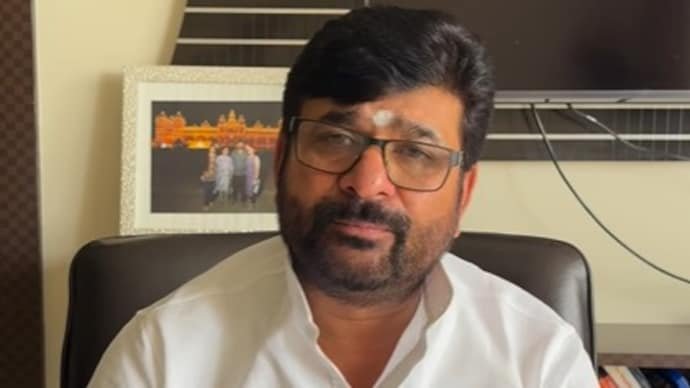
The disqualification of congress leader Vinay Kulkarni from the Karnataka Legislative Assembly marks a significant moment where criminal conviction, constitutional law, and political consequences intersect. Once a powerful minister representing Dharwad, Kulkarni now stands removed from office after being convicted in the high-profile murder of BJP leader Yogeshgouda Goudar. The development not only reshapes local political dynamics but also underscores how India’s legal framework deals with elected representatives found guilty of serious crimes.
Who is involved? Vinay Kulkarni, a Congress MLA, and the late BJP leader Yogeshgouda Goudar. What happened? Kulkarni was convicted of murder and subsequently disqualified from the Assembly. When? Conviction on April 15, 2026, with disqualification effective the same day. Where? Karnataka, specifically the Dharwad constituency. Why? Due to legal provisions that bar convicted individuals from holding public office. How? Through constitutional and statutory mechanisms triggered automatically upon conviction.
The Legal Trigger: Why Disqualification Was Immediate
Kulkarni’s disqualification was not a political decision it was a legal consequence. Under Article 191(1)(e) of the Constitution, read with Section 8 of the Representation of the People Act, any legislator convicted of certain serious offences is disqualified from holding office.
What makes this case notable is the immediacy. The disqualification took effect from the date of conviction itself, without waiting for appeals or further proceedings. This reflects a strict legal standard designed to maintain the integrity of public office.
Importantly, the disqualification will continue for six years after Kulkarni completes his sentence unless a higher court stays or overturns the conviction. This clause ensures that legal outcomes, not political considerations, determine eligibility.
The Case: A Political Rivalry Turns Deadly
The roots of the case go back to June 15, 2016, when Yogeshgouda Goudar, a BJP Zilla Panchayat member, was brutally murdered inside a gym in Dharwad. The attack, carried out by hired assailants, quickly drew attention due to its alleged political motivations.
According to investigators, Kulkarni viewed Goudar as a rising political rival. The Central Bureau of Investigation later identified him as the “main conspirator,” alleging that he orchestrated the killing through contract attackers.
This transformation from political competition to criminal conspiracy turned the case into one of Karnataka’s most closely watched legal battles.
Conviction and Sentencing: A Turning Point
The case reached a decisive moment in April 2026. A special court in Bengaluru found Kulkarni guilty under multiple provisions, including criminal conspiracy and murder.
Within two days, the court sentenced him and 15 others to life imprisonment. This swift progression from conviction to sentencing reinforced the seriousness of the charges and the strength of the prosecution’s case.
For Kulkarni, the verdict marked a dramatic fall from a senior political figure to a convicted prisoner.
CBI Investigation: Why It Mattered
The involvement of the Central Bureau of Investigation (CBI) played a crucial role in the case. Initially handled at the state level, the investigation was transferred to the CBI in 2019 following sustained pressure from the victim’s family and political leaders.
This shift had two major implications:
- Credibility: A central agency added weight and perceived neutrality to the investigation
- Depth: The CBI’s supplementary chargesheet in 2020 provided detailed allegations, including identifying Kulkarni as the key conspirator
The agency’s findings ultimately formed the backbone of the prosecution’s case in court.
Legal Battles and Bail: A Long Road to Conviction
Kulkarni’s journey through the legal system was complex and extended over several years. Arrested in 2020, he was granted bail in 2021 with strict conditions, including restrictions on entering Dharwad district.
However, the case took a dramatic turn in 2025 when his bail was cancelled by the Supreme Court over allegations of witness tampering. This highlighted a critical issue in criminal trials involving powerful individuals the risk of influencing proceedings.
Although he was later granted bail again in early 2026 after witness examination was completed, the final conviction brought the legal process to a decisive conclusion.
Political Impact: Dharwad Seat Falls Vacant
The immediate political consequence of Kulkarni’s disqualification is the vacancy of the Dharwad Assembly seat. This triggers the need for a by-election, setting the stage for a fresh contest in a constituency already shaped by intense political rivalry.
The vacancy also affects the overall strength of the Karnataka Assembly, though its broader impact depends on existing party numbers and alliances.
For political parties, the upcoming bypoll is not just about winning a seat it is about controlling the narrative around Governance, law, and accountability.
Bypoll Dynamics: What to Watch
The Dharwad bypoll is likely to become a high-profile contest for several reasons:
- Sympathy vs Accountability: Will voters respond to sympathy for Kulkarni or prioritize the conviction?
- Party Strategy: Both Congress and BJP will frame the election around law, justice, and political credibility
- Local Issues: Development and governance concerns may still play a decisive role
Bypolls often serve as indicators of broader political trends, making this contest particularly significant.
Legal Insight: When Can Disqualification Be Reversed?
One of the key legal questions is whether Kulkarni’s disqualification could be reversed. The answer depends on the outcome of appeals.
If a higher court stays the conviction, the disqualification can be temporarily lifted. However, without such relief, the disqualification remains in force throughout the sentence and for six years afterward.
This legal framework ensures that electoral eligibility is closely tied to judicial outcomes, reinforcing the principle of accountability.
Comparison: Disqualification of Lawmakers in India
| Scenario | Outcome | Condition for Reversal |
|---|---|---|
| Conviction for serious offence | Immediate disqualification | Stay or reversal by higher court |
| Pending trial | No disqualification | Until conviction occurs |
| Acquittal on appeal | Eligibility restored | Final court decision |
This framework highlights how the legal system balances the presumption of innocence with the need for accountability in public office.
Bigger Picture: Crime and Politics Debate
The case also feeds into a broader national debate about the role of criminal cases in Politics. India has long grappled with concerns about candidates facing serious charges contesting Elections.
While legal provisions exist to disqualify convicted individuals, the process often takes years raising questions about whether reforms are needed to address cases more swiftly.
Kulkarni’s case, with its long timeline and eventual conviction, reflects both the strengths and limitations of the current system.
Conclusion: Law, Politics, and Accountability Converge
The disqualification of Vinay Kulkarni is more than a procedural step it is a powerful example of how legal accountability can reshape political careers. From a rising leader to a convicted individual, his journey underscores the consequences of criminal conviction in public life.
As Dharwad prepares for a bypoll and courts continue to hear appeals, the case will remain in focus not just for its legal implications, but for what it reveals about the intersection of Crime, politics, and justice in India.
Ultimately, this moment reinforces a fundamental principle: public office carries responsibility, and when that responsibility is breached, the consequences extend far beyond the individual to the very structure of democratic governance.
For breaking news and live news updates, like us on Facebook or follow us on Twitter and Instagram. Read more on Latest India on thefoxdaily.com.






COMMENTS 0