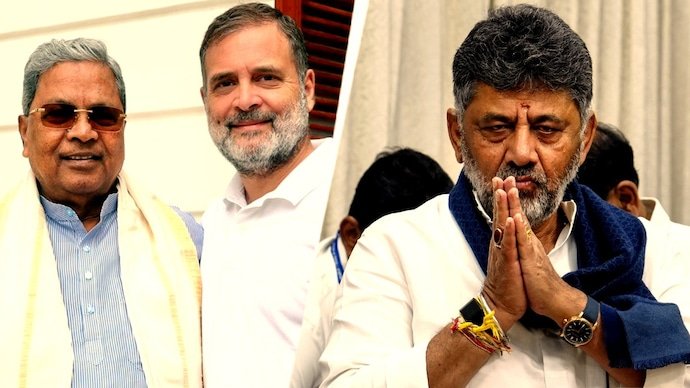
Karnataka is witnessing one of the most significant political transitions in recent years as the Congress Party moves toward forming a new government following Chief Minister Siddaramaiah‘s resignation. The Congress Legislature Party (CLP) is scheduled to meet in Bengaluru to elect its new leader, with Deputy Chief Minister DK Shivakumar widely expected to assume the top post.
The transition comes at a critical moment for both Karnataka and the Congress party. While Leadership changes are not uncommon in Indian Politics, the current development carries broader implications because it involves two of the state’s most influential political figures, complex social representation considerations, cabinet restructuring, and the party’s long-term electoral strategy.
Who is involved? Siddaramaiah, DK Shivakumar, the Congress high command, and Karnataka’s legislators. What is happening? A planned leadership transition and formation of a new state government. When? Following Siddaramaiah’s resignation and ahead of the CLP meeting. Where? Karnataka, with key consultations taking place in New Delhi and Bengaluru. Why? To implement a leadership change agreed upon within the party framework. How? Through formal election of a new CLP leader and subsequent cabinet formation.
Why the Karnataka Leadership Change Matters Beyond State Politics
Karnataka occupies a unique position in Indian politics. As one of the country’s largest economies and the Congress party’s most significant southern stronghold, developments in the state often influence national political calculations. The leadership transition is therefore not merely a state-level event but a test of the Congress party’s ability to manage succession, maintain unity, and project stability.
The state contributes significantly to India‘s technology exports, startup ecosystem, manufacturing output, and services sector. Any uncertainty in governance can have implications for investment confidence, infrastructure planning, and policy implementation.
Congress leaders have repeatedly emphasized a smooth transfer of power, suggesting that the party is keen to demonstrate organizational discipline at a time when political stability remains a key concern for voters and investors alike.
The End of an Era: Siddaramaiah’s Lasting Political Legacy
Siddaramaiah’s resignation marks the conclusion of a defining chapter in Karnataka Politics. Over several decades, he emerged as one of the state’s most influential leaders, building a reputation around social justice, welfare governance, and inclusive development.
His political journey is often cited as one of the most remarkable in modern Karnataka politics. Rising from a modest background, he built a broad support base among rural voters, backward classes, marginalized communities, and sections of the urban electorate.
During his tenure, welfare schemes became a central pillar of governance. His administration focused on expanding access to public services while attempting to balance social equity with economic growth.
Even after stepping down as Chief Minister, Siddaramaiah remains a dominant political force. His meetings with the Congress leadership indicate that he intends to continue playing an active role in shaping Karnataka’s political future rather than moving to a national assignment.
Why DK Shivakumar Is the Natural Successor
Deputy Chief Minister DK Shivakumar has long been viewed as one of Congress’s most influential leaders in Karnataka. Known for his organizational capabilities and political networking skills, he has been instrumental in strengthening the party’s position across multiple regions of the state.
His expected elevation reflects both political experience and strategic necessity. Shivakumar enjoys strong support among party workers and has demonstrated the ability to navigate complex political situations.
Several factors strengthen his claim to leadership:
- Extensive grassroots organizational network.
- Experience handling major political negotiations.
- Strong rapport with the Congress high command.
- Administrative experience across various government roles.
- Influence among key social and regional constituencies.
Supporters argue that his leadership could ensure continuity while bringing a renewed focus on governance and development.
The Delicate Balance of Community Representation
One of the most important aspects of the government formation process is the question of representation. Karnataka’s political landscape is shaped by a complex mix of communities, regions, and social groups.
Siddaramaiah’s reported insistence on adequate representation for Scheduled Castes, Scheduled Tribes, Other Backward Classes, Lingayats, and other communities reflects a long-standing reality of Karnataka politics. Cabinet formation is rarely just about administrative competence; it is also about ensuring political inclusiveness.
Every major political party in Karnataka must carefully balance these considerations to maintain social harmony and electoral support.
| Government Formation Factor | Why It Matters |
|---|---|
| Regional Representation | Ensures all parts of Karnataka have a voice |
| Community Balance | Promotes political inclusiveness |
| Administrative Experience | Supports effective governance |
| Youth Representation | Brings fresh perspectives and innovation |
| Party Unity | Prevents internal factional conflicts |
A Younger Cabinet Could Signal a New Political Direction
Reports suggest that the new Karnataka cabinet may include several younger faces. This would align with a broader trend across Indian politics, where parties are increasingly investing in next-generation leadership.
Younger ministers often bring expertise in technology, entrepreneurship, digital governance, climate policy, and Innovation-driven economic development. For Karnataka, home to Bengaluru’s thriving startup ecosystem, such a shift could carry particular significance.
The challenge for the Congress will be balancing youthful energy with experienced leadership. Successful governments typically combine both, ensuring continuity while embracing new ideas.
Karnataka’s Economic Significance Raises the Stakes
The leadership transition is attracting national attention partly because Karnataka is one of India’s most economically important states.
The state plays a major role in:
- Information technology exports.
- Startup creation and innovation.
- Biotechnology research.
- Aerospace and defense manufacturing.
- Engineering and higher education.
- Foreign direct investment inflows.
Bengaluru remains India’s leading technology hub and is often compared with global innovation centers. Businesses and investors therefore watch political developments closely to assess whether policy continuity will be maintained.
A smooth transition is likely to reassure stakeholders that governance priorities will remain stable despite the change in leadership.
How the Transition Reflects Congress’s National Strategy
The Karnataka leadership change also provides insight into the Congress party’s broader political approach. Rather than allowing internal competition to create instability, the party appears focused on presenting a united front.
The active involvement of Rahul Gandhi, Mallikarjun Kharge, KC Venugopal, and Randeep Surjewala highlights Karnataka’s strategic importance within the Congress framework.
The state remains one of the party’s strongest governance showcases, making political stability a top priority. A successful transition would strengthen the party’s narrative that it can manage leadership changes without disrupting governance.
The Yathindra Siddaramaiah Question
Discussions surrounding the future role of Siddaramaiah’s son, Yathindra Siddaramaiah, have added another dimension to the transition.
Political succession remains a recurring theme in Indian politics. While family members of established leaders often enter public life, long-term success ultimately depends on individual performance and political credibility.
Should Yathindra receive a significant role in the new setup, attention will focus on how effectively he can establish an independent political identity while carrying forward his father’s legacy.
Major Challenges Awaiting the New Government
Regardless of who takes charge, Karnataka’s next government will inherit a demanding governance agenda.
Urban Infrastructure
Bengaluru continues to face challenges related to traffic congestion, public transportation, water management, and urban planning.
Economic Growth
Maintaining Karnataka’s competitive edge in technology and manufacturing will require continued policy support and infrastructure investment.
Employment Generation
Young voters increasingly prioritize job creation, skill development, and entrepreneurship opportunities.
Agricultural Development
Farmers remain dependent on effective irrigation policies, market access improvements, and climate-resilient agricultural strategies.
Social Welfare
Balancing fiscal discipline with welfare commitments will remain a critical challenge for the incoming administration.
Comparison With Previous Karnataka Political Transitions
Karnataka has experienced several leadership changes over the decades, but this transition differs in one important respect: the emphasis on consensus.
Many political transitions in India are accompanied by factional disputes, public disagreements, or prolonged uncertainty. In contrast, Congress leaders have consistently projected unity and cooperation.
If this approach continues through cabinet formation and governance, it could become an example of how large political parties manage leadership succession without sacrificing stability.
What Voters Will Watch Closely
For ordinary citizens, leadership changes matter less than governance outcomes. Voters are likely to judge the new government based on its ability to deliver results.
Key areas of public focus include:
- Infrastructure development.
- Employment opportunities.
- Education and healthcare improvements.
- Implementation of welfare programs.
- Investment attraction.
- Transparency and administrative efficiency.
The performance of the new administration during its first year will significantly influence public perception and future electoral prospects.
The Bigger Lesson in Political Succession
One of the most interesting aspects of this transition is what it reveals about modern Indian politics. As regional leaders become increasingly influential, national parties face the challenge of balancing individual ambitions with organizational unity.
The Karnataka model appears to emphasize negotiation, consultation, and consensus-building. Whether this strategy succeeds could influence how similar leadership transitions are handled elsewhere in the country.
Future Outlook: What Happens Next?
The immediate focus will be on the election of the new Congress Legislature Party leader and the formation of the cabinet. The composition of the ministry will provide important clues about the party’s priorities, internal power balance, and long-term strategy.
Attention will also remain on the relationship between Siddaramaiah and Shivakumar. Their ability to work together despite the leadership transition could prove crucial for maintaining political stability and ensuring effective governance.
At the same time, the Congress high command will be watching closely to ensure that Karnataka continues to serve as one of the party’s strongest governance examples ahead of future electoral contests.
Conclusion
The Karnataka leadership transition is more than a routine political event. It represents a significant moment for governance, party management, social representation, and economic stability in one of India’s most important states.
As Siddaramaiah exits the Chief Minister’s office and DK Shivakumar prepares to potentially assume the state’s top position, Karnataka stands at the beginning of a new political chapter. The success of this transition will ultimately be measured not by the smoothness of the handover but by the government’s ability to deliver growth, stability, and inclusive development.
If managed effectively, the transition could strengthen both Karnataka’s governance framework and the Congress party’s political standing. If challenges emerge, it will serve as a reminder that leadership changes are only the beginningthe real test lies in governing successfully afterward.
For breaking news and live news updates, like us on Facebook or follow us on Twitter and Instagram. Read more on Latest India on thefoxdaily.com.






COMMENTS 0